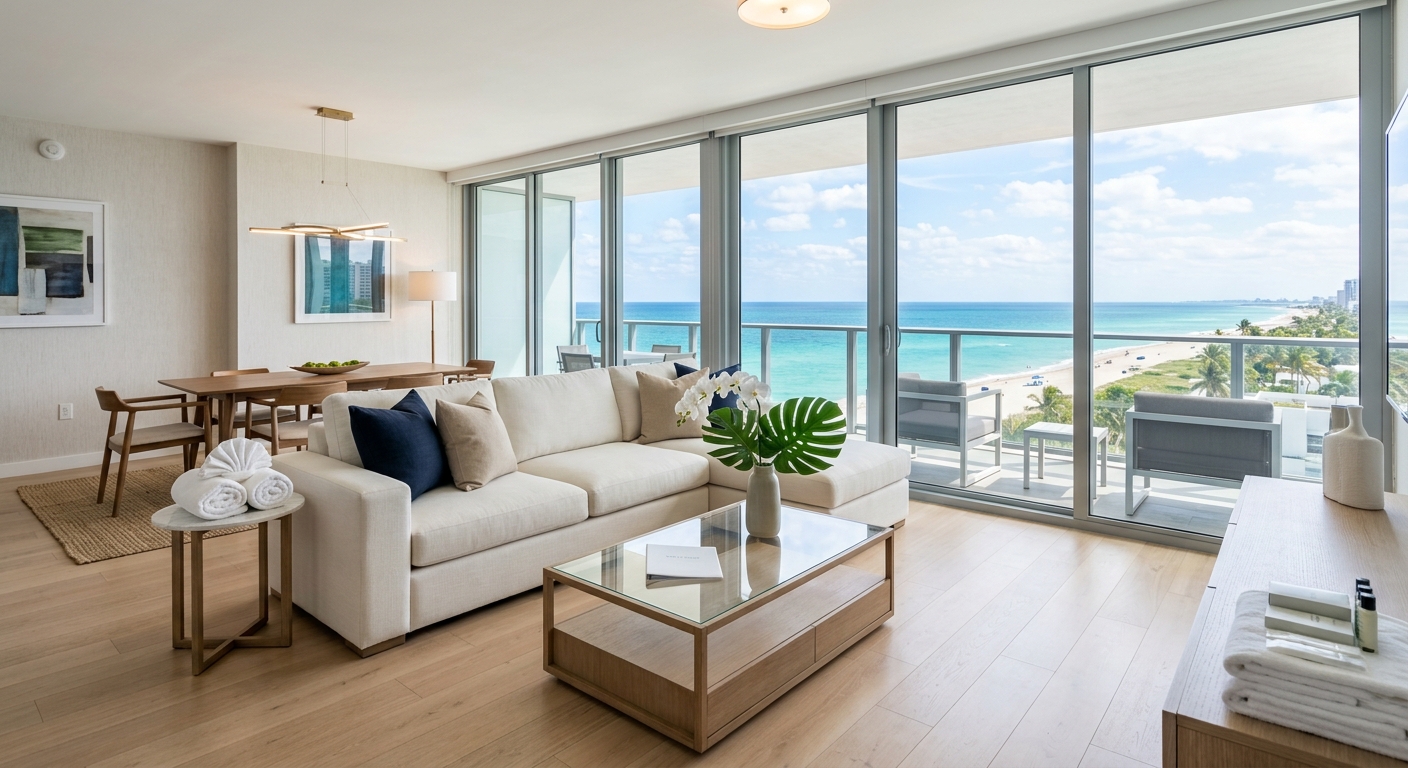
Your guests just checked out at 11 AM. New arrivals are scheduled for 3 PM. You have four hours to transform a lived-in space back into a pristine, five-star vacation rental—and in Miami Beach's competitive short-term rental market, anything less than perfection means bad reviews, lost bookings, and potentially thousands in lost revenue.
We understand that pressure. After managing hundreds of Airbnb turnovers across South Florida, we have learned that successful Airbnb cleaning Miami Beach properties requires more than just tidying up—it demands a systematic approach, the right products, and an understanding of what today's guests actually scrutinize when they walk through your door.
In this comprehensive guide, we will walk you through everything we have learned about maintaining vacation rentals in Miami Beach: from the Enhanced Clean standards that can make or break your Superhost status to dealing with the unique challenges of sand-tracked interiors and Florida's humidity. Whether you are managing your first property or your tenth, you will find specific techniques and insider knowledge that goes beyond generic cleaning advice.
Understanding Miami Beach's Unique Airbnb Cleaning Challenges
Miami Beach is not just another vacation rental market. The combination of beach proximity, tropical humidity, and high-end guest expectations creates cleaning challenges you won't encounter in most other cities.
The sand problem is relentless. Even with door mats and guest reminders, fine beach sand works its way into every crevice—carpets, tile grout, furniture seams, and especially sliding door tracks. We have found that traditional cleaning methods simply push sand around rather than removing it effectively.
After testing various tools across dozens of beachfront properties, we now exclusively use rubber brooms for sand removal. Unlike traditional straw brooms that wear out in weeks, rubber brushes last 10 times longer and actually grip sand particles. Industry expert Sean Kemper confirmed what we discovered through experience: these brushes excel on both carpets and hard floors, and the built-in squeegee helps push water away from entryways—critical during Florida's afternoon thunderstorms.
Humidity accelerates everything. Mildew appears faster. Towels smell musty if not dried properly. Hard water stains seem to materialize overnight on glass shower doors. The vacant periods between guests—sometimes 2-3 days in slower seasons—allow moisture to settle and minerals to harden in ways that rarely happen in primary residences.
This is where vacation rental-specific cleaning chemistry matters. Short-term rentals sit empty between guests, leaving more time for water to dry, minerals to harden, and surfaces to stain faster than in occupied homes. We use tile and grout cleaners specifically formulated for hard water stains, rust, and mineral deposits—not generic bathroom cleaners that simply cannot handle Miami Beach water chemistry.
What Guest Reviews Actually Focus On
Guest cleaning expectations in 2025 are higher than ever. The standard is hotel-level cleanliness with Airbnb's homey personality. Based on thousands of reviews we have analyzed, here is where guests focus their attention:
- Bathrooms receive the most scrutiny—this is where cleanliness reviews are won or lost, including issues like mold or mildew in grout and caulk
- Kitchen appliance interiors (microwave, oven, refrigerator shelves)
- Baseboards, light switches, and other detail areas that reveal whether cleaning was thorough or rushed
- Linens and towels must feel crisp, smell fresh, and show zero stains
- Floor corners and under furniture where dust accumulates
According to recent data, 70% of guests prefer accommodations that follow strict cleaning practices. In our experience managing Airbnb cleaning in Miami Beach, the difference between a 4.6 and 4.9 cleanliness rating often comes down to these detail areas that rushed cleaners skip.
The financial stakes are significant. If your property earns $200 per night with 100 bookings per year, a 20% reduction in bookings costs $4,000 annually—the direct price of not meeting cleaning expectations. When you factor in that Superhost status requires a 4.8+ overall rating, and cleanliness heavily weights that score, the connection between meticulous cleaning and revenue becomes crystal clear.
Miami Beach Compliance: What Hosts Must Know
Before we dive deeper into cleaning protocols, you need to understand that operating legally in Miami Beach requires navigating one of Florida's most complex short-term rental regulatory environments.
Most residential zones prohibit vacation rentals entirely. The City of Miami Beach Land Development Regulations (Chapter 142, Article IV, Division 3, Sec. 142-1111) specifically prohibit short-term rentals for periods of less than six months and one day in single-family homes and many multifamily residential buildings within certain zones.
If you are operating in one of the approved zones, you face a three-layer licensing structure:
- State level: DBPR (Department of Business and Professional Regulation) license—as of 2025, this costs $170 annually, $90 semi-annually, plus a $50 application fee, expiring October 1st each year
- County level: Miami-Dade County Business Tax Receipt and Resort Tax Certificate
- City level: Miami Beach-specific permits and potential balcony inspections
The enforcement is aggressive. Fines for illegal short-term rentals reach up to $1,000 per day for first offenses and $5,000 per day for repeat violations. The City of Miami Beach Code Compliance Department actively pursues violations, including breaching maximum occupancy standards or failing to meet noise ordinances.
Why mention compliance in a cleaning guide? Because part of your turnover protocol should include occupancy verification and property condition documentation. The same attention to detail that prevents bad cleaning reviews also helps you stay compliant and avoid guest behavior that triggers neighbor complaints.
The Airbnb Enhanced Clean Protocol: Miami Beach Edition
Airbnb's 2024-2025 cleaning guidelines center around a 5-step Enhanced Clean process: Prepare, Clean, Sanitize, Check, and Reset. This framework was developed in collaboration with health and hospitality experts and requires hosts to follow thorough procedures using approved disinfectants and room-by-room checklists.
We have adapted this protocol specifically for Miami Beach properties based on our experience with over 200 monthly turnovers. Here is how we execute each phase:
Step 1: Prepare (10-15 minutes)
Start by ventilating every room—open windows and doors to create airflow. This eliminates odors naturally and provides a safer environment when using cleaning products. In Miami Beach's humidity, this step also helps prevent that musty smell that can develop in closed-up units.
Pro Tip: Start laundry immediately. Get linens, towels, and bath mats into the washer right away. This keeps your turnover timeline moving while you tackle other areas. With Florida humidity, nothing air-dries effectively—everything goes through the dryer completely before remaking beds.
Gather your supplies using a color-coded system. We use separate microfiber cloths—one color for kitchens, another for bathrooms—to avoid cross-contamination. Professional cleaners learned this from the healthcare industry, and it is now standard practice for vacation rentals.
Step 2: Clean (45-75 minutes depending on property size)
This phase removes visible dirt, dust, and debris before sanitizing. In Miami Beach, we tackle rooms in this order to maximize efficiency:
Kitchen first. While the space is still organized, we clean inside appliances (microwave splatters, oven drips, refrigerator spills), wipe down all surfaces, and address the often-neglected areas: top of the refrigerator, inside cabinet doors, and the space between the stove and counter.
Bathrooms second. This is where turnover success lives or dies. We have learned that grout and caulk require special attention in humid climates. For standard maintenance, we use Seventh Generation Professional Non-Chlorine Bleach, available on Amazon for $23.99 per half gallon. It is a biodegradable hydrogen peroxide-based formula that sanitizes effectively without the harsh fumes of chlorine bleach—important in enclosed bathroom spaces and better for luxury fixtures.
However, here is a critical warning we learned the expensive way: never use descalers on natural stone. Miami Beach's luxury condos frequently feature granite and marble—using acidic descalers on these surfaces causes permanent etching. For natural stone, stick to pH-neutral cleaners specifically formulated for marble and granite.
Living areas and bedrooms third. We vacuum thoroughly using a Dyson V11 Torque Drive Cordless Vacuum ($504.85 on Amazon or the Dyson website). After testing various models, this one justifies its price through reliability, battery life for back-to-back turnovers, and most importantly, the powerful suction needed for Miami Beach sand removal. The cordless feature saves enormous time when moving between rooms.
For carpet stains—inevitable with vacation rentals—we keep Folex Carpet Spot Remover stocked. It is a no-scrub, rinse-free solution that tackles stains quickly without leaving residue that attracts more dirt.
Step 3: Sanitize (20-30 minutes)
This step focuses on high-touch surfaces using EPA-approved disinfectants: door handles, light switches, remote controls, thermostat, kitchen appliance handles, bathroom fixtures, and furniture pulls.
The Enhanced Clean program specifically requires EPA-approved products. We rotate between approved disinfectants to prevent surface buildup, but one critical principle applies regardless of product: use correct dilution ratios. More chemical does not mean more clean—it means residue buildup, potential surface damage, and wasted money. Follow manufacturer instructions precisely.
Pay special attention to items guests touch but rarely think about: coffee maker buttons, TV remotes (we actually replace batteries monthly), thermostat screens, and drawer pulls. These details separate adequate cleaning from the level that earns Superhost status.
Step 4: Check (10-15 minutes)
Walk through as if you are the arriving guest. We use a printed checklist, but the mental approach matters more than the list itself: look at eye level, then down at baseboards and corners, then up at ceiling fans and light fixtures.
Check for:
- Any remaining sand (look at door tracks, under furniture edges)
- Water spots on glass, mirrors, and fixtures
- Dust on surfaces guests will touch immediately: nightstands, TV stands, coffee tables
- Proper towel and amenity placement
- Working light bulbs throughout
- Fresh smell (not cleaning product smell, not previous guest smell, not musty smell—actually fresh)
Pro Tip: Take the same photo of each room from the same angle after every turnover. This creates documentation for insurance and guest disputes, but more importantly, it trains your eye to spot inconsistencies. When Wednesday's living room photo looks different from Friday's, you will catch details you might otherwise miss.
Step 5: Reset (15-20 minutes)
This final phase transforms the cleaned space into a welcoming vacation experience. Fresh linens with hospital corners. Towels folded uniformly. Amenities arranged attractively. Climate controls set to comfortable temperatures (we set AC to 74°F in Miami Beach—cool enough to feel refreshing when guests enter, not so cold that the unit runs constantly during vacant periods).
We add small touches that guests mention in reviews: a handwritten welcome note, locally-sourced coffee for the morning, a Miami Beach guidebook with our favorite spots marked. These take minimal time but signal care that elevates the entire experience.
Time-Saving Technology for Miami Beach Hosts
Managing Airbnb turnovers manually becomes overwhelming fast, especially during Miami Beach's peak season when you might have multiple properties flipping on the same day. Technology bridges the gap between what you can personally manage and what professional cleaning services provide.
Top cleaning management platforms in 2025 include Doinn, Properly, Breezeway, Turno, and TIDY. Each offers unique strengths: AI automation, cleaner marketplaces, workflow management, and quality assurance features. These platforms handle everything from cleaner coordination and inventory tracking to performance monitoring.
In our operations, we have found these tools essential for maintaining consistent standards across multiple properties. They automate scheduling, send cleaners room-by-room checklists, and flag when a property falls below quality benchmarks.
For hosts managing just one or two properties, the investment might seem unnecessary. But consider the cost of a single bad review—not just the immediate booking it loses but the algorithmic penalty that suppresses your listing for weeks afterward. Technology that ensures consistency pays for itself quickly.
Common Airbnb Cleaning Mistakes Miami Beach Hosts Make
After years of managing Airbnb cleanings across Miami, we have seen patterns in what separates successful hosts from those struggling with ratings and reviews.
Mistake #1: Relying on Regular House Cleaners
The person who cleans your home biweekly is likely excellent at maintenance cleaning. But vacation rental turnover is fundamentally different—tighter timeframes, hotel-level standards, and every single detail matters because every guest is essentially inspecting the work.
We train our team specifically on turnover protocols. It is a different skill set than residential cleaning, with different priorities and different quality thresholds.
Mistake #2: Rushing Through Because Guests Are Arriving Soon
Time pressure leads to cut corners, which leads to bad reviews. If you cannot complete the full Enhanced Clean protocol before guest arrival, you need to either adjust your booking settings (longer gaps between guests) or hire professional turnover services.
The math is straightforward: a $150 professional cleaning costs less than the revenue lost from even one bad cleanliness review.
Mistake #3: Using the Same Products for Everything
Miami Beach properties need specialty products for specific challenges: sand removal tools, hard water cleaners, humidity-resistant maintenance solutions. Generic all-purpose cleaners simply cannot handle the unique demands.
Invest in the right products for the right jobs. The upfront cost is negligible compared to replacing permanently stained grout or etched stone surfaces.