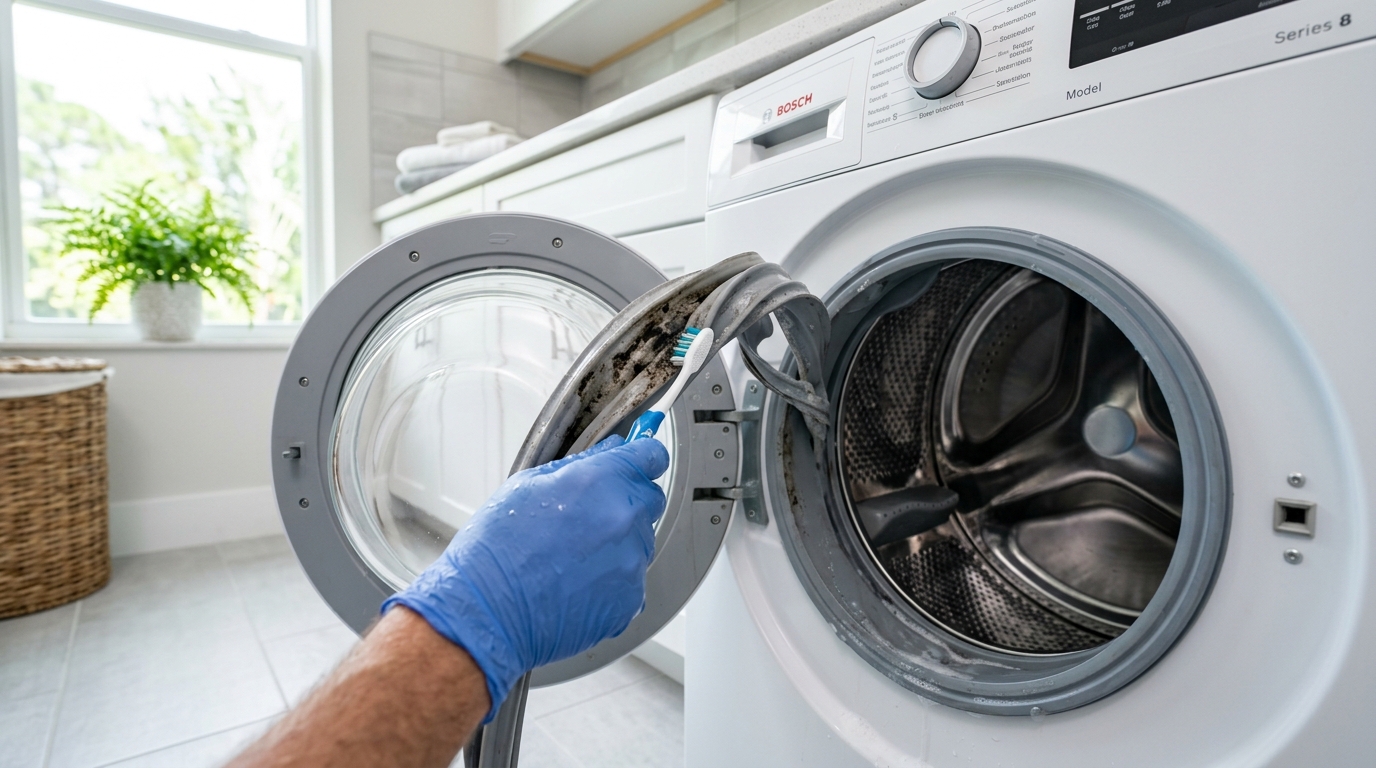
You open the washer door and get hit with that sour, damp-towel smell. Worse, your "clean" laundry comes out smelling like it sat in a gym bag. If that sounds familiar, the problem usually isn't your detergent. It's the machine. Knowing how to clean a front-load washing machine properly, gasket, drawer, filter and drum, fixes the smell in an afternoon, and a few small habits keep it from coming back.
We clean Florida homes every day, and laundry closets are one of the spots where we see moisture problems most often. In this guide you'll learn why front-loaders get musty, the exact cleaning steps in order, which cleaners are safe for your machine, and the routine that keeps things fresh even in humid weather.
Why Front-Load Washers Get Musty (Especially in Florida)
Front-loaders are efficient because they seal tightly and use very little water. That same tight seal is the problem. After every load, water pools in the folds of the rubber door gasket, in the detergent drawer and in the drain pump area. With the door shut, nothing dries.
Add leftover detergent and fabric softener, plus lint, hair and skin cells from your clothes, and you've got food for mildew and bacterial film. That slimy, gray-black layer is what you smell.
Climate makes it worse. According to the EPA, indoor humidity should ideally stay between 30% and 50%, and below 60% at most, to limit mold growth. Florida's air spends much of the year well above that range. Many of our customers' washers live in windowless hallway closets, garage utility rooms or tight condo laundry nooks with no exhaust fan, so the damp has nowhere to go. We cover the bigger picture in our guide to humidity and mold in Florida homes.
What You'll Need (and Why)
You don't need a cabinet full of products. Here's what we actually reach for:
- A washer cleaner your manual approves. That might be a brand tablet (Affresh, Tide, Clorox and others make them), an oxygen-based washer cleaner, or diluted chlorine bleach. More on choosing below.
- Dish soap and warm water in a spray bottle. A teaspoon of dish soap in a 16-ounce bottle cuts detergent scum on rubber without drying it out.
- An old soft toothbrush. It gets into gasket folds and drawer channels that a cloth can't reach.
- Three or four microfiber cloths. They grab gunk instead of smearing it, and they dry the gasket better than paper towels.
- A shallow baking pan and old towels. For catching water when you open the drain pump filter.
- Rubber gloves and a flashlight. You'll want to see deep into the gasket, and you won't want to touch what you find.
Set aside about two to three hours total. Most of that is the cleaning cycle running while you do something else. Hands-on time is roughly 45 minutes.
How to Clean a Front-Load Washing Machine, Step by Step
Order matters here. Clean the parts that shed gunk first, then run the cleaning cycle to flush everything out, then dry the machine.
Step 1: Check your manual (5 minutes)
Look up your model's cleaning section online if the paper manual is long gone. You're checking three things: whether you have a "Tub Clean" or "Clean Washer" cycle, which cleaners the manufacturer allows, and how often they recommend running it. Brands differ, and some warn against specific products.
Step 2: Scrub the door gasket (15 to 20 minutes)
This is where most of the smell lives. Put on gloves, grab the flashlight and pull back the rubber fold all the way around, especially at the bottom where water collects.
- Pick out anything loose: hair ties, coins, lint clumps, the occasional sock.
- Spray the inside of the fold with your dish soap solution.
- Scrub with the toothbrush, working in small sections. Pay attention to the drain holes at the bottom of the gasket, which clog with lint.
- Wipe each section with a damp microfiber cloth, rinse the cloth often, then dry with a clean one.
If you see black spots that don't budge, use the cleaner your manual approves for the gasket. Whirlpool has a helpful walkthrough on cleaning a front-load gasket. Don't use abrasive pads; scratches in the rubber give mildew a better grip.
Step 3: Clean the detergent drawer (15 minutes, plus soaking)
Most drawers pull out completely. Press the release tab (often marked "PUSH" in the softener compartment) and slide it free.
- Soak the drawer in hot water with a squirt of dish soap for about 15 minutes.
- Scrub the compartments and siphon caps with the toothbrush.
- While it soaks, shine the flashlight into the empty drawer cavity. The ceiling of that cavity often grows a crust of black mildew. Scrub it with the toothbrush and soapy cloth.
- Rinse, dry the drawer fully and slide it back.
Step 4: Empty the drain pump filter (10 to 15 minutes)
Many front-loaders have a small access door at the bottom front corner. Behind it is a filter that traps lint, hair and small objects. A clogged filter leaves dirty water sitting in the machine, and that stinks.
- Lay towels down and set the baking pan underneath.
- If there's a small drain hose next to the filter, pull it out, unplug it and let the water drain into the pan. Expect more water than you think; empty the pan as needed.
- Unscrew the filter counterclockwise, slowly.
- Rinse it under the tap and clear out debris from the opening.
- Screw it back in firmly and check for drips.
Not every model has a user-serviceable filter, so check your manual first.
Step 5: Run the cleaning cycle (1 to 2 hours, hands-off)
Now flush everything. According to LG's tub-cleaning instructions, you add an oxygen-based washing machine cleaner at the dose the cleaner's maker recommends, then run the Tub Clean cycle. Other brands follow the same basic pattern with their own cycle names.
- Make sure the drum is empty.
- Add the cleaner where your manual says, usually directly in the drum, sometimes in the detergent drawer.
- Select Tub Clean, Clean Washer or the hottest, longest cycle if you don't have a dedicated one.
- Let it finish completely. If the smell is strong, run it a second time.
Step 6: Wipe the glass and exterior (5 minutes)
Once the cycle ends, wipe the inside of the door glass, which collects a film of detergent and minerals, and wipe the buttons and top. If you have hard water, our tips on removing hard water stains work on cloudy washer glass too.
Step 7: Dry it out (5 minutes, then air)
Dry the gasket one more time with a microfiber cloth, leave the detergent drawer slightly open and leave the door ajar for several hours. This step is the one people skip, and it's the one that keeps the smell from returning in a week.
Bleach, Vinegar or a Tablet? Choosing a Safe Cleaner
Online advice is all over the place on this. Some people swear by vinegar, others by bleach. Our honest answer: your manual wins. Here's how the main options compare.
| Cleaner | Good for | Watch out for |
|---|---|---|
| Brand washer tablets | Monthly tub-clean cycles; easy dosing | Some manuals specify their own brand only |
| Oxygen-based washer cleaner | Breaking down residue and odor; named in LG's guidance | Follow the product's dose; too much can over-suds |
| Diluted chlorine bleach | Visible mildew, when your manual allows it | Never mix with other cleaners; can fade colored rubber; rinse well |
| White vinegar | Occasional use where approved | Many manufacturers advise against regular use because it may wear rubber seals |
One rule has no exceptions. The CDC warns never to mix bleach with ammonia or with acids like vinegar, because the combination releases toxic gases. That includes running a bleach cycle right after pouring vinegar in the drawer. If you switch products, run a plain rinse cycle in between.
We also tell customers to skip the viral "dishwasher pod in the washer" and baking soda paste hacks unless the manual mentions them. They can leave residue in places you can't reach.
Pro Tip: After every load, take 20 seconds to run a dry microfiber cloth around the bottom of the gasket, where water pools. Keep one cloth hanging on a hook beside the machine just for this and toss it in the wash weekly. In our experience, this one habit does more for the smell than any cleaning product.
A Routine That Keeps the Musty Smell Away
Cleaning fixes the smell. Habits keep it gone. Here's the schedule we recommend for Florida homes.
| How often | Task | Time |
|---|---|---|
| After every load | Move wet laundry out promptly; wipe gasket bottom; leave door and drawer ajar | 1 minute |
| Weekly | Quick wipe of gasket folds and door glass; check gasket drain holes | 5 minutes |
| Monthly | Run the cleaning cycle with an approved cleaner; rinse the detergent drawer | 10 minutes hands-on |
| Every 2 to 3 months | Full deep clean: Steps 1 to 7 above, including the drain filter | About 45 minutes hands-on |
Whirlpool's front-load washer care guide recommends running a cleaning cycle roughly once a month and leaving the door open between loads to let the drum dry. Intervals vary by brand and model, so treat monthly as a starting point.
Use less detergent than you think
Consumer Reports' advice on minimizing mold in washing machines includes using only HE detergent and not overdoing it. Front-loaders use so little water that extra soap never fully rinses out. It coats the drum and gasket, and that film is exactly what mildew feeds on. For most loads, the line marked "1" on the cap is plenty, and pods are already a full dose.
Go easy on fabric softener
Liquid softener is waxy and builds up in the drawer and drum fast. If you use it, use half the recommended amount, or try wool dryer balls instead.
Fix the room, not just the machine
A washer in a closed, humid closet will keep fighting you. A few changes we've seen work:
- Leave the laundry closet door open after a load, or swap a solid door for a louvered one if your HOA or landlord allows it.
- Run a small dehumidifier in garage utility rooms during the wettest months.
- Keep wet towels and swimsuits out of the closet; dry them in the dryer or outside first.
- Run the washer while you're home so you can empty it right away.
If you have kids or pets, a wide-open door is a safety risk. Leave it cracked a couple of inches instead, or use your machine's door stopper or child lock if it has one.
Common Mistakes That Make the Smell Worse
- Closing the door right after a load. It traps humid air in a dark drum. This is the number one cause of a returning smell.
- Leaving wet laundry in overnight. Clothes can go sour in a few hours in Florida heat, and they leave that smell behind in the drum.
- Using regular (non-HE) detergent. It makes too many suds for a front-loader and leaves heavy residue.
- Only cleaning the drum. Running a tub-clean cycle without scrubbing the gasket and drawer leaves the worst gunk in place.
- Washing only on cold. Cold water saves energy, but residue builds faster. Run a hot cycle with towels or sheets now and then, as long as the fabric care labels allow it.
- Mixing cleaners. Bleach plus vinegar, or bleach plus an ammonia-based product, is dangerous. Pick one and rinse between switches.
- Scrubbing the gasket with steel wool or harsh pads. Damaged rubber traps more grime and can start to leak.
When the Smell Won't Go Away
If you've done a full clean and two tub-clean cycles and the smell is still there, look a little further.
- Mildew stained deep into the gasket. If black spots remain after cleaning and the rubber feels sticky or cracked, the gasket may need replacing. That's a job for an appliance technician, and the price varies by model, so get a quote before deciding between repair and replacement.
- The drain, not the washer. A sewer-like smell can come from the standpipe or a dry floor drain behind the machine. Pour water into any floor drain and check that the drain hose isn't pushed too deep into the standpipe.
- Hidden leaks. A musty smell around, rather than inside, the washer can mean a slow leak under the machine. Pull it out and check the floor and wall.
Renters should report a persistent smell or leak to the landlord or property manager in writing. Who pays for appliance repairs usually depends on your lease. If you're seeing mold elsewhere in the home, our guide to removing mold and mildew in South Florida walks through what's safe to handle yourself.
Conclusion
Learning how to clean a front-load washing machine comes down to hitting the hidden spots: the gasket folds, the drawer cavity and the drain filter, then flushing it all with a cleaning cycle and letting the machine dry. Do the deep clean every couple of months, run the cleaning cycle monthly, wipe the gasket after loads and keep the door cracked. Your towels will smell like nothing at all, which is exactly how clean should smell.
A fresh washer is one piece of keeping a Florida home free of that musty, humid-weather smell. If you'd rather leave the rest of the house to the pros, our team handles kitchens, bathrooms and other moisture-prone spots during a deep cleaning. You can request a quote anytime, and a real person will get back to you, 7 days a week.
Frequently Asked Questions
How often should you clean a front-load washer?
Run your machine's cleaning cycle about once a month, which matches Whirlpool's general guidance, and do a full hands-on clean of the gasket, drawer and filter every two to three months. In humid homes or with heavy use, monthly hands-on cleaning may be needed. Always check your model's manual, since intervals vary.
Can I use vinegar to clean my front-load washer?
Only if your manual allows it. Many manufacturers advise against regular vinegar use because it may wear down rubber seals over time. An approved washer cleaner tablet or oxygen-based cleaner is the safer choice, and you should never use vinegar in the same cycle as bleach.
Why do my clothes smell musty after washing?
Usually it's residue and mildew inside the washer, especially in the door gasket, combined with too much detergent or leaving wet clothes in the drum too long. Clean the machine, cut back on detergent, use HE detergent and move laundry to the dryer promptly.
Should I leave my front-load washer door open?
Yes, leave it ajar between loads so the drum and gasket can dry. Whirlpool recommends this, and it's the simplest way to prevent the musty smell. If you have small children or pets, crack it just a couple of inches rather than leaving it wide open.
Can I use bleach and a washer cleaner tablet together?
No. Use one cleaner per cycle. Mixing products can cause dangerous chemical reactions, and the CDC warns specifically against combining bleach with ammonia or acids. If you want to try a different product, run an empty rinse cycle first.