You open the front door after a long weekend and it hits you: that damp, closed-up, old-towel smell. Candles cover it for an evening, but by morning it's back. If you've been asking yourself why your house smells musty, especially here in Florida, the answer is almost always moisture, and your air conditioner is usually part of the story.
We clean hundreds of Florida homes every month, from Miami high-rises to Panhandle beach houses. Musty odor is one of the most common complaints we hear, and it rarely comes from a dirty house. It comes from water that has nowhere to go.
In this guide you'll learn how to measure your indoor humidity for about the price of a pizza, which AC habits make the smell worse, where to hunt for the source room by room, and how to clean the odor out instead of masking it. We'll also cover when the problem is bigger than a cleaning job.
Why Does My House Smell Musty? It's Almost Always Moisture
That musty smell is the byproduct of mold and mildew growing on damp surfaces. Mold spores are everywhere, indoors and out, and they don't need much to get going: a damp surface, some organic material to feed on (dust, soap scum, drywall paper, fabric), and time.
Florida hands them the first ingredient for free. Our outdoor air is warm and heavy with water for much of the year, and every time a door opens, a shower runs or a pot boils, more moisture enters the house. If your home can't remove it fast enough, it settles into closets, carpets, grout and the inside of your AC system.
So the real question isn't "what smells?" It's "where is the water, and why isn't it leaving?" Fix that, and the cleaning actually sticks.
The usual suspects in Florida homes
- High indoor humidity from an AC that's off, undersized, oversized or set up poorly.
- The AC system itself: a clogged condensate drain, a wet drip pan or a dirty coil.
- Slow leaks under sinks, behind toilets, around the water heater or at window and slider tracks.
- Fabric that never dries: bath mats, shower curtains, rugs, towels left in the washer, clothes packed tight in closets.
- Closed-up homes: seasonal residents and rental owners who turn the AC off while they're away.
Step 1: Measure Your Indoor Humidity
Before you buy a single cleaning product, find out how wet your air actually is. This one number tells you whether you're dealing with a whole-house problem or a single hidden spot.
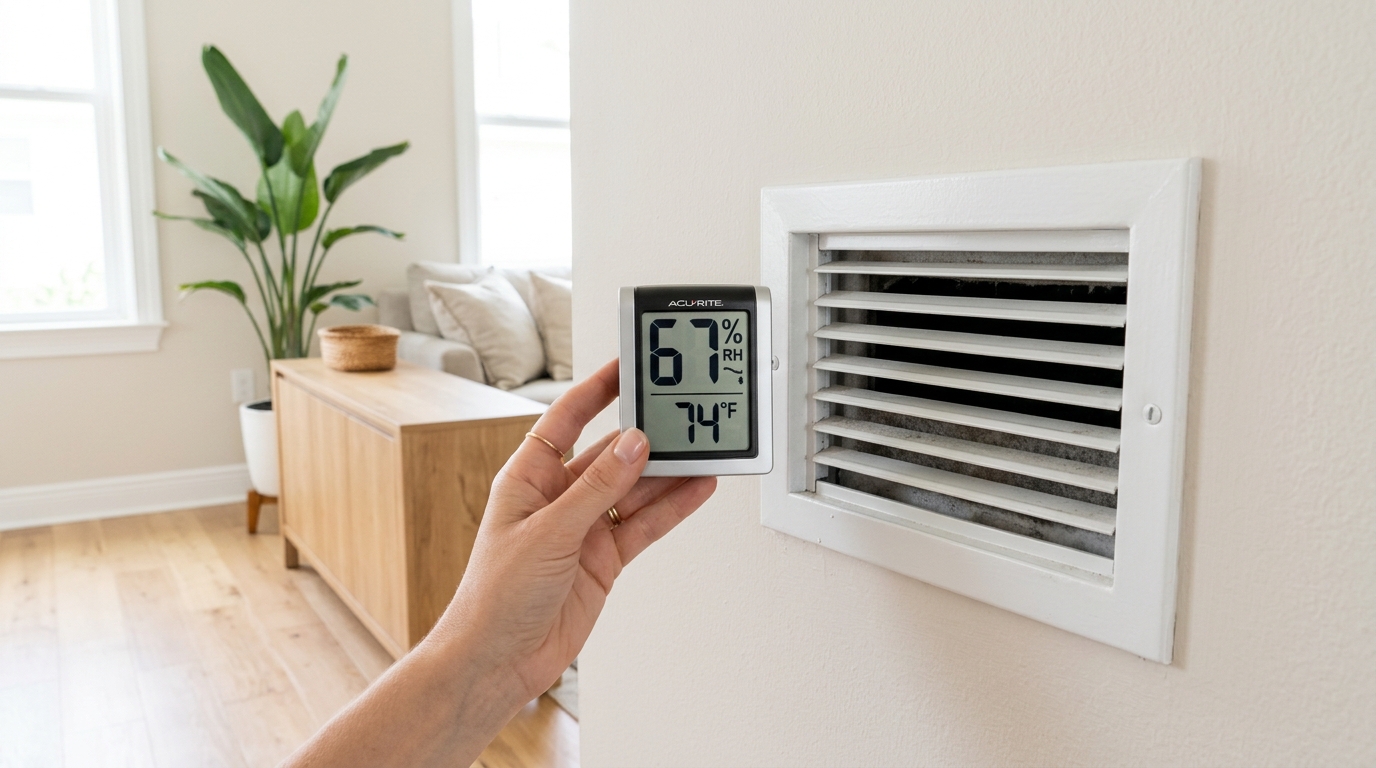
According to the EPA's guide to mold, moisture and your home, indoor relative humidity should be kept below 60%, and ideally between 30% and 50%. The EPA also notes that a humidity meter (a hygrometer) is a small, inexpensive instrument, typically $10 to $50, sold at many hardware stores.
How to test it properly
- Buy two cheap digital hygrometers if you can. One for the main living area, one for the room that smells worst (often a bedroom closet or the bathroom hallway).
- Let them settle for an hour before trusting the reading. Don't put them near a vent, window or the kitchen.
- Check at different times: morning, late afternoon, and after showers. Write the numbers down for three or four days.
- Compare against the EPA's 60% line. If your living area regularly reads above it, you have a whole-house humidity problem. If the house is fine but one room is high, you have a local source.
In our experience, homes that read in the mid-40s to low-50s rarely smell musty unless there's a leak. Homes that hover in the 60s almost always do, no matter how often they're cleaned.
How Your AC Causes (or Fixes) a Musty Smell
In Florida, your air conditioner is your main dehumidifier. As warm air passes over the cold coil, water condenses out and drains away. When that process breaks down, the AC can go from fixing the smell to spreading it through every vent.
Set the fan to "Auto," not "On"
This is the single most common setting we see in musty homes. With the fan set to "On," it keeps blowing after the compressor stops, which can re-evaporate water sitting on the coil and push it back into your rooms. HVAC technicians commonly recommend "Auto" for humid climates so the coil has a chance to drain between cycles.
Don't turn the AC off when you leave
Turning the system off for a weekend, a cruise or a summer up north is how we find closets full of mildewed shoes and couches with a damp funk. Set the thermostat a few degrees warmer than usual instead of off. If your thermostat has a dehumidify or "away" humidity setting, use it. Our snowbird home opening and closing checklist covers the rest of the shutdown routine.
Check the condensate drain line
That water pulled out of the air has to go somewhere, usually through a PVC drain line to the outside or a nearby drain. In Florida, these lines are prone to clogging with algae and sludge. When they back up, water sits in the drip pan, and a musty smell blows out whenever the system kicks on.
- Find the drain line near your indoor air handler. Many have a T-shaped access port with a cap.
- Look for standing water in the pan under the unit, or a float switch that has shut the system off.
- Many homeowners pour a cup of plain white vinegar into the access port every month or two to keep algae down. Check your system's manual or ask your HVAC tech first.
- If the pan is full or the line is fully clogged, call an HVAC company. A wet-dry vac on the outside end can clear minor clogs, but don't force anything.
Change the filter more often than the box says
A clogged filter reduces airflow across the coil, which can affect how well the system removes moisture, and a damp, dusty filter can smell on its own. In Florida homes with pets or nearby construction, we see filters that look exhausted well before the date on the package.
Ask about system sizing
If your humidity stays high even with a clean filter, a clear drain and the fan on Auto, the system itself may be the issue. An oversized unit cools the house quickly and shuts off before it has run long enough to pull much water out of the air. The room feels cold but clammy. That's a question for a licensed HVAC contractor, who can assess sizing and talk through options like a dehumidifier.
Step 2: Hunt Down the Source Room by Room
If one area smells worse than the rest, follow your nose and your hygrometer. Here's where our cleaners find the source most often, in roughly this order.
Bathrooms
- Grout lines and caulk along the tub and shower floor
- The bottom hem of the shower curtain and liner
- Bath mats with rubber backing (they trap water against the floor)
- Under the sink, especially around the P-trap and supply lines
- The exhaust fan grille, which collects damp dust
Kitchen
- The cabinet under the sink: check for soft particleboard or water stains
- The dishwasher door gasket and filter
- The drip tray under the refrigerator, if yours has one
- Sponges and dish rags left wet in the sink
Laundry area
- Front-load washer door seals, which hold water in the folds
- Wet clothes left sitting in the drum overnight
- Dryer vents that are blocked, venting moist air back into the room
Bedrooms and closets
- Closets on exterior walls, packed tight with no air movement
- Leather goods, shoes and luggage stored on the floor
- Carpet near sliding doors, where condensation and rain collect
- Window and slider tracks holding standing water and debris
The AC closet
Open the door to the air handler and take a sniff. If the smell is strongest here, go back to the drain line and drip pan before you do anything else.
Step 3: Clean the Musty Smell Out (Not Over)
Air fresheners, plug-ins and scented candles add a second smell on top of the first. The goal is to remove what's producing the odor and dry everything thoroughly. Here is the order we follow.
- Dry first. Run the AC, close windows on humid days, and use fans or a portable dehumidifier in the problem room for 24 hours before you start.
- Strip and launder fabrics. Shower curtain liners, bath mats, throw blankets and any towels with a sour smell. Wash in the hottest water the label allows, add a cup of white vinegar to the rinse, and dry completely. Don't fold anything that's even slightly damp.
- Vacuum before you wipe. Use a vacuum with a HEPA filter on carpets, rugs, upholstery, closet floors and vent grilles. Dust feeds mildew, and vacuuming first means you aren't turning it into mud.
- Scrub hard surfaces with detergent and water. A squirt of dish soap in warm water handles most mildew film on tile, sills, cabinet interiors and baseboards. Use a soft brush for grout. Rinse and dry with a microfiber cloth.
- Use white vinegar for lingering odor. Wipe cabinet interiors, washer gaskets and window tracks with undiluted white vinegar, then let them air dry. The vinegar smell fades within a few hours. Never mix vinegar with bleach.
- Deodorize soft surfaces with baking soda. Sprinkle it on carpets and mattresses, leave it for several hours or overnight, then vacuum thoroughly.
- Clean the washer. Wipe the door seal, pull out and wash the detergent drawer, and run an empty hot cycle. Leave the door cracked open afterward.
- Re-check humidity in a week. If the reading drops and the smell doesn't come back, you've found it. If it returns, the moisture source is still active.
For grout, caulk and visible spots, our guide to removing mold and mildew in South Florida homes walks through each surface in more detail.
Pro Tip: Put your hygrometer inside the smelliest closet for a full day with the door closed. Closets often read noticeably higher than the room outside, especially on exterior walls. If yours does, pull everything off the floor, leave the door open a few inches, and drop a moisture-absorbing container (the calcium chloride kind sold at hardware stores) on a high shelf. Empty it when it fills.
When It's More Than a Cleaning Job
We're a house-cleaning company, and we want to be clear about where cleaning stops. Surface mildew on tile, sills and fabrics is a cleaning problem. Mold growing inside walls, under flooring or throughout your ductwork is not.
Call a qualified professional if you notice any of these:
- A smell that persists even after deep cleaning and humidity under control
- Soft, stained or bubbling drywall or ceiling spots
- Visible growth that keeps coming back in the same place, or covers a large area
- Water damage from a leak, roof problem or storm that wasn't fully dried out
- Mold you can see inside air vents or the air handler
For AC problems, start with a licensed HVAC contractor. For hidden or widespread mold, look for a mold assessor or remediation company and ask to see their Florida license before work begins. If anyone in the home has asthma, allergies or a weakened immune system and you're worried about symptoms, talk to a doctor.
Common Mistakes That Keep the Smell Coming Back
- Masking instead of drying. Fragrance doesn't stop growth. Once the plug-in runs out, the smell is still there, often stronger.
- Leaving the fan on "On" all day. It feels like better air circulation, but it can send moisture right back into the house.
- Shutting the AC off to save money while away. The power bill drops; the cleanup bill climbs.
- Reaching for bleach first. Bleach can lighten stains on hard surfaces, but it doesn't fix the moisture that caused them, and it's harsh on grout, fabrics and lungs. Detergent, water and thorough drying handle most household mildew.
- Scrubbing without drying. A wet mop over a damp floor in a humid house just spreads the problem. Dry every surface with microfiber after cleaning.
- Ignoring the drain line. It's out of sight in a closet, so it's easy to forget until water hits the floor.
- Closing interior doors in rooms you don't use. Guest rooms with the door shut and the vent half-closed are a favorite spot for that closed-up smell.
Keeping Your Florida Home Fresh Long-Term
Once the smell is gone, a few habits keep it from returning:
- Check your hygrometer weekly and keep readings below the EPA's 60% threshold.
- Run the bathroom exhaust fan during showers and for 20 to 30 minutes after.
- Hang towels and bath mats spread out, never bunched on a hook.
- Leave the washer door and detergent drawer open between loads.
- Treat or flush the AC drain line on a regular schedule and change filters often.
- Keep closets organized with space between clothes and nothing stored on damp floors.
For more day-to-day habits, see our guide to keeping a home clean in a humid climate.
The Bottom Line
If you've been wondering why your house smells musty, the fix in Florida starts with a cheap hygrometer and an honest look at your AC. Get indoor humidity below 60%, clear the drain line, set the fan to Auto, then clean and dry the spots where mildew has settled. Most homes stop smelling within a week or two once the moisture is under control.
If you'd rather leave the scrubbing to the pros, our team can handle it. A deep cleaning covers the grout, baseboards, cabinet interiors, window tracks and other spots where musty odors hide. Our cleaners have at least two years of experience cleaning homes, and a real person answers the phone 7 days a week. Deep cleans start at $312 for apartments under 700 square feet, with larger homes priced higher. You can get a quote for your home whenever you're ready.
Frequently Asked Questions
Does a musty smell always mean mold?
Usually it means mold or mildew is growing somewhere, but it may be small and on the surface, like a damp bath mat or a washer gasket. The smell tells you there's moisture to deal with. It doesn't tell you how big the problem is, so check your humidity and look for leaks before assuming the worst.
Why does my AC smell musty when it turns on?
The most common reasons are a clogged condensate drain, standing water in the drip pan, a dirty filter, or growth on the coil. Check the drain line and filter first. If the smell continues, have a licensed HVAC technician inspect and clean the coil and pan.
What humidity should my house be in Florida?
The EPA recommends keeping indoor relative humidity below 60%, ideally between 30% and 50%. In Florida, staying under 60% is the practical goal. A $10 to $50 hygrometer from a hardware store will tell you where you stand.
Will a dehumidifier get rid of a musty smell?
It helps by drying the air, which slows new growth. But it won't remove mildew that's already on surfaces or fabrics, so you still need to clean. If your AC is working properly, a portable unit in one problem room is often enough; whole-house humidity issues are worth discussing with an HVAC contractor.
Can a musty smell make you sick?
Some people, particularly those with allergies or asthma, may react to mold, while others notice nothing beyond the odor. Health effects vary widely and are often overstated online. If you or a family member has symptoms you think are related, talk to a doctor, and focus on fixing the moisture source either way.