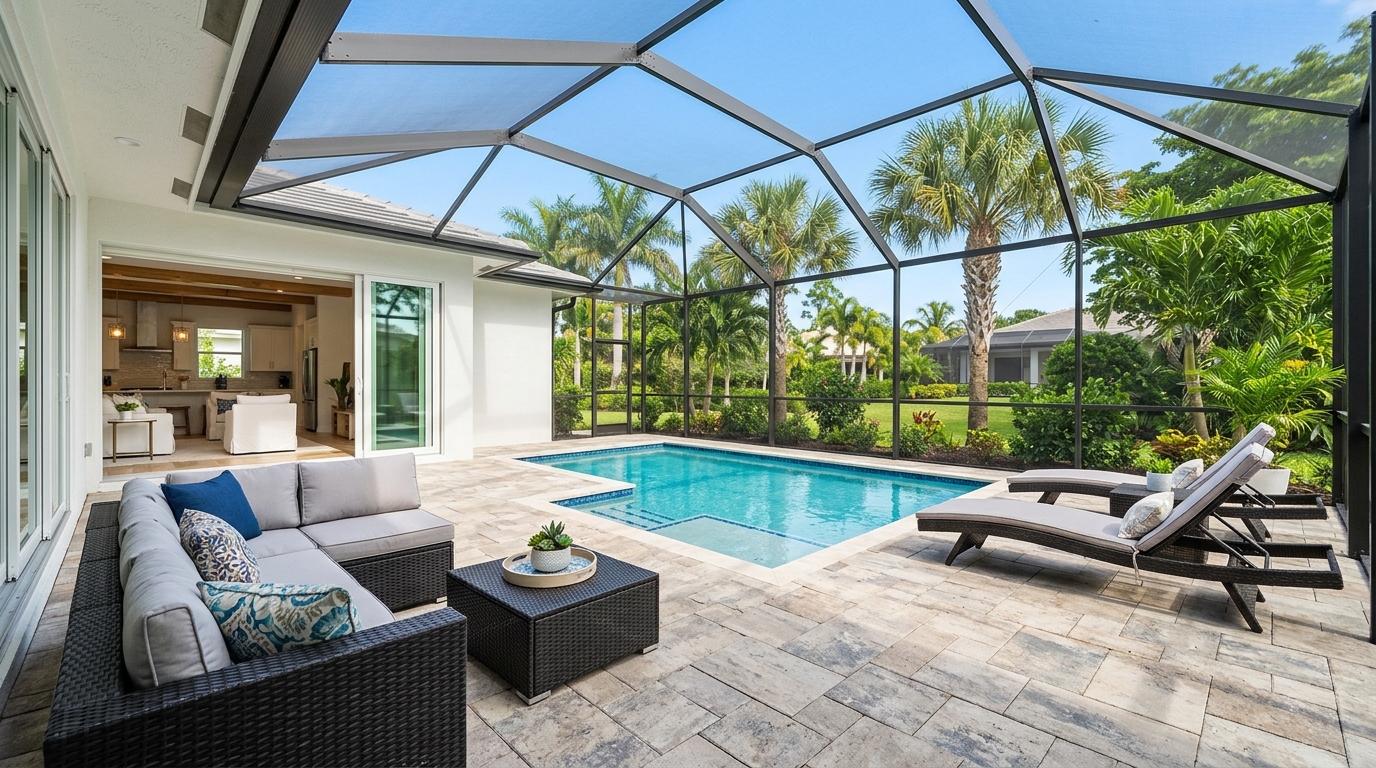
Step onto your lanai after a summer of afternoon storms and you'll probably notice it: a green film in the paver joints, screens that look grey instead of black, and furniture cushions with dark speckles. Lanai and patio cleaning in South Florida is a different job from the one you'd do in Ohio. The humidity never lets up, the rain splashes dirt onto everything, and if you have a saltwater pool, the splash zone grows its own white crust.
October is a good time to fix it. The rainy season is winding down, the drier months are when most of us actually use our outdoor space, and a clean lanai stays clean longer once the daily downpours stop. In this guide you'll learn how to clean screen enclosures, pavers, concrete and travertine, how to care for a saltwater pool deck, what to do with furniture and fans, and what pressure-cleaning companies charge if you'd rather hire it out.
Why South Florida Lanais Get Dirty So Fast
Outdoor grime here comes from four directions at once. Humidity and warm nights feed mildew and algae on any surface that stays damp. Rain bounces soil and leaf debris off the ground and onto the bottom of screens and walls. Pollen and dust from landscaping settle into every corner.
Then there are the seasonal extras. Lovebug flights in late spring and again in late summer and early fall leave residue on screens and frames (we cover that mess in our lovebug season cleanup guide). Coastal homes also get a fine layer of salt from the air, and saltwater pools add their own salt every time someone cannonballs in.
None of this is a sign you're doing anything wrong. It's just the climate. The goal is a routine that removes growth before it stains, plus one or two deeper cleans a year.
Lanai and Patio Cleaning in South Florida: Tools and Products
You don't need a garage full of equipment. Here's what we'd actually keep on hand, and why each item earns its spot.
- Soft-bristle brush on an extension pole. This is the single most useful tool for screens and walls. Soft bristles lift dirt without stretching or tearing mesh.
- Stiff deck brush. For pavers and concrete, where you need scrubbing power in the texture and joints.
- Garden hose with an adjustable nozzle. A shower or fan setting rinses screens safely. Most of your rinsing should happen here, not with a pressure washer.
- Oxygen bleach (sodium percarbonate powder). It breaks down organic stains and mildew and is gentler on plants and surrounding landscaping than chlorine bleach. Mix it with warm water following the label; it works best fresh, so only mix what you'll use within a few hours.
- Plain dish soap. A few squirts in a bucket of water handles most furniture frames, glass tabletops and aluminum screen frames.
- Household chlorine bleach, used sparingly. For stubborn black mildew on concrete or stucco, diluted bleach works fast. Follow the label dilution, pre-wet nearby plants, and rinse thoroughly.
- Microfiber cloths and an old toothbrush. For fan blades, door tracks and corners.
- Pump sprayer. Lets you apply cleaner evenly across a deck or screen panel without wasting product.
One safety rule matters more than any product choice: never mix chlorine bleach with ammonia-based cleaners or with acids like vinegar. Both combinations release toxic gas, and a screened lanai doesn't ventilate as well as you'd think.
If you want to go deeper on mildew chemistry and which products work on which surfaces, our guide on removing mold and mildew in South Florida covers the indoor and outdoor side in more detail.
How to Clean a Screen Enclosure (Pool Cage)
Screens are where most people go wrong, usually by blasting them with a pressure washer. Mesh is thin, and the spline that holds it in the frame can pop loose. Gentle and thorough beats fast and forceful here.
Step by step
- Pick your weather. Aim for a cloudy morning or late afternoon. In direct midday sun, cleaning solution dries on the mesh before you can rinse it, leaving streaks.
- Clear the floor. Move furniture, plants and grills toward the center or out of the enclosure entirely. Cover anything you can't move.
- Dry brush first. Run the soft brush over each panel, top to bottom, to knock off cobwebs, leaves and loose bugs. This keeps you from turning dust into mud.
- Rinse from the outside in. Hose the screens from outside the cage on a fan setting, so debris pushes inward onto a floor you're about to clean anyway.
- Apply cleaner. Fill a pump sprayer with mild soap and water, or oxygen bleach solution for mildewed panels. Work in sections of a few panels at a time.
- Scrub gently. Use the soft brush in light vertical strokes. Pay extra attention to the bottom panels and kick plates, where rain splash concentrates.
- Rinse top to bottom. Rinse each section before the solution dries. Then rinse the frames separately.
- Wipe the frames. Aluminum frames collect a chalky film and bug residue. A cloth with soapy water, then a clean rinse, is usually enough. Skip abrasive pads, which can scratch the finish.
For a typical single-story pool cage, budget a full morning for the first deep clean. After that, a twice-yearly wash plus occasional rinses keeps it manageable.
Pro Tip: Clean the screens before the floor, never after. Everything you wash off the mesh lands on the deck, so if you scrub the pavers first, you'll be doing them twice. Top to bottom, outside to inside, screens then floor, and you only handle each surface once.
How to Clean Pavers, Concrete, Travertine and a Saltwater Pool Deck
Your deck surface decides your method. What's perfect for brushed concrete can damage travertine, and what's gentle enough for travertine won't touch old mildew on concrete.
Pavers
Pavers handle scrubbing well, but the sand between them doesn't handle high pressure. Sweep first, wet the area, apply oxygen bleach solution and let it sit for 10 to 15 minutes without drying. Scrub with a stiff deck brush, paying attention to the joints where algae grows, then rinse.
If you use a pressure washer, choose the widest fan tip, keep the wand well back from the surface, and never aim directly down into the joints. Blowing out joint sand loosens pavers and invites weeds and ants. If you've lost sand, re-sanding (polymeric sand is the common choice) is a weekend job worth doing once the deck is fully dry.
Concrete and textured coatings
Plain or broom-finished concrete is the most forgiving surface. Oxygen bleach handles most staining. For black mildew that won't budge, a diluted chlorine bleach solution applied with a pump sprayer, left for a few minutes, scrubbed and rinsed well, usually clears it. Many older South Florida pool decks have a spray-textured acrylic coating (often called cool deck or knockdown finish); treat that gently, since high pressure can strip or chip it.
Travertine and other natural stone
Travertine is popular around South Florida pools because it stays relatively cool underfoot. It's also calcium-based, which means acids etch it. Skip vinegar, lemon-based cleaners and anything labeled as a rust or lime remover unless it's specifically rated for natural stone. Use a pH-neutral stone cleaner or mild soap, a soft-to-medium brush, and a gentle rinse. If the stone is sealed, harsh cleaners can also wear down the sealer faster.
The saltwater pool splash zone
Saltwater pools are easier on skin and eyes for many families, but the water still contains dissolved salt. When it splashes onto the deck and evaporates, salt is left behind. Over time you may see a white crust near the coping, on step edges, or along the bottom of screen frames closest to the water.
The fix is simple and cheap: a fresh-water rinse. In our experience, hosing the first few feet of deck around the pool and the nearby frame bottoms after heavy use (a pool party, a weekend of kids) prevents most buildup. Once a month, scrub the splash zone with plain water and a brush. If you have natural stone or a sealed surface and you're seeing flaking or pitting, talk to your pool builder or stone installer about sealing; that's a specialist call, not a cleaning one.
Homes near the beach deal with airborne salt on top of pool salt. Our cleaning tips for coastal homes cover how that salt film affects windows, sliding doors and outdoor fixtures.
Furniture, Cushions, Fans and the Sliding Door Between
A spotless deck with mildewed cushions still looks dirty. These are the details that make a lanai feel finished.
Furniture frames
- Aluminum and powder-coated metal: Dish soap and water, a soft cloth, rinse and dry. Car wax on frames after cleaning helps water and pollen slide off, if you want to go the extra step.
- Resin and plastic: Soapy water for routine cleaning, oxygen bleach solution for grey staining. Avoid abrasive powders that dull the finish.
- Teak and other wood: Mild soap and a soft brush, scrubbing with the grain. Let it dry fully in the shade before covering.
- Wicker and woven resin: A soft brush and the vacuum's brush attachment get debris out of the weave before washing.
Cushions
Check the care tag first. If the covers zip off and the tag allows it, machine-wash them on a gentle cycle. For cushions that can't be stripped, spray with oxygen bleach solution, let it work for 15 minutes, scrub with a soft brush, and rinse until the water runs clear. Dry them standing on their edges in the sun so water drains out instead of pooling inside the foam. Putting a damp cushion back on a chair is the fastest way to grow fresh mildew.
Ceiling fans and light fixtures
Outdoor fans gather a sticky mix of dust, pollen and humidity that indoor fans never see. Turn off the fan at the switch, then wipe each blade with a damp microfiber cloth, using a pillowcase slipped over the blade to catch debris. Wipe light fixtures and remove any bug buildup from inside the glass.
The sliding glass door
The door between your lanai and your living room collects everything you just cleaned off the outside. Vacuum the track with a crevice tool, scrub the corners with an old toothbrush and a little soapy water, then wipe dry. Clean the glass on both sides at the same time so you can tell which side a streak is on.
What It Costs to Hire Out Lanai and Patio Cleaning
If you'd rather pay someone with the right equipment, here's what published pricing looks like. Most figures come from company websites, so treat them as ballparks rather than independent surveys.
| Source | Area | Published price |
|---|---|---|
| Atom Pressure Cleaning (vendor) | Miami-Dade and Broward | About $150–$400 for most single-family lanais; front porch about $100–$250; condo balcony about $100–$300 |
| Premier Pro Wash & Seal (vendor) | Tampa Bay | Full pool-cage cleaning listed from $240 (the page also shows $290 as a starting price) |
| HomeAdvisor (2025 data) | National | $0.10–$0.50 per sq ft, or about $50–$100 per hour |
| Homewyse (January 2026) | National | $0.42–$0.52 per sq ft |
| Angi (2026 data) | Tampa | $0.10–$0.50 per sq ft |
| Angi (2026 data) | Orlando | $0.08–$0.39 per sq ft |
A few things stand out. According to Atom Pressure Cleaning, the biggest variables on a Miami-Dade or Broward lanai are square footage and whether screens are included, so always ask that question when comparing quotes. HomeAdvisor notes that flat surfaces like patios and driveways usually land at the cheaper end of its range. And the national per-foot sources don't agree with each other, which is why a local quote beats any calculator.
The same Miami-Dade vendor makes a practical point about bundling: adding the pool deck, patio, driveway and a house soft wash to one visit avoids paying for multiple trips, and porch cleaning is noticeably cheaper as an add-on than as a standalone job. If you're getting the lanai done, it's worth pricing the driveway at the same time.
When you hire, ask three questions: Are the screens included? What cleaning solution do you use, and how do you protect my plants and pool? Can you show proof of license and insurance? Also ask whether your city or HOA has rules about wash water running toward storm drains; requirements vary by city and county, and a good contractor should know the local ones.
Common Lanai and Patio Cleaning Mistakes
We see the same handful of errors over and over. Avoid these and you'll save yourself repairs.
- Pressure washing screens up close. It stretches mesh, tears weak panels and pops the spline. Brush and hose instead.
- Blasting paver joints. Losing joint sand leads to shifting pavers and weeds. Keep the wand angled and back.
- Using vinegar on travertine or marble. Acid etches calcium-based stone. Use pH-neutral cleaners.
- Mixing cleaners. Bleach plus ammonia or acid creates toxic fumes. One product at a time, rinse between.
- Letting solution dry in the sun. It streaks screens and glass and can leave residue on decks. Work in sections and in shade or cloud cover.
- Forgetting the plants. Pre-wet landscaping before using any bleach product and rinse it again afterward.
- Letting bleach runoff reach the pool. It throws off your water chemistry. Direct rinse water away from the pool and toward the lawn edge or a drain your HOA allows.
- Putting cushions back damp. They'll mildew within days in this humidity.
- Waiting for a big annual clean. Light, regular maintenance is far easier than scrubbing a year of growth off once.
A Simple Year-Round Routine
Here's the rhythm we'd suggest for most South Florida lanais. Adjust for shade, tree cover and how close you are to the water.
- Weekly: Sweep or blow off the deck, and rinse the saltwater splash zone after heavy pool use.
- Monthly: Wipe furniture frames and tabletops, scrub the splash zone, vacuum door tracks, dust the fan.
- Twice a year (spring and fall): Full screen wash, deck scrub with oxygen bleach, cushion deep-clean.
- After storms: Clear debris quickly so wet leaves don't stain pavers. Our hurricane season cleanup guide covers the bigger post-storm jobs.
Bringing It All Together
Good lanai and patio cleaning in South Florida comes down to working with the climate instead of fighting it: gentle methods on screens, the right cleaner for your deck surface, regular fresh-water rinses around a saltwater pool, and furniture that dries completely before it goes back in place. Do the twice-yearly deep clean in October and again in spring, and the weekly upkeep takes minutes.
Outdoor pressure cleaning is a specialist's job, and we're a house-cleaning company, so we'd point you to a pressure-cleaning pro for the cage and deck. But the inside of your home takes a beating from lanai season too: tracked-in grit, sandy floors, smudged glass and dusty fans. If you'd rather leave that side to the pros, our cleaners have at least two years of experience cleaning homes, and you get the same cleaner every visit. A deep cleaning after the outdoor crew leaves is a nice way to reset the whole house. We serve homes across Miami-Dade County, Broward and Palm Beach, and you can get a quote here whenever it suits you.
Frequently Asked Questions
How often should I clean my lanai in South Florida?
Sweep weekly and do a full wash of screens, deck and furniture about twice a year. Shady lanais, homes near the water and enclosures around saltwater pools may need it more often, since mildew and salt build up faster in those conditions.
Can I pressure wash my pool screen enclosure?
We don't recommend pressure washing screen mesh at close range. It can stretch or tear the screen and loosen the spline. A soft-bristle brush on a pole, mild soap or oxygen bleach, and a garden hose rinse clean screens safely. Frames can take a bit more scrubbing.
How much does lanai cleaning cost in Miami-Dade and Broward?
One Miami-Dade pressure-cleaning company, Atom Pressure Cleaning, says most single-family lanai jobs run about $150 to $400, depending on size and whether screens are included. National per-square-foot figures from HomeAdvisor run $0.10 to $0.50. Always get a local quote that spells out what's included.
Does a saltwater pool damage pavers or travertine?
Salt left behind when pool water evaporates can build up as white residue on decks, coping and frame bottoms. The easiest prevention is rinsing the splash zone with fresh water after heavy use and scrubbing it monthly. If you see flaking or pitting on stone, ask your pool builder or stone installer about sealing.
What is the best cleaner for mildew on a pool deck?
Oxygen bleach (sodium percarbonate) mixed with warm water is a good first choice because it's gentler on plants and surfaces. For stubborn black mildew on concrete, diluted chlorine bleach works, but pre-wet your plants, keep runoff out of the pool, and never mix it with ammonia or vinegar.