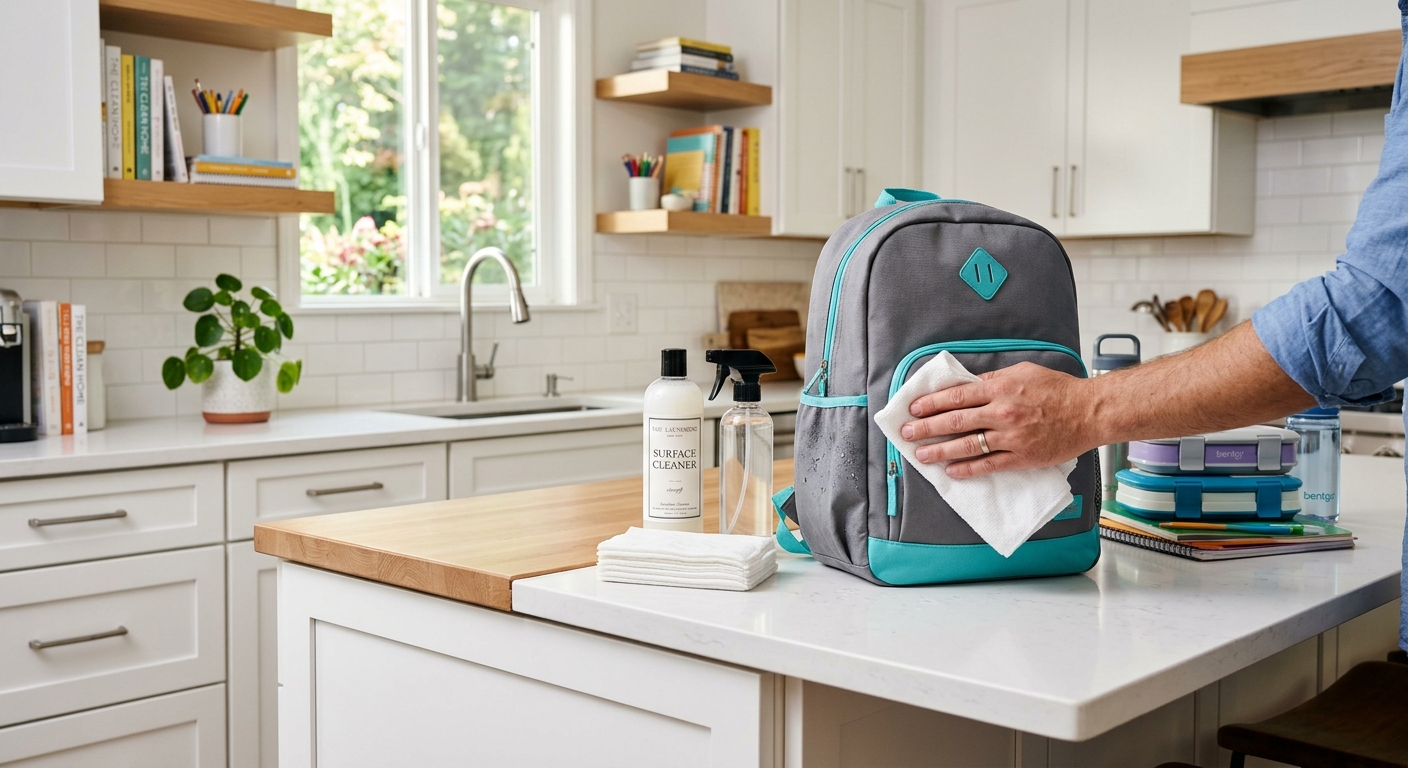
If your house looks like summer just exploded in it, backpacks dumped in the entryway, sunscreen bottles on every counter, sand somehow still in the couch cushions, you are exactly who this guide is for. A proper back to school cleaning reset home routine is not about scrubbing every surface until it sparkles for Instagram. It is about getting ahead of the germs, clutter, and chaos that come rushing back the moment school buses start running again.
Our teams at Catalina Cleaning have reset hundreds of homes across Miami-Dade, Broward, and Palm Beach counties every August, and we see the same patterns year after year: overloaded backpacks, forgotten lunch containers, and bathrooms that need way more than a quick wipe-down. In this guide, we will walk through exactly where to focus, what products actually work, and the mistakes we see even the most organized parents make.
What You Will Learn in This Back-to-School Cleaning Reset
By the end of this article, you will know how to tackle the five zones that matter most before school starts: backpacks and lunchboxes, bedrooms and closets, bathrooms, kitchens, and shared living spaces. We will also cover the difference between cleaning and disinfecting (most people get this backwards), plus a few professional shortcuts that will save you an entire weekend.
Why a Back-to-School Cleaning Reset Actually Matters
It is tempting to write this off as parental paranoia, but the data backs it up. A widely cited Clorox brand study found that clothes kids wore to school came back 28 times germier than the average toilet seat, and backpacks tested at a staggering 31 times germier than the average cell phone. Hard surfaces like counters, remotes, and fridge handles were not much better, coming in around 26 times germier than a bathroom doorknob.
Separate research from Lysol Pro Solutions found that a single backpack can pick up hundreds of thousands of germs in a single day, accumulating nearly as much bacteria from a classroom desk as it would from a public restroom floor. That is not a typo. Your kid's backpack strap has likely touched more bacteria today than your bathroom sink.
There is a bigger health story here too. A University of Utah School of Medicine study found that families with school-age kids experience viral infections for roughly 87 percent of the year. Households without kids average just 3 to 4 weeks of illness annually; add one school-age child and that jumps to 18 weeks, add a second and it climbs to 29 weeks. A back to school cleaning reset will not eliminate that entirely, but it dramatically reduces the germ load circulating through high-touch areas of your home.
The Backpack and Lunchbox Reset (Do This First)
After cleaning hundreds of family homes, we have learned that backpacks and lunchboxes are almost always the most neglected items in the house, and also the germiest. University of Arizona researchers found that shoes alone carry over 421,000 types of bacteria, including E. coli, and a University of Houston study found that 26.4 percent of shoes carry clostridium difficile. Backpacks that get tossed on the floor next to shoes pick up plenty of that.
Backpacks
- Empty the backpack completely every afternoon and shake out crumbs, dirt, and paper debris.
- Wipe the inside and outside weekly with disinfectant wipes or a cloth dampened with mild soap and water, focusing on handles, straps, and zipper pulls where hands make the most contact.
- Hand wash or launder the entire backpack once a week if the fabric allows it, and air dry away from direct sunlight or heat, which breaks down the material and elastic over time.
Pro Tip: Turn the backpack inside out before washing and use a soft-bristle brush with a drop of dish soap on the bottom seams. That is where crushed granola bars and juice box leaks hide, and it is the number one spot we find mold starting to form in kids' bags.
Lunchboxes
Hard plastic lunchboxes can go through the dishwasher daily. Soft-sided lunch bags need to be hand cleaned every single day, not just when they start to smell. This matters more than most parents realize: a University of Texas at Austin study found that children under four develop 4.5 times as many foodborne infections as adults aged 20 to 49. Part of the reason is that insulated lunch bags and ice packs do not reliably keep food out of the "danger zone" between roughly 39 and 140 degrees Fahrenheit, the temperature range where bacteria multiply fastest.
Pro Tip: A tablespoon of baking soda left in a closed, empty lunchbox overnight neutralizes lingering food odors far better than spraying air freshener into the bag, which often just masks the smell temporarily.
Bedrooms and Closets: The Summer-to-School Swap
Before you touch a single sock drawer, strip every bed completely, sheets, pillowcases, mattress protector, and any stuffed animals that have been living in the bed all summer. Wash on the hottest setting the fabric allows.
- Vacuum the mattress itself using the upholstery attachment, paying attention to seams where dust mites and dead skin accumulate.
- Sort through the closet and pull anything that no longer fits, this is also the fastest way to reduce morning meltdowns over "nothing to wear."
- Wipe down dressers, nightstands, and light switches with a disinfecting wipe. These get touched constantly and are almost never cleaned during a normal weekly routine.
- Vacuum under the bed. We consistently find this is the most skipped spot in kids' rooms, and it is where dust and allergens build up the fastest.
If bedrooms have gotten away from you over the summer, a deep cleaning service before the first day of school can reset the whole space in a few hours instead of a few weekends.
Kitchens and Bathrooms: Where Cleaning and Disinfecting Actually Differ
This is the section where most homeowners get it wrong, so let's slow down. According to CDC guidance, cleaning alone with soap and water removes most germs from everyday surfaces. Disinfecting is a separate step that is only necessary when someone in the house has been sick or a sick visitor has recently been in your home. You do not need to disinfect your entire kitchen every single day, and doing so unnecessarily can actually trigger asthma symptoms in sensitive household members from repeated chemical exposure.
The correct sequence matters too: clean the surface with soap and water first, then disinfect if needed. Dirt and food residue left behind can physically block disinfectants from reaching the surface, which means you could be spraying disinfectant onto a surface that is still too dirty for it to actually work.
Our Product Recommendations
- Bar Keepers Friend for stainless steel sinks and lunchbox thermoses with stuck-on stains. We prefer it over generic abrasive cleaners because its oxalic acid formula lifts mineral deposits and food stains without scratching stainless surfaces the way harsher powders can.
- A CDC-standard diluted bleach solution (five tablespoons of bleach per gallon of water) for cutting boards and lunchbox surfaces after raw meat prep. Never mix bleach with ammonia-based cleaners or any other household cleaner, the combination produces toxic fumes.
Pro Tip: Run your dishwasher's hottest cycle empty once with a cup of white vinegar before back-to-school season starts. Summer means more popsicles, more sticky cups, and more buildup in the filter than you would expect, and a clean dishwasher gets dishes and lunch containers genuinely sanitized instead of just rinsed.
Shared Living Spaces: The Overlooked Germ Hotspots
The Clorox study we mentioned earlier also found that the average couch carries as much bacteria as a dog's tennis ball, roughly twice as germy as your fridge door handle. Add in remote controls, gaming controllers, and light switches, and your living room is quietly one of the germiest rooms in the house by the time school starts.
- Vacuum upholstery with a fabric attachment weekly, focusing on cushion seams and armrests.
- Wipe remotes and game controllers with disinfecting wipes at least twice a week during the school year, they get passed between siblings and friends constantly.
- Launder any throw blankets used during summer movie nights before the first day back.
What Most Homeowners Get Wrong About Back-to-School Cleaning
The biggest mistake we see is treating this as a single weekend deep clean instead of a reset that establishes new habits. Families spend an entire Saturday scrubbing the house, then fall right back into the same clutter patterns two weeks into the school year because no new system was put in place.
The second mistake is over-disinfecting. As the CDC's own science brief notes, the risk of getting sick from touching a contaminated surface is actually considered low in most everyday situations. Constant disinfecting of every surface is not just unnecessary, it wastes money on wipes and sprays and can irritate airways, especially in kids with asthma. Clean regularly with soap and water; disinfect strategically when someone is actually sick.
The third mistake is ignoring backpacks and shoes entirely while obsessing over the kitchen. As the research above shows, those two items are frequently the germiest objects entering your home every single day, yet they rarely make it onto anyone's cleaning checklist.
Frequently Asked Questions
How often should I actually clean my kid's backpack?
Wipe down the outside weekly and empty it out daily. If it's machine or hand washable, a full wash once a week during the school year keeps bacteria levels down without wearing out the fabric.
Do I need to disinfect everything before school starts?
No. CDC guidance is clear that regular cleaning with soap and water handles most everyday germs. Disinfecting is really only necessary if someone in the home has recently been sick.
What is the single best place to start a back-to-school cleaning reset?
Start with backpacks, lunchboxes, and bedding. These are the items most directly tied to school exposure and also the ones most commonly skipped during a normal cleaning routine.
How long does a full back-to-school home reset take?
For an average home, expect 3 to 5 hours if you're tackling bedrooms, bathrooms, kitchen, and living areas yourself. A professional deep cleaning visit typically compresses that into 2 to 3 hours with a full team.
Ready for Your Own Back-to-School Cleaning Reset?
Whether you handle this yourself room by room or want a head start before the first bell rings, the goal is the same: fewer germs circulating through backpacks, kitchens, and bedrooms, and a home that actually feels reset instead of just tidied. If you'd rather leave the deep scrubbing to professionals, our teams provide recurring cleaning and one-time deep cleaning services across Fort Lauderdale, Boca Raton, and throughout Miami-Dade, Broward, and Palm Beach counties. A back to school cleaning reset home visit from our team means you get to enjoy the first week of school instead of spending it with a mop in hand.