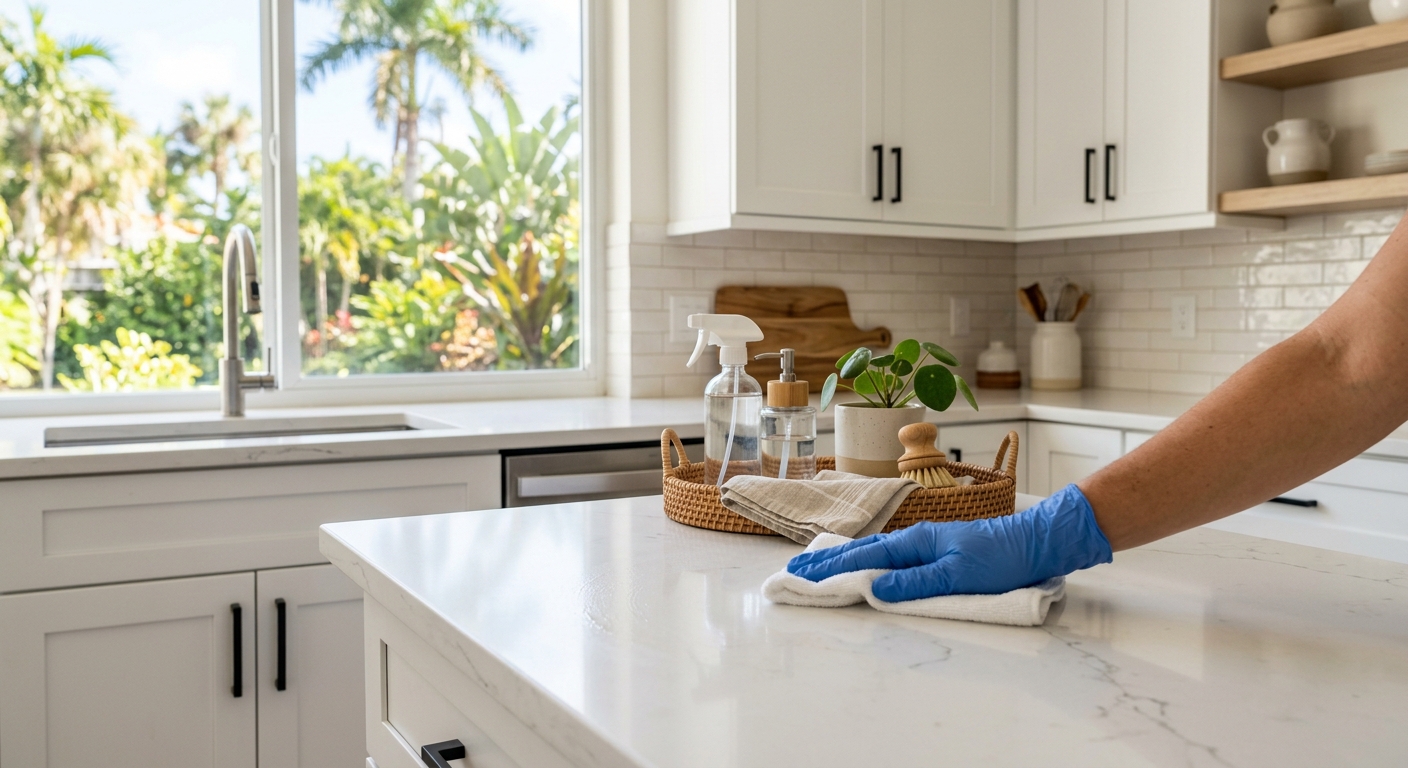
Here's the thing nobody tells you when you move to South Florida: fall doesn't mean sweater weather and pumpkin candles. It means humidity is still sitting at 80%, your AC has been running nonstop since March, and hurricane season is technically still open until November 30th. A generic fall cleaning checklist Florida bloggers copy-paste from Midwest sites just doesn't cut it here. We've spent years cleaning homes across Miami-Dade, Broward, and Palm Beach counties, and the "fall reset" down here looks nothing like it does anywhere else in the country.
This guide is the actual checklist we use and recommend to clients — the tasks that matter for South Florida homes specifically, not the ones that matter for a house in Ohio. By the end, you'll know exactly what to clean, what to inspect, what to restock, and what most homeowners get completely wrong this time of year.
Why Fall Is Different in South Florida
In most of the country, fall means the humidity drops, the AC finally shuts off, and mold risk goes down. Here, none of that happens. Our fall cleaning checklist Florida residents need has to account for three things that don't exist up north: lingering hurricane risk, AC units running at full tilt through October and beyond, and humidity levels that stay high enough to grow mold on a damp towel in under 48 hours.
NOAA's own data backs this up. Since hurricane records began in the mid-1800s, every inch of Florida's coastline has been hit by at least one hurricane — there's no magic "safe" pocket of the state. And while the scariest stretch of the season runs from mid-August through mid-October (that window alone accounts for 96% of major hurricane days on record), November isn't a free pass either. Sixteen tropical cyclones have come within 30 miles of Florida's coast in November alone, and Hurricane Nicole made landfall near Vero Beach as recently as 2022. So the first rule of any real fall cleaning checklist Florida homeowners should follow: don't let your guard down just because Halloween decorations are up.
Step 1: The Hurricane Supply Refresh
Most people restock hurricane supplies in June and never think about them again. That's a mistake. Water goes stale, batteries corrode, and canned goods creep toward their expiration dates right as risk is still elevated.
- Rotate stored water every 6 months — replace it now if you filled jugs back in June
- Check battery expiration dates on flashlights and radios, not just whether they still "work"
- Replace any pantry hurricane food nearing its expiration date
- Confirm your first aid kit hasn't been raided over the summer for splinters and bug bites
- Test your generator (if you have one) for 10 minutes under load, not just a dry start
Pro Tip: Write the restock date directly on your water jugs and batteries with a permanent marker. We've walked into more than one South Florida garage where nobody could remember if the hurricane bin was from this year or three years ago — and expired supplies during an actual storm are worse than useless, they're a false sense of security.
Step 2: HVAC — The Task Everyone Underestimates
If there's one category that separates a real South Florida fall cleaning checklist from a copy-paste version, it's HVAC. Our AC systems don't get a break in October the way they do in Chicago or Denver, and that changes the maintenance math entirely.
Filter Replacement, But on Florida's Schedule
National advice says change your filter every 3 months. Ignore that in South Florida. In our humid climate, filters should be checked every 30 days and typically replaced within 60 days during peak AC season — sooner if the filter looks gray, damp, musty, bowed, or unevenly dirty. High humidity makes airborne particles stickier, which means they cling to a dirty filter and can actually grow mold on it, further choking your airflow.
For the filter itself, we recommend at minimum a MERV 8 filter, with MERV 11 as a solid default for most humid-climate homes — it catches mold spores and fine dust without overly restricting airflow on older systems. One HVAC tech we've worked with put it best: that little filter is "probably the hardest working $10-20 part in your entire HVAC system." It's a small cost against a real payoff — ENERGY STAR notes that airflow problems from a clogged filter can cut HVAC efficiency by up to 15%, and cooling already eats up close to half of most home energy bills.
Pro Tip: Hold the filter up to a light bulb before you toss it. If light doesn't pass through evenly, it's overdue — this is more reliable than just eyeballing dust buildup.
The October "Heat Mode" Test
Here's a step almost no national checklist mentions: in October, before the season's first real cold front rolls through, switch your system to "Heat" mode and let it run for about 10 minutes. This burns off accumulated dust and confirms your heat strips actually work before you need them on a rare 55-degree January night. We've had clients discover a dead heat strip in the middle of a cold snap simply because nobody tested it in the fall.
Step 3: Humidity and Mold Control
This is where South Florida fall cleaning really diverges from the rest of the country. The EPA recommends keeping indoor relative humidity between 30-50% to prevent both dry air issues and mold growth — but in our region, hitting that 50% ceiling takes real effort, not just running the AC.
- Run a hygrometer in bathrooms, laundry rooms, and closets — if you consistently see readings above 55%, add a standalone dehumidifier to that room
- Wipe down window sills and sliding door tracks weekly; these are the first spots mold shows up in coastal homes
- Check under-sink cabinets in kitchens and bathrooms for musty smells — a classic early mold warning sign we catch constantly during deep cleaning visits
- Run bathroom exhaust fans for a full 20 minutes after every shower, not just while you're in there
In our experience, the closets and laundry rooms in South Florida homes are consistently the most neglected humidity zones. They don't get direct AC airflow, they're often against an exterior wall, and they're where we most often find that faint mildew smell homeowners can't quite place.
Step 4: Pest Entry Audit
As temperatures start to dip even slightly in November, pests actively seek warmth — and that means your home becomes a target for a new wave of unwanted guests just as you're relaxing about hurricane season.
- Walk the perimeter of your home at night with the interior lights on; if you can see light escaping from under an exterior door, a pest can get through it too
- Adjust or replace door sweeps on any door where light is visible
- Check weep holes and screens for gaps, especially after storm damage from earlier in the season
- Keep a 6-inch mulch-free "dead zone" around your foundation and siding — mulch touching the house is one of the most common invitations for both pests and moisture damage we see
Step 5: The Roof and Gutter Check
Most Florida homeowners should get a professional roof inspection twice a year: once in spring before hurricane season ramps up, and again in fall once the season winds down. Skipping this isn't just a maintenance issue — it's a financial one. Insurers in Florida can deny storm damage claims if they determine the real cause was neglected maintenance rather than the storm itself.
With well over 240 sunny days a year hitting South Florida roofs, UV exposure dries out shingle oils and cracks sealants faster than in almost any other region of the country. Add in humidity that feeds algae growth — those dark streaks you see on older roofs are typically Gloeocapsa magma algae — and fall becomes the ideal window to get eyes on your roof before winter storms and before you file any insurance paperwork.
Step 6: Water Heater Flush
This one surprises people. Florida's hard water means sediment builds up inside your water heater tank faster than in softer-water regions, which can clog lines and shorten the unit's lifespan. A fall flush — draining a few gallons from the tank's bottom valve until the water runs clear — takes about 20-30 minutes and is one of the most overlooked items on any Florida home maintenance checklist.
Room-by-Room Fall Deep Clean
Once the big-picture systems are handled, it's time for the actual cleaning. This is the part of the fall cleaning checklist Florida homeowners tend to enjoy least, but it's where the visible payoff lives.
Kitchen
After cleaning hundreds of South Florida kitchens, we've learned that the range hood filter and the seal around the fridge door are the two spots almost everyone skips. Grease and humidity team up here, and it gets sticky fast.
We prefer Bar Keepers Friend over generic all-purpose abrasive cleaners for stainless steel sinks and stovetops, because its oxalic acid formula cuts through hard water spots and light rust without scratching the finish the way bleach-based powders can. For grout and tile grout lines that have picked up mildew over a humid summer, a stiff nylon grout brush paired with an oxygen bleach powder (not chlorine bleach) lifts stains without damaging sealant.
Bathrooms
- Descale showerheads in white vinegar for 30 minutes — hard water buildup is a year-round issue here, not just a fall one
- Replace any shower curtain liner showing pink or black mildew spots; at that point it's cheaper to replace than clean
- Re-caulk around tubs if you see gaps — this is a direct line for humidity to reach your subfloor
Living Areas and Bedrooms
Vacuum under furniture and along baseboards, then follow with a microfiber dust cloth on ceiling fan blades, which collect a surprising amount of dust in homes that run AC year-round. Rotate mattresses and wash all bedding, including pillow protectors, in hot water.
What Most Homeowners Get Wrong About Fall Cleaning in Florida
The single biggest mistake we see: treating fall cleaning as a one-and-done weekend project, then not touching HVAC filters or humidity again until spring. In South Florida, moisture and dust don't take a season off, so a real fall reset needs a follow-up check around the 30-45 day mark, especially for filters and bathroom exhaust fans.
The second mistake is assuming hurricane season is "basically over" once October ends. As the NOAA data shows, isolated November storms aren't rare enough to ignore, and restocking supplies now still matters.
The third mistake is skipping professional roof and HVAC inspections because "nothing looks wrong." Algae growth, sediment buildup, and heat strip failures are rarely visible until they cause a bigger, more expensive problem — or a denied insurance claim.
Frequently Asked Questions
When should I do a fall cleaning checklist in Florida?
Late September through October is ideal — after the peak of hurricane season has passed but before humidity and pest pressure shift with the first cool fronts in November. This timing lets you handle both storm supply restocking and deep cleaning in one pass.
How often should I change my AC filter in South Florida?
Check it every 30 days and plan to replace it within 60 days during peak AC season, sooner if it looks gray, damp, or musty. Our humid climate makes filters work harder and clog faster than in drier regions.
Is hurricane season really over by fall?
Not entirely. While the highest-risk window is mid-August through mid-October, hurricane season officially runs through November 30th, and Florida has recorded storm strikes in November as recently as 2022.
What's the average cost of fall home maintenance in Florida?
Ballpark annual maintenance for a mid-sized home typically runs $1,500–$3,000, though coastal South Florida properties often run higher due to roof, humidity, and pest-related upkeep.
Ready for a Real Fall Reset?
Whether you knock out this entire fall cleaning checklist Florida-style yourself or want help with the deep-cleaning portion, the key is treating it as a system check, not just a tidy-up. If you'd rather leave the scrubbing, grout, and baseboards to professionals while you focus on the hurricane prep and HVAC side, our team offers deep cleaning and recurring cleaning plans built around South Florida's humidity and seasonal patterns. We serve homes throughout Miami, Fort Lauderdale, and Boca Raton, and we're happy to walk through exactly what your home needs this season.