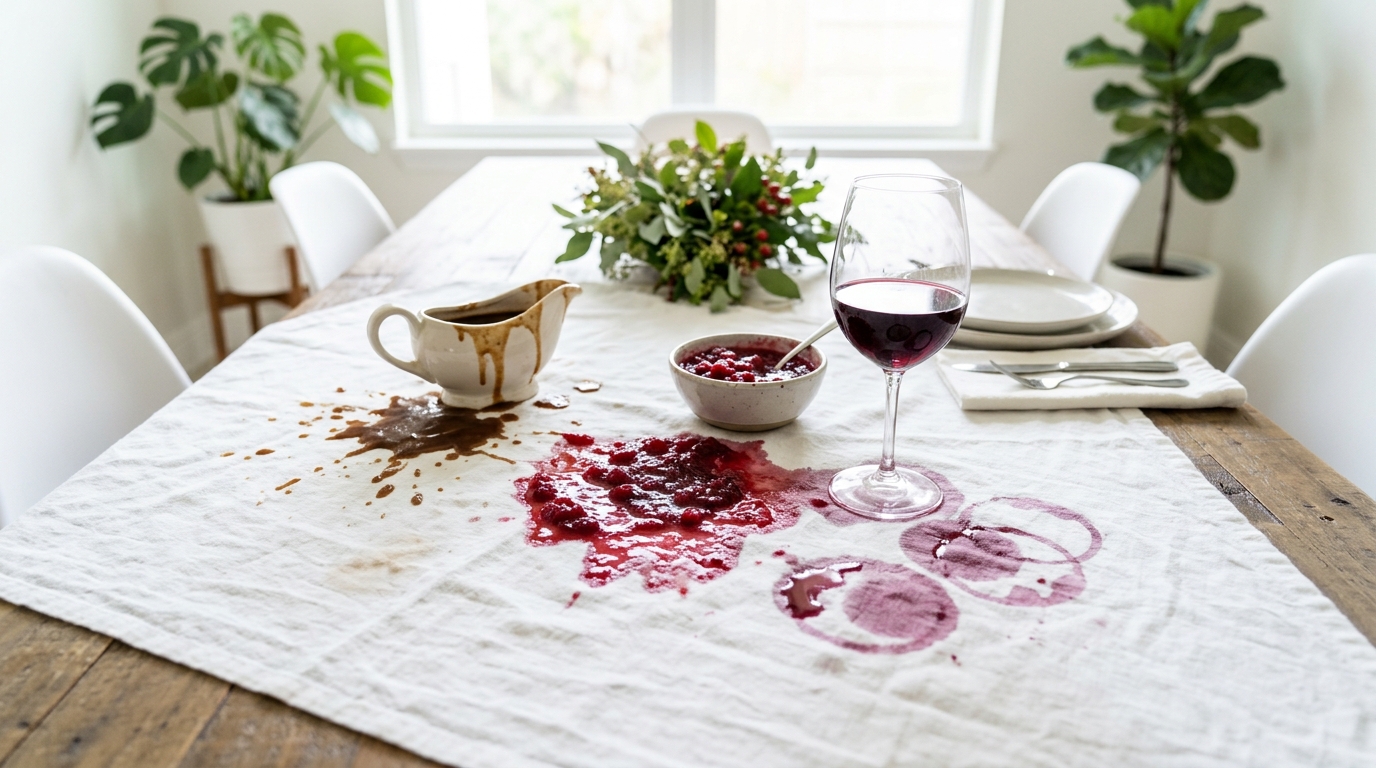
The gravy boat tips, the cranberry sauce rolls off the spoon, and somebody's red wine finds the one cream-colored rug in the house. Every holiday table ends with at least one stain, and the first five minutes decide whether it comes out or stays for good. If you're wondering how to get gravy stains out before the tablecloth hits the hamper, you're in the right place.
This guide covers the three biggest holiday offenders: gravy, cranberry and red wine. For each one you'll get what to do on clothes, tablecloths and carpet, which products work and why, and the mistakes that set a stain permanently. We'll also cover a South Florida problem most stain guides skip, which is drying carpet fast enough in our humidity.
Three Rules That Apply to Every Holiday Stain
Different stains need different chemistry, but the opening moves are the same. Get these right and most spills never become real problems.
- Blot, don't rub. Rubbing grinds the spill deeper into the fibers and frays them. Press a clean white cloth or paper towel down, lift, and repeat with a fresh section.
- Scrape off the solids first. Use the back of a spoon or a butter knife to lift gravy, cranberry sauce or anything with body. Pushing it around with a wet cloth just spreads it.
- Read the care label before you treat anything. The FTC's Care Labeling Rule requires most garments to carry care instructions, and the label tells you the hottest water and the safest products the fabric can take. Tablecloths and napkins often have one too.
One more habit worth building: work from the back of the fabric when you can. Running water or pretreatment through from the reverse side pushes the stain out the way it came in, instead of driving it through the weave.
Here is a quick cheat sheet to keep on the fridge during the holiday week.
| Stain | What it is | First move | Skip this |
|---|---|---|---|
| Gravy | Grease plus pigment | Scrape, blot, dish soap pretreat | Cold water only, or the dryer |
| Cranberry | Dye plus tannin | Cold water flush from the back | Hot water, which can set it |
| Red wine | Dye plus tannin | Blot, dilute with cold water | Rubbing, or piling on salt |
How to Get Gravy Stains Out of Clothes and Tablecloths
Gravy is mostly fat with browned drippings suspended in it. That's why water alone does almost nothing. You have to break up the grease first, then wash away the color.
Fresh gravy: the step-by-step
- Scrape off the excess with a spoon or dull knife. Work from the edges toward the center.
- Blot the spot with a clean cloth. Don't wipe.
- Apply a few drops of liquid dish soap, such as Dawn, directly on the stain. Dish soap is built to cut kitchen grease, which makes it one of the best pretreatments for gravy. A liquid laundry detergent works too.
- Gently work it in with your fingertips or a soft toothbrush. Let it sit 5 to 10 minutes.
- Wash in the warmest water the care label allows. Heat helps melt the fat, but only up to what the fabric can take.
- Check the stain before the dryer. If any shadow remains, repeat the pretreatment and rewash. Dryer heat will lock a leftover stain in.
Laundry brands like Tide and Clorox publish the same basic sequence for gravy: remove the excess, pretreat, then wash warm. University extension textile pages, including UGA's gravy stain guide, follow the same logic of treating the grease first.
Dried gravy: lift the grease before you wet it
If the stain sat overnight on the tablecloth, start dry. Brush off any crust, then cover the spot with cornstarch or baking soda and press it in lightly. These powders absorb grease, so they pull the fat up out of the fibers.
Leave the powder for at least 15 minutes, longer for a heavy stain. Brush it off, then follow the dish soap steps above. This is standard expert practice rather than a lab-tested promise, so expect to repeat it once or twice on an old stain.
Gravy on a tablecloth
Cotton and polyester-blend tablecloths can usually take the full dish soap and warm wash treatment. Linen needs more care, and an heirloom or hand-embroidered cloth is best left to a professional launderer or dry cleaner. If it's a family piece, don't experiment on it at 10 p.m. with whatever's under the sink. Blot it, scrape the solids, and take it in.
Pro Tip: Treat the tablecloth before dessert, not after. Pull it off the table once the plates are cleared, spot-treat the gravy with dish soap, and let it sit while everyone eats pie. Twenty minutes of dwell time during the party does more than an hour of scrubbing the next morning.
How to Remove Cranberry Stains From Fabric and Carpet
Cranberry is a different animal. It's a bright dye plus tannins, and it is stubborn mostly because people reach for the wrong water temperature.
Cold water first
Use cold water, not warm. Heat can set a cranberry stain into the fabric, which is the opposite of what happens with gravy. Rinse from the back of the fabric under a cold tap until the water runs mostly clear.
After the cold rinse, work in a liquid detergent or an oxygen-based pretreatment such as OxiClean-style products or a Tide stain pretreater. Oxygen-based formulas lift dye without the harshness of chlorine bleach. Let it sit 10 to 15 minutes, then wash according to the label.
Cranberry sauce on carpet
- Lift the sauce with a spoon. Don't press down.
- Blot with a damp white cloth to pick up what's left.
- Mix a small squirt of clear dish soap into a cup of cool water, and dab it on from the outside edge inward so the stain doesn't spread.
- Blot with a clean dry cloth. Repeat until the cloth stops picking up red.
- Rinse by dabbing with plain cool water, then blot dry with a stack of towels.
Use as little liquid as you can. We'll come back to why in the Florida section below.
Skip the chlorine bleach
It's tempting on a white tablecloth, but chlorine bleach is a poor choice on silk, wool and colored fabrics. It can eat the fibers or leave a yellow patch bigger than the original stain. Stick with an oxygen-based product, and test it on a hidden hem first.
How to Get Red Wine Out of Carpet
Red wine is where internet advice gets loud and contradictory. Here's what holds up and what's genuinely disputed.
The method that works
- Blot immediately. Press clean white towels onto the spill. Keep swapping to dry sections until nothing more transfers.
- Dilute with cold water. Pour a small amount of cold water onto the spot, just enough to thin the wine, and blot again. Repeat a few times.
- Apply a carpet-safe cleaner. A dedicated spot cleaner like Folex, or a mild dish soap solution, works on most synthetic carpets. Follow the product directions and dab, don't scrub.
- Rinse and blot dry. Residue left in the carpet attracts dirt, so go over the area once more with plain water and towels.
The Carpet and Rug Institute publishes simple stain removal tips, and it runs a Seal of Approval program for tested cleaning products. If your carpet has a warranty, check what products it allows before you improvise. Bissell also has a practical walkthrough of wine stains on carpet and upholstery.
The salt and white wine debate
Many bloggers swear by pouring salt or white wine on a red wine spill. Cleaning professionals often disagree. In our experience, salt mostly pushes the wine around and gives you a crusty mess to vacuum, and white wine just adds more liquid. Diluting with cold water and blotting is the safer play. If you want to try salt, use it only as a quick absorbent on a fresh pool of wine, then brush it away and move on to blotting.
The hydrogen peroxide and dish soap trick
This is a popular home remedy, and it does work on some stains. It also bleaches. Hydrogen peroxide can lighten dyed carpet and fabric, and it's risky on wool and silk. If you want to try it, test a small hidden spot (inside a closet, under a sofa) and wait several minutes before you commit. A pale patch that's bigger than the stain is a worse outcome than a faint pink shadow.
Red wine on clothes and napkins
Flush from the back with cold water, pretreat with detergent or an oxygen-based stain remover, and wash on the label's recommended setting. As with cranberry, check that the stain is gone before drying. Wine on a delicate silk blouse should go to a dry cleaner, ideally within a day or two, with the stain pointed out.
South Florida Problems: Tile, Grout and Slow-Drying Carpet
Holiday stain advice usually assumes a dry northern house with wall-to-wall carpet. Ours is different.
Don't over-wet the carpet
Humidity is the catch. According to the EPA, wet carpet and other porous materials should be dried within 24 to 48 hours to prevent mold growth. Here, with outdoor air that's already heavy, a soaked patch of carpet can take far longer than that to dry on its own.
So keep your stain treatment light. Use small amounts of liquid, blot hard with towels, then press a dry towel under your foot or a heavy book for a few minutes to pull moisture out of the pad. Run the A/C, aim a fan at the spot, or bring in a dehumidifier. If a musty smell shows up a few days later, our guide to cleaning products you should never mix is worth a read before you reach for a stronger fix, and you'll want to dry the area again.
Grout and area rugs
Many South Florida homes have tile or terrazzo floors with area rugs on top. That's a good setup for stain control, because the rug takes the spill and you can pull it up. Keep in mind this is our own observation from cleaning homes, not a measured stat. Grout, though, is porous, and it can soak up red wine and cranberry fast. Wipe tile spills right away and rinse with clean water. For grout that has already taken on color, see our tile and grout cleaning guide.
Rugs with latex backing or natural fibers (jute, sisal) don't love water, so blot rather than flood them. A wool rug with a wine stain is usually a job for a professional rug cleaner.
Upholstery
Dining chair cushions and sofas follow the same blot-and-dilute rules as carpet. Check for a cleaning code tag first, then see our guide on cleaning couch upholstery for how to read it.
Common Holiday Stain Mistakes
- Rubbing the stain. It spreads it and damages the fibers. Blot.
- Using hot water on cranberry or wine. Cold first, always, for dye-based stains.
- Using cold water on gravy. Grease needs soap and warmth (within the label's limits) to break up.
- Putting it in the dryer too soon. If a trace is left, the dryer sets it. Air-dry and re-treat until it's gone.
- Stacking products. When the first product doesn't work, people grab a second and a third. Mixing bleach with ammonia-based or acid cleaners can create toxic fumes. The CDC and poison control centers both warn about this. Rinse the area thoroughly between products and never combine them.
- Skipping the spot test. Peroxide, bleach alternatives and strong spot removers can lift dye from the carpet along with the stain.
- Overwetting carpet. More liquid means more drying time, and drying time is where Florida humidity gets you.
- Waiting until the guests leave. A stain treated in 10 minutes and one treated the next afternoon are two different stains.
Wrapping Up: Getting Holiday Stains Out for Good
If you remember one thing about how to get gravy stains out, and cranberry and wine too, make it this: act fast, blot gently, and match the water temperature to the stain. Dish soap and warm water for grease, cold water first for dye, and light, quick drying for anything on carpet in our climate.
Hosting also leaves behind everything that isn't a stain: sticky counters, crumbs in the corners, a kitchen that needs a real reset. If you'd rather leave that part to the pros, Catalina Cleaning can handle a deep cleaning before the holidays or help you through the aftermath with our post-holiday cleaning guide. Our cleaners have 2+ years of experience cleaning homes, and a real person answers our phone seven days a week.
Frequently Asked Questions
Can you get dried gravy stains out of clothes?
Usually, yes. Scrape off the crust, cover the spot with cornstarch or baking soda for at least 15 minutes to absorb the grease, brush it off, then pretreat with dish soap and wash in the warmest water the label allows. Old stains may need a second round, and you should avoid the dryer until the stain is completely gone.
Does dish soap really work on gravy?
It does. Gravy is largely fat, and dish soap is made to break down grease on plates and pans. Work a few drops into the stain, let it sit 5 to 10 minutes, then launder as normal.
Should I use hot or cold water on cranberry stains?
Cold. Heat can set cranberry's dye and tannins into the fabric. Rinse from the back with cold water first, then use detergent or an oxygen-based pretreatment, and wash only once the stain is gone or nearly gone.
Does salt get red wine out of carpet?
It's disputed. Many blogs recommend it, but cleaning professionals often say it just moves the stain around. Blotting and diluting with cold water, then using a carpet-safe cleaner, is the more dependable approach.
How long does carpet take to dry after a spill in Florida?
It varies with how much liquid you used and your indoor humidity. The EPA advises drying wet carpet within 24 to 48 hours to prevent mold growth, so use towels, a fan, the A/C or a dehumidifier. If the carpet is still damp after two days, call a professional carpet cleaner.