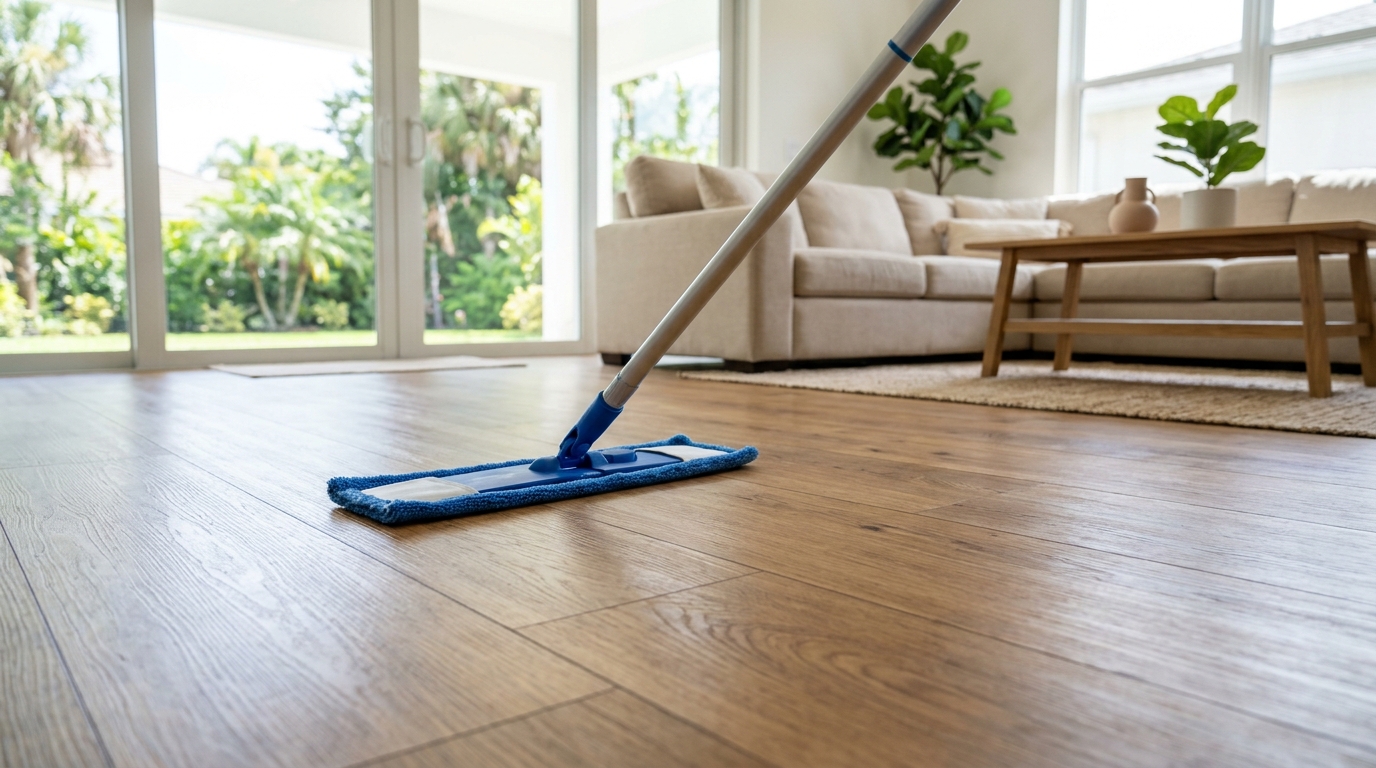
You mopped the whole house, the floor dried, and now the afternoon light through the sliding door shows a cloudy haze, footprints and streaky swirls. If you've been searching for how to clean luxury vinyl plank floors without leaving that dull film, the problem usually isn't dirt. It's what got left behind after cleaning.
We clean a lot of LVP in Florida homes, from Miami condos to Panhandle beach houses. The fix is almost always the same: get the grit up before any liquid touches the floor, use less product than you think, and keep your mop water clean. Below you'll find the exact tools to use, a step-by-step routine, how to strip off residue that's already there, how to handle scuffs and sand, and the mistakes we see most often.
Why Vinyl Plank Floors Turn Dull
If your home has LVP, you're in good company. According to Floor Covering News data reported by Trend Trail Market, US flooring sales fell 1.8% in 2025 while resilient flooring, the category that includes LVP, grew 2.5% to $8.587 billion. SNS Insider reports that residential renovation and new construction accounted for 58.16% of the luxury vinyl plank market in 2025. In other words, plenty of homeowners are learning this floor's quirks for the first time.
In our experience, a dull LVP floor comes down to one of four causes:
- Residue film. Too much cleaner, the wrong cleaner, or cleaner that was never rinsed dries into a thin, cloudy layer. It also grabs dirt, so the floor looks dirty again sooner.
- Micro-scratches. Sand and grit under shoes, chair legs or a dirty mop pad sand the top surface. Thousands of tiny scratches scatter light and read as dullness.
- Dirty or mineral-heavy water. Mopping a whole house from one bucket spreads gray water everywhere. Hard tap water can leave spotty marks as it dries.
- Shine products. Polishes, waxes and "mop and shine" formulas look great for a day, then build up, yellow and smear.
The wear layer is what you're protecting
Every plank has a clear top coat called the wear layer, measured in mils. SNS Insider found that 12 to 20 mil wear layers held 48.26% of the market in 2025, so there's a good chance your floor falls in that range. That layer is what takes the abuse.
Here's the hard truth: residue can be cleaned off, but scratches in the wear layer can't. Good cleaning habits are really about prevention. Also, finish matters. On matte planks, residue tends to show up as blotchy, uneven patches, while on glossier planks it shows as streaks and swirl marks.
What You Need (and What to Keep Off the Floor)
You don't need a cabinet full of specialty products. Here's the kit we'd recommend for a typical Florida home:
- Microfiber dust mop for daily or every-other-day passes. It traps fine sand instead of pushing it around.
- Vacuum with a hard-floor setting, or with the beater bar turned off. A spinning bristle roll can fling grit and scuff the surface.
- Flat microfiber mop with removable pads. Have at least three or four pads so you can swap them as they get dirty.
- Two buckets or a spray bottle. One for cleaning solution, one for rinsing the pad, or a spray bottle so the mop never sits in dirty water.
- A pH-neutral cleaner labeled for vinyl or LVP. Bona Hard-Surface Floor Cleaner is one common example. A few drops of plain dish soap in a gallon of warm water also works; a few drops, not a squirt.
- Dry microfiber towels for buffing spots.
- Felt pads and good door mats, which do more for your floor's shine than any cleaner.
| Product | Use it? | Why |
|---|---|---|
| pH-neutral vinyl/LVP cleaner | Yes | Cleans without etching or leaving a heavy film when diluted correctly |
| Plain warm water | Yes | The best rinse there is for lifting old residue |
| "Mop and shine" or polish products | Skip | The most common cause of cloudy buildup we see |
| Oil soap | Skip | Leaves a greasy film that attracts dirt and footprints |
| Wax or paste | Skip | LVP isn't designed to be waxed; it builds up and can yellow |
| Steam mop | Check your manual first | Heat and moisture can work into seams; some manufacturers advise against it |
| Vinegar | Check your manual first | It's acidic; care guidance varies by brand |
| Bleach, ammonia, abrasive powders, scouring pads | Skip for routine cleaning | Can dull or scratch the wear layer |
Your flooring manufacturer's care guide is the final word, especially if you care about the warranty. Look it up by brand and product line before you try anything new. If you don't know the brand, check the closing paperwork, ask your landlord, or look for leftover boxes in the garage.
How to Clean Luxury Vinyl Plank Floors, Step by Step
This is the routine our team uses. For a 1,200 sq ft home with mostly LVP, plan on 30 to 45 minutes once you have the rhythm down.
- Clear the floor. Lift chairs onto the table, pick up rugs, move pet bowls and shoes. Five minutes here saves you from mopping around obstacles and missing strips.
- Dry clean first, every time. Dust mop or vacuum the whole floor, working in the direction of the planks so you pull debris out of the bevels between them. Hit the edges, toe kicks under cabinets and the track in front of sliding doors. Skipping this step turns sand plus water into a gritty slurry that sands your floor as you mop.
- Mix the solution exactly as the label says. Measure with the cap or a measuring cup. Use warm water, not hot. More concentrate does not clean better; it just leaves more film.
- Go damp, not wet. Wring the pad until it's barely damp, or mist a small area with a spray bottle. The floor should look slightly wet and dry within a minute or two. Puddles are a red flag.
- Work in sections toward your exit. Mop with the grain of the planks in overlapping passes. Start at the farthest corner so you never walk on wet floor.
- Swap pads early. Change to a fresh pad every room, or as soon as the pad looks gray. If you're using buckets, rinse the pad in the plain-water bucket and change that water when it clouds.
- Do a rinse pass where it counts. In kitchens and entryways, follow with a pad dampened in plain water. This is the step most people skip and the one that prevents haze.
- Buff any streaks. Put a dry microfiber towel under your foot and buff spots you can see in the light, especially near windows and sliders.
- Let it dry before rugs go back. Give it 15 to 20 minutes. Use rugs and pads labeled safe for vinyl floors; some rubber or latex backings can discolor vinyl over time.
How often to do each task
| Task | How often |
|---|---|
| Dust mop entries, kitchen and sliders | Daily or every other day in sandy or pet-heavy homes |
| Vacuum the whole floor | Weekly |
| Damp mop the kitchen | Weekly |
| Damp mop bedrooms and living areas | Every 1 to 2 weeks |
| Spills and pet accidents | Immediately |
| Plain-water residue reset | Every few months, or whenever haze appears |
| Check and replace felt pads | Every few months |
How to Remove the Dull Film That's Already There
Before you strip anything, confirm you're dealing with residue and not wear. Rub a clean, dry white microfiber cloth firmly over a dull spot. If it drags or squeaks, or the cloth picks up a gray or greasy smudge, you've got buildup.
Pro Tip: Turn off the overhead lights, lay your phone flat on the floor with the flashlight on, and look across the beam. Residue shows up as smeary, cloudy swaths and mop swirls. Wear shows up as fine, straight scratches concentrated in walkways and under chairs. Residue you can fix this afternoon. Scratches you can only stop from getting worse.
To remove residue:
- Dry clean thoroughly so you're not grinding grit into the floor while you scrub.
- Mop with plain warm water only, using fresh pads and changing the water often. On a light film, two passes is often all it takes.
- Work a small area at a time on heavy buildup, about 4 by 4 feet, and wipe dry right away with a towel so the loosened residue doesn't settle back down.
- For stubborn polish buildup, use the residue remover your flooring manufacturer recommends. Some care guides allow a diluted vinegar solution and some don't, so check yours first and test in a closet or behind a door.
- Stop using whatever caused it. If the haze came from a shine product, it will come right back the next time you use it.
If the floor still looks dull after a thorough rinse and the flashlight shows scratches, no cleaner will bring the shine back. That's the time to focus on mats, felt pads and a dry-mopping habit.
Spot Cleaning: Scuffs, Sticky Spills, Pets and Florida Sand
Scuff marks
Start with a dry microfiber cloth or a clean tennis ball rubbed over the mark. If that doesn't lift it, add a dab of your pH-neutral cleaner. Be careful with melamine sponges: they're mildly abrasive and can leave a shiny or dull patch on matte planks, so test somewhere hidden first.
Sticky spots and dried spills
Lay a warm, damp cloth over the spot for 30 seconds to soften it, then wipe. For gum residue, tape adhesive or marker, a little isopropyl alcohol on a cloth usually works; spot-test first and wipe with plain water afterward. Skip acetone and nail polish remover, which can damage vinyl.
Pet accidents
Blot fast. Then clean with your regular solution, follow with an enzyme cleaner according to its label if odor is a concern, and dry the area completely. Even planks marketed as waterproof have seams and edges where standing liquid can work its way down, so don't let accidents sit.
Sand, salt and grit
This is the big one in Florida. Beach sand, pool-deck grit and lanai debris are basically sandpaper for your wear layer. Put a mat outside and inside every door, especially sliders to the pool or patio. A shoes-off rule and a quick daily dust-mop pass in entryways prevent more dullness than anything you do with a mop. Our cleaning tips for coastal homes cover more ways to keep sand and salt from spreading through the house.
Strong sun through big windows can also fade planks unevenly over time. Blinds or shades during the brightest hours, and moving rugs occasionally, help keep the color even.
Robot vacuums and mops
Robots are great for daily grit control on LVP. Just empty the bin often, clear hair from the brush, and wash or replace the mopping pad regularly. A robot dragging a dirty pad around every day will cloud the floor fast. Use only plain water or a solution your floor and robot both approve.
Common Mistakes That Dull Vinyl Plank Floors
These are the habits we run into most when we take over cleaning a home with hazy LVP:
- Using more cleaner for a "deeper" clean. Extra concentrate is the number one cause of film. Measure it.
- Mopping the whole house from one bucket. By the third room you're spreading dirty water. Swap pads and change water.
- Reaching for shine products. If a bottle promises a glossy finish, expect buildup.
- Skipping the dry step. Mopping over sand grinds it in.
- Soaking the floor. Puddles find seams. Damp is enough.
- Using a steam mop without checking the warranty. Some manufacturers advise against them.
- Switching products every few weeks. Different formulas can layer on top of each other. Pick one approved cleaner and stick with it.
- Dragging furniture. Lift it, and keep felt pads fresh on chair and table legs.
- Treating LVP like hardwood. The rules overlap but aren't identical. If you have real wood in other rooms, see our guide to cleaning hardwood floors.
Keeping Your Luxury Vinyl Plank Floors Clean, Not Cloudy
Learning how to clean luxury vinyl plank floors without dulling them comes down to a few habits: dry clean first, use a measured amount of a pH-neutral cleaner, mop damp instead of wet, swap pads often, and rinse with plain water when haze appears. Keep sand out at the door and the wear layer will stay clearer for longer.
If you'd rather leave it to the pros, our team cleans LVP in homes across South Florida, the St. Petersburg area and the Panhandle coast. Our cleaners have 2+ years of experience cleaning homes, not hotels or offices, and a real person answers the phone 7 days a week. A deep cleaning starts at $312 for an apartment under 700 sq ft, and recurring cleaning starts at $130, with the same cleaner whenever possible; bigger homes cost more. Our service isn't the cheapest, because we pay our cleaners well. When you're ready, you can get a quote for your home.
Frequently Asked Questions
Why does my vinyl plank floor look cloudy after mopping?
Usually it's residue: too much cleaner, a cleaner that isn't meant for vinyl, a shine product, or dirty mop water spread across the floor. Mop with plain warm water and fresh pads, then dry any streaks with a towel. If the haze is gone, cut back on product going forward.
Can you use vinegar on luxury vinyl plank floors?
It depends on your manufacturer. Vinegar is acidic, and care guidance varies from brand to brand, so check your flooring's care guide before using it. For routine cleaning, we stick with a pH-neutral cleaner made for vinyl.
Is it safe to use a steam mop on LVP?
Check your warranty first. Some manufacturers advise against steam because heat and moisture can work into seams and edges. We don't use steam on LVP; a damp microfiber mop gets it clean without the risk.
What is the best thing to clean vinyl plank floors with?
A microfiber dust mop or a vacuum with the beater bar off for dry debris, then a flat microfiber mop with a properly diluted pH-neutral cleaner labeled for vinyl or LVP. A few drops of dish soap in a gallon of warm water also works. Avoid oil soaps, waxes and polish products.
How often should you mop luxury vinyl plank floors?
In most Florida homes, mop the kitchen weekly and other rooms every one to two weeks. Dry cleaning matters more: dust mop entryways and sliders daily or every other day if you get a lot of sand, pets or foot traffic.