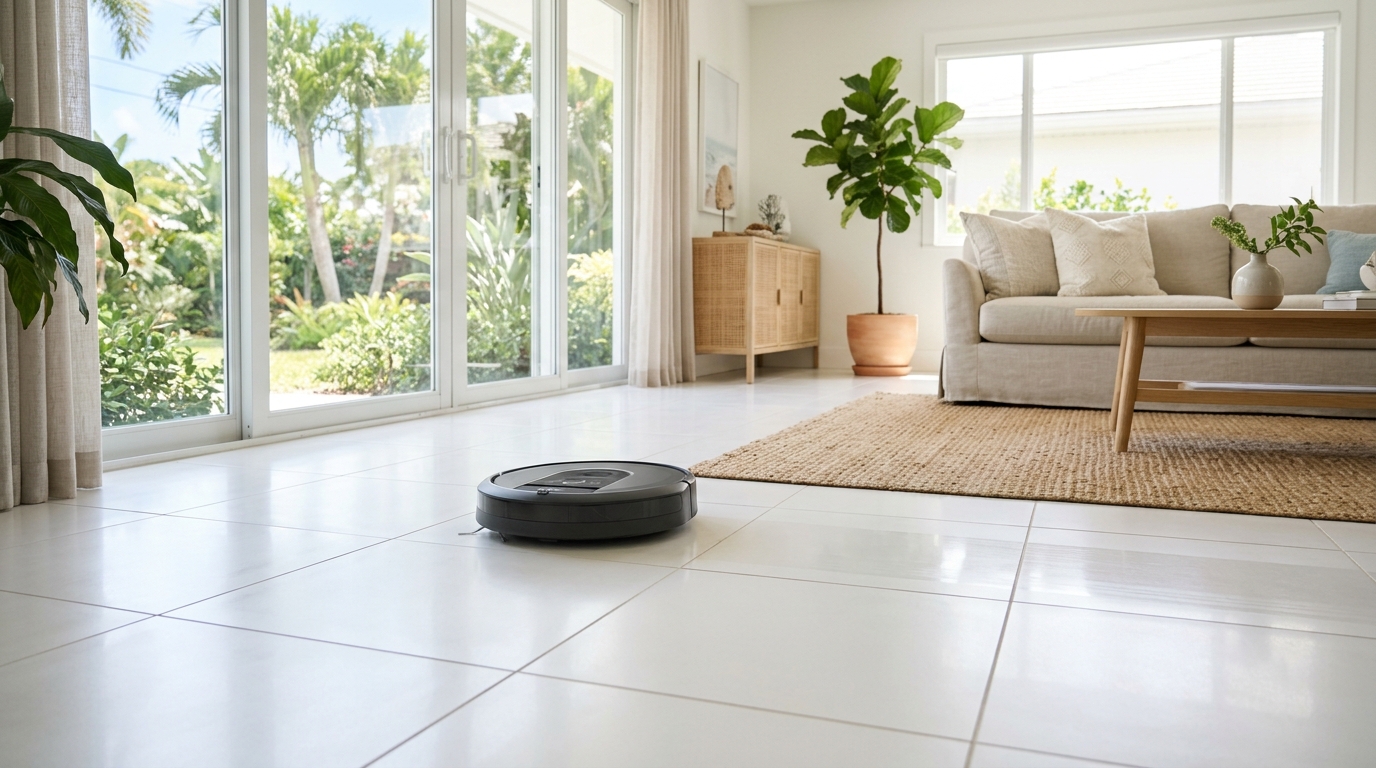
You've seen the Black Friday banners, and a robot vacuum is sitting in your cart. The question nagging you is simple: are robot vacuums worth it, or will you own an expensive gadget that bumps into the couch and gets stuck on a rug fringe?
We clean homes for a living, and we walk into houses with robot vacuums all the time. Some owners love theirs. Others keep it in a closet. Below is what these machines do well, what they miss, how Florida homes change the math, and how to decide before you spend the money.
The Short Answer: Are Robot Vacuums Worth It?
For the right home, yes. A robot vacuum is worth it if you have mostly hard floors, shed-prone pets, or a daily crumb and dust problem you keep putting off. It's not worth it if you expect it to replace a real vacuum, a mop and a cleaning routine.
Think of it as maintenance, not cleaning. A robot keeps floors from getting bad between your real cleanings. It will not pull deep dust from carpet, do your baseboards, or touch the corners it physically can't reach.
| Your situation | Worth it? | Why |
|---|---|---|
| Tile, vinyl or hardwood throughout | Usually yes | Hard floors are where robots perform best and where daily dust shows up fastest. |
| Dog or cat that sheds | Usually yes | Daily passes keep hair from building into tumbleweeds. |
| Mostly thick carpet or shag rugs | Probably not | Deep pile is hard on small robots, and you'll still need an upright. |
| Multi-level home | Maybe | Robots can't climb stairs. You'd carry it, or buy a second one. |
| Small apartment with little floor space | Often not | A stick vacuum takes a few minutes and costs less. |
| Cluttered floors, lots of cords and toys | Not until you declutter | Cords, socks and toys are what get robots stuck. |
What a Robot Vacuum Does Well
Consistency beats intensity
The real advantage is frequency. A human vacuums when the floor looks bad, which might be once a week. A robot runs every day or every other day, so dust, sand and hair never get a chance to pile up.
In our experience, homes with a robot running regularly show up cleaner on the surface. Baseboard edges and open floor areas look better, and the floors need less prep before we start.
Pet hair and fine debris on hard floors
Hair on tile and wood is the best use case. Robots sweep up the loose layer every day, which cuts down on the drifting clumps that collect under beds and along walls. If you have pets, look at what independent testers say. According to Consumer Reports, it runs separate lab-tested rankings of robot vacuums for pet hair, for carpeted floors and for hardwood, because performance differs by surface.
The time you get back
It won't be hours. It's the small daily chore of grabbing the vacuum for a quick pass before guests, or after a messy dinner. For many people that's the point: the floor is decent without thinking about it.
What Robot Vacuums Can't Do
This is the part product pages skip. Here's what we see them miss in real homes:
- Corners and edges. Round robots leave a sliver of dust in square corners and tight edges along baseboards.
- Under low furniture. If a sofa or bed sits lower than the robot's height, that area never gets cleaned.
- Stairs. They can't climb them, and most can't clean them.
- Upholstery, mattresses and curtains. None of that is on a robot's route.
- Baseboards, vents, ceiling fans and door frames. Dust lives up high too, and gravity moves it to the floor, where the robot finally finds it.
- Deep carpet cleaning. Many robots remove surface debris but don't pull what's embedded deep in the pile the way a good upright does.
- Sticky spills and dried messes. A robot can smear or spread wet and sticky messes rather than remove them. Wipe those up by hand first.
Robot mops are a separate question. They're fine for light maintenance on sealed hard floors. They won't scrub grout lines or lift dried-on grime the way a person with a mop and a bit of elbow does. If you want to see what proper floor care looks like, our guide on cleaning hardwood floors covers the products and technique that protect the finish.
Florida Homes: What Changes the Math
Tile and terrazzo are robot-friendly
Plenty of South Florida homes have tile or terrazzo floors, and that's good news for a robot vacuum. Smooth, hard surfaces give wheels traction and make suction effective. The catch is grout. Robots glide over it but don't clean the lines themselves, so grout still needs manual attention. We cover that in our guide to cleaning tile and grout.
Sand, pollen and constant dust
Coastal homes track in sand, and many Florida homes seem to collect dust no matter what. We explain why in why South Florida homes get so dusty. A robot handles the daily floor layer well, but sand can wear on brushes and fill bins quickly, so expect to empty and clean it more often than the marketing implies.
Humidity and your machine
Florida humidity is hard on everything, and electronics are no exception. We can't point to a study on how humidity or salt air affects robot sensors or batteries, so treat this as a practical caution rather than a fact. Keep the dock away from bathrooms, wet entries and open lanai doors, and check the manufacturer's care guidance.
Humidity matters for dust, too. The EPA recommends keeping indoor humidity roughly between 30 and 50 percent, since higher levels favor dust mites and mold. A robot vacuum doesn't fix that. Your air conditioning and, in some homes, a dehumidifier do. Our posts on reducing allergens at home and keeping a home clean in a humid climate go deeper.
Condos, noise and layout
If you live in a condo or apartment, check your building's quiet hours before scheduling the robot while you're out. A robot bumping furniture on a tile floor carries sound to the unit below. Also consider your layout: one-level condos are ideal, while multi-floor townhouses need a plan for moving it.
What to Look For Before You Buy
Match the machine to your floors
Start with the surface you clean most. Consumer Reports publishes lab-tested lists broken out by carpeted floors, hardwood, pet hair and a budget tier of $300 or less. The fact that they split the testing this way tells you something: a robot that shines on hardwood may struggle on rugs.
Features that actually matter
- Brush design. If you have long hair in the house, from people or pets, look for brushes that resist tangling. You'll still cut hair off them, but less often.
- Bin or self-emptying base. A self-emptying dock means less daily maintenance but adds ongoing bag costs. A small bin is fine if you don't mind emptying it after each run.
- Obstacle avoidance. Better sensors mean fewer rescues from cords and socks. It's worth paying for if your floors are rarely clear.
- Mapping and no-go zones. Useful for keeping the robot out of pet bowls, fringe rugs and bathrooms.
- Replacement parts. Check that filters, brushes and batteries are easy to find and what they cost over time. The sticker price is only part of the cost.
Check the company, not just the model
Brand stability matters more than it used to. iRobot, the maker of Roomba, went through financial trouble and a Chapter 11 filing, with an acquisition by its manufacturer Picea reported. Before buying any brand, check current warranty terms and whether app support is guaranteed to continue. A robot is only as useful as its software.
Think about the camera
Many robots use cameras and map your home. That's a privacy tradeoff. There was reporting in 2022 about images from iRobot development units leaking, which is a reminder to read the privacy policy, turn off features you don't need, and keep the app updated. If it makes you uneasy, a model that navigates with sensors and no camera is an option.
How to Get the Most Out of a Robot Vacuum
- Clear the floor first. Pick up cords, socks, pet toys and loose rug fringe. Ten seconds of prep prevents most rescue missions.
- Run it on a schedule. Daily or every other day works well. Consistency is the whole point.
- Empty the bin often. A full bin loses suction. Empty it after each run if you have pets or tile that tracks sand.
- Cut the hair off the brush weekly. Use scissors to snip hair wrapped around the roller and side brushes. It takes two minutes and keeps the motor from straining.
- Clean the filter and sensors. Follow your manual. Some filters can be tapped clean or rinsed, others must be replaced. Wipe sensors and charging contacts with a dry microfiber cloth.
- Still vacuum by hand. Once a week or so, go over corners, edges, stairs and under furniture with a regular vacuum or crevice tool.
Pro Tip: Run your robot after you've dusted, not before. Dust from shelves, fan blades and baseboards lands on the floor, and the robot picks it up for you. Dusting from top to bottom first means the robot does the last step instead of leaving a fresh layer behind.
Common Mistakes People Make With Robot Vacuums
- Expecting it to replace a real vacuum. It won't. Plan on a regular vacuum for edges, stairs and carpet.
- Buying on price alone. A cheap model that gets stuck every day gets abandoned. A pricier one that works gets used.
- Skipping maintenance. Tangled brushes and full bins are the top reasons robots underperform.
- Running it over wet or sticky spills. You'll spread the mess and gum up the wheels. Wipe spills by hand first.
- Ignoring pet accidents. A robot meeting a pet accident is a story nobody wants to tell. Keep it out of rooms where accidents happen, and use no-go zones.
- Forgetting everything else. Floors are only one part of a clean home. Kitchens, bathrooms, surfaces and the dust above floor level still need people. Our guide on how often to clean everything is a good reality check.
So, Are Robot Vacuums Worth It for You?
If your home is mostly hard flooring, you share it with a shedding pet, and you'll commit to two minutes of weekly upkeep, then yes, are robot vacuums worth it is an easy answer: they're worth it. If you have thick carpet, stairs everywhere or a cluttered floor, you may be happier with a good upright or stick vacuum.
Either way, a robot vacuum handles one job: the daily floor layer. Bathrooms, kitchens, baseboards and all the surfaces above the floor still need a human. If you'd rather leave it to the pros, our team does the full job, and recurring cleaning starts at $130 for an apartment under 700 square feet. Bigger homes cost more, and you can get a quote to see your price. We also know our service isn't the cheapest, because we pay our cleaners well.
Frequently Asked Questions
Are robot vacuums worth it for pet hair?
Usually, yes, especially on hard floors. A daily run keeps hair from building up. Look for tangle-resistant brushes and a bin or dock that handles volume, and expect to cut hair off the brush each week.
Do robot vacuums work on carpet?
They can, but results vary by model and pile height. Low-pile carpet is easier than thick or shag rugs. Consumer Reports tests robot vacuums on carpeted floors separately from hard floors, so check those results if carpet is your main surface.
Can a robot vacuum replace a regular vacuum?
No. Robots miss corners, edges, stairs, upholstery and the areas under low furniture. Use the robot for daily upkeep and a regular vacuum for a weekly full pass.
How often should I run a robot vacuum?
Daily or every other day is ideal for most homes. Homes with pets, kids or sandy entries benefit most from daily runs. Empty the bin after each run if it's small.
Do robot vacuums help with allergies?
They may help by removing surface dust and hair regularly, but whether vacuuming reduces allergens overall is debated, and a robot doesn't address humidity or dust on higher surfaces. Keeping indoor humidity in the EPA's suggested 30 to 50 percent range, and cleaning top to bottom, matters just as much.