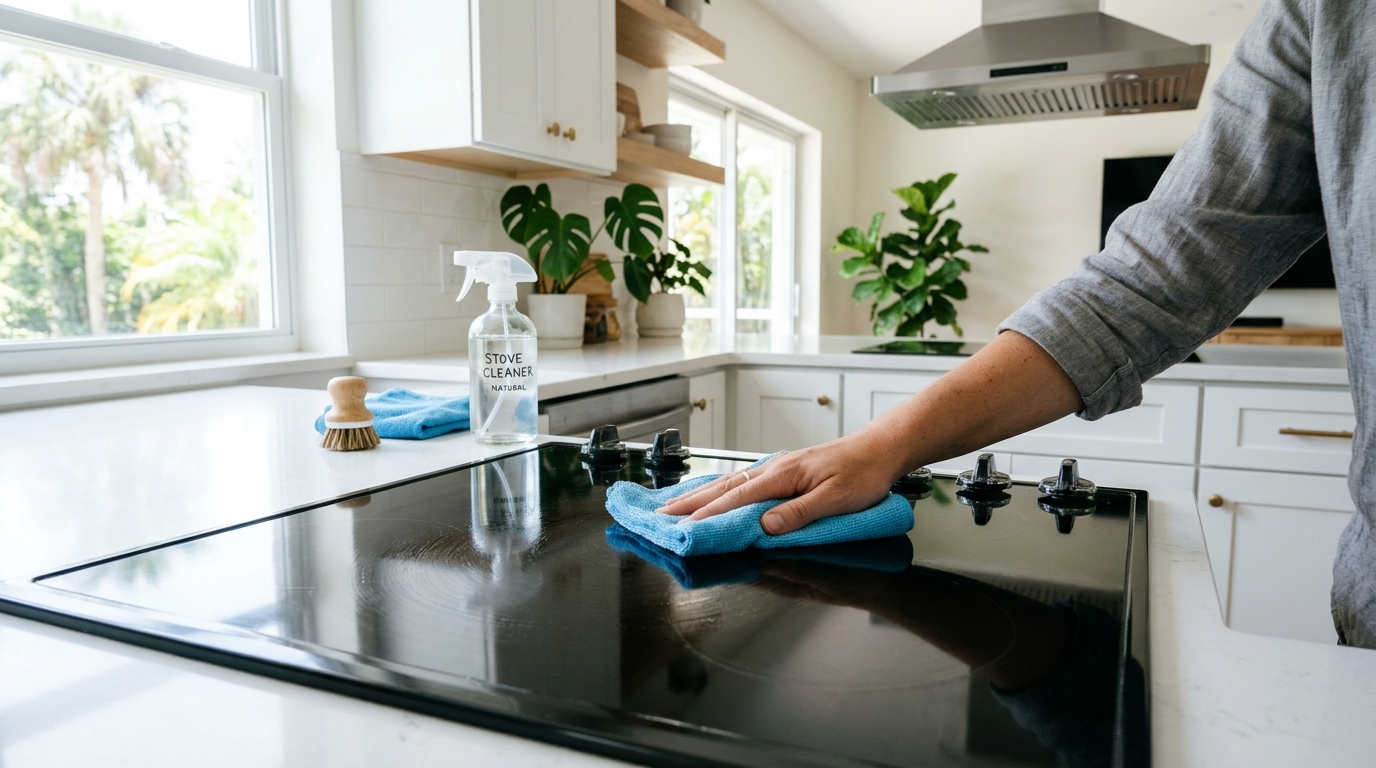
You boil over a pot of pasta sauce, it bakes onto the glass, and now the stove top looks like a crime scene. You reach for the scrubby sponge, then stop. Everyone has heard that glass cooktops scratch if you look at them wrong.
The good news: a glass stove top is tougher than its reputation, as long as you use the right tools. This guide covers how to clean a glass stove top step by step, how to lift burnt-on messes without leaving marks, what to do about white mineral film, and which popular hacks to skip.
Know Your Cooktop First
Most smooth-top ranges are glass-ceramic. That includes electric radiant, induction, and many gas models with a glass surface. They look similar, but the care rules come from the manufacturer, so find your use-and-care manual or search your model number online.
Two things to check before you start:
- Is it fully cool? Cleaning a hot surface bakes cleaner into the glass and can burn you. Wait until the “hot surface” light is off.
- What does your manual say about scrapers and cleaners? Whirlpool and GE Appliances both publish glass cooktop cleaning instructions, and brands differ on details. Warranty language can differ too.
You can read the manufacturer guidance directly: Whirlpool's glass electric stovetop cleaning steps and GE Appliances' electric cooktop cleaning instructions.
What You Need (and What to Keep Away From the Glass)
The short supply list
- A non-abrasive cooktop cleaner. Cerama Bryte is the one most manufacturers name. It's a creamy cleaner designed for glass-ceramic, and it leaves a thin protective film that makes the next cleanup easier.
- A single-edge razor scraper with a fresh blade. Dull or nicked blades are what actually scratch glass.
- Two or three clean microfiber cloths. Microfiber grabs residue without grit. Keep them separate from your kitchen towels so there's no embedded crumb or grease.
- A non-scratch pad. Look for one labeled safe for glass cooktops. Many cooktop cleaner kits include one.
- Dish soap and warm water for the daily wipe-down.
- A small amount of white vinegar in a spray bottle for streaks and light mineral film (more on this below).
What to keep away from the glass
Manufacturer care pages, including those from Whirlpool and GE, consistently steer owners away from steel wool, abrasive scouring pads, and harsh or ammonia-based cleaners. Here's why each one causes trouble:
- Steel wool and green scouring pads: They scratch glass-ceramic. Scratches collect grease and never fully come out.
- Ammonia-based glass sprays: They can leave a hazy, cloudy residue on a cooktop and can be harsh on the finish.
- Gritty powders and cleansers: The grit that makes them “work” is the same grit that micro-scratches.
- Old rags and sponges with dried-on food: A crumb dragged under a cloth acts like sandpaper.
How to Clean a Glass Stove Top Step by Step
This is the routine we use in homes, and it works for most radiant, induction, and glass-top gas ranges. Adjust for your manual if it says otherwise.
Step 1: The everyday wipe (2 minutes)
- Make sure the surface is cool and all burners are off.
- Brush loose crumbs off with a dry microfiber cloth or soft brush. Don't push them around under pressure.
- Spray a little warm water mixed with a drop of dish soap, or wipe with a damp, soapy cloth.
- Rinse the cloth, wipe again to remove soap, then buff dry with a clean microfiber cloth.
Drying matters. Water left to evaporate is what leaves spots, especially with hard water.
Step 2: The weekly cleaner treatment (5-10 minutes)
- Shake the cooktop cleaner well. Put a few dime-sized dots on the glass.
- Spread it across the surface with a damp paper towel or a non-scratch pad, using light, even pressure.
- Let it sit for a minute or two if there's light residue, then rub in small circles.
- Wipe off thoroughly with a clean damp cloth. Cleaner left behind can burn onto the surface the next time you cook, which is a common cause of brown haze.
- Buff with a dry microfiber cloth until it shines.
If you cook on it daily, a weekly cleaner treatment is plenty. Light cooks can stretch it to every other week.
Step 3: Burnt-on food and stubborn spots
This is where the razor scraper earns its place. Manufacturers generally recommend a razor scraper for baked-on residue, held at a low angle against the glass, around 30 degrees. Check your manual for your brand's exact guidance.
- Soften first. Spread a bit of cooktop cleaner or a few drops of water over the burnt spot. A damp, warm (not hot) cloth laid over it for 10-15 minutes also helps loosen it.
- Keep the glass wet. Scraping dry increases the chance of dragging grit across the surface.
- Hold the blade flat. Aim for that shallow angle, not upright. An upright blade digs in.
- Push in short, steady strokes in one direction. Use light pressure and let the blade do the work.
- Wipe away the debris as you go so loose bits don't get dragged back across the glass.
- Finish with cleaner and a buff to remove any remaining film.
Never use a scraper on the metal trim or on a bare edge with the corner of the blade leading. Corners cut. Replace the blade the moment it feels rough or catches.
Step 4: Sugar and melted plastic
Sugary spills and melted plastic are the exception to the “wait until cool” rule. Many manufacturers advise dealing with them quickly, because sugar and plastic that cool and harden on hot glass can pit the surface. Turn the burner off, move the pan, and then carefully scrape the spill off the still-warm surface with a scraper, wearing an oven mitt. Check your manual for your brand's instructions, because some give a specific procedure. Once cool, finish with the normal cleaner treatment.
Home Remedies: What Works and What's Debated
You'll find a lot of advice online about baking soda, vinegar, and lemon. Here's our honest read.
Vinegar for streaks and film
A light spray of white vinegar and water on a cool cooktop, wiped and buffed dry, is a reasonable way to cut streaks and mineral film. Just don't leave it sitting for long, and don't use it in place of cooktop cleaner on real burnt-on messes.
Baking soda: handle with care
Baking soda paste is a favorite hack, and it's disputed. Some manufacturers and appliance technicians say gritty pastes can dull or micro-scratch the surface. Others say gentle use is fine. Our approach: if you want to try it, use a thin paste with plenty of water, a soft damp cloth, and very light pressure, and test a small corner first. If you have a newer or darker cooktop where scratches show easily, skip it and stick with a dedicated cooktop cleaner.
Never mix cleaners
The CDC and EPA both warn against mixing bleach with ammonia or with acids such as vinegar, because the combinations release toxic gases. Don't layer products on the cooktop either. Use one product, wipe it off, then move to the next. Our guide on cleaning products you should never mix covers the combinations to avoid.
Removing White Film and Hard Water Spots in Florida Kitchens
In our experience cleaning South Florida homes, a cloudy white film on glass cooktops often points to mineral deposits. Boil-overs, splashed water from the sink, and wiping with a damp cloth that air-dries all leave residue behind.
To clear it:
- Wipe the cool cooktop with a cloth dampened with white vinegar and water (about equal parts).
- Let it sit for a minute or two. Don't let it dry on the glass.
- Wipe with a clean damp cloth, then buff completely dry.
- Finish with cooktop cleaner to restore shine and leave the protective layer.
For a broader approach to mineral buildup around the kitchen, see our guide to removing hard water stains. Humid Florida air also makes cooking grease sticky and slow to dry, so don't let splatter sit for days.
Habits That Prevent Scratches in the First Place
- Lift pots, don't slide them. Dragging a pan, especially one with a rough or dirty base, is a top source of scratches.
- Check pan bottoms. Cast iron and rough-bottomed pans can scratch glass. If you use them, lift them carefully and keep the base clean.
- Match the pan to the burner. Pans that overhang or sit unevenly boil over more.
- Wipe spills as soon as it's safe. Fresh spills wipe up; baked ones need a scraper.
- Don't use the cooktop as counter space. Hot pots, heavy dishes, or sliding small appliances across it invite damage.
- Keep the area clean above it. A greasy range hood drips onto the cooktop. Our guide on cleaning your range hood filter helps with that.
Pro Tip: Do the cleaner step in the evening after dinner rather than before cooking. Cooktop cleaner left as a thin film on the glass is the usual culprit when brown stains suddenly appear after a burner heats up. Wipe it off thoroughly, then buff until the glass squeaks slightly under the cloth. That squeak means the surface is residue-free.
Common Mistakes to Avoid
- Cleaning while hot. Cleaner bakes into the glass and leaves streaks or a hazy stain.
- Using a worn razor blade. A nicked blade is the quickest way to scratch glass. Replace it often.
- Scraping dry or at a steep angle. Keep the glass wet and the blade nearly flat.
- Skipping the rinse. Soap or cleaner residue burns on and builds a yellowish-brown film.
- Reaching for the abrasive pad. One heavy scrub can leave marks that stay.
- Ignoring the manual. Some brands specify products and tools, and some warranties depend on following them.
- Forgetting the edges and trim. Grease collects along the seams and under the burner knobs. Wipe those with a damp cloth and a cotton swab.
When the Stove Is Only One Part of the Mess
A burnt-on cooktop usually comes with a greasy backsplash, a grimy oven, and sticky cabinet fronts. If you're tackling the whole kitchen, our guide on how to deep clean your kitchen lays out the order to work in, and cleaning your oven without harsh chemicals covers the other half of your range.
The Takeaway
Knowing how to clean a glass stove top comes down to a few habits: use a cooktop cleaner made for the glass, scrape only with a fresh blade held low and flat on a wet surface, and always wipe off every trace of residue. Skip steel wool, gritty powders, and stacked-up chemical mixes.
If you'd rather leave it to the pros, our team at Catalina Cleaning handles kitchens as part of a deep cleaning, and you can request a quote whenever you're ready. Our cleaners have 2+ years of experience cleaning homes, and a real person answers the phone seven days a week.
Frequently Asked Questions
Can you use a razor blade on a glass stove top?
Yes, in most cases. Manufacturers generally recommend a single-edge razor scraper for burnt-on residue when it's held at a low angle on a wet surface. Use a fresh blade, light pressure, and check your manual first, since some brands have specific rules.
What is the best cleaner for a glass stove top?
A non-abrasive cooktop cleaner made for glass-ceramic, such as Cerama Bryte, is the product manufacturers most often point to. For daily upkeep, warm soapy water and a microfiber cloth are enough.
Is it safe to use baking soda and vinegar on a glass cooktop?
It's debated. Vinegar and water for streaks is generally fine on a cool surface. Baking soda paste is contested: some manufacturers warn that gritty pastes can dull or micro-scratch the glass. If you try it, go gentle and test a corner first, or use a dedicated cooktop cleaner instead.
Why does my glass stove top have white or cloudy spots?
Usually it's mineral residue from water, or leftover cleaner that wasn't fully wiped off. Wipe with a vinegar-and-water cloth, rinse, dry completely, and finish with cooktop cleaner. Always buff dry so water doesn't air-dry on the glass.
Can you remove scratches from a glass stove top?
Light surface marks sometimes fade with cooktop cleaner and buffing, but real scratches are in the glass and generally can't be fully removed. If damage is deep, contact the appliance manufacturer or a repair technician rather than trying abrasives.