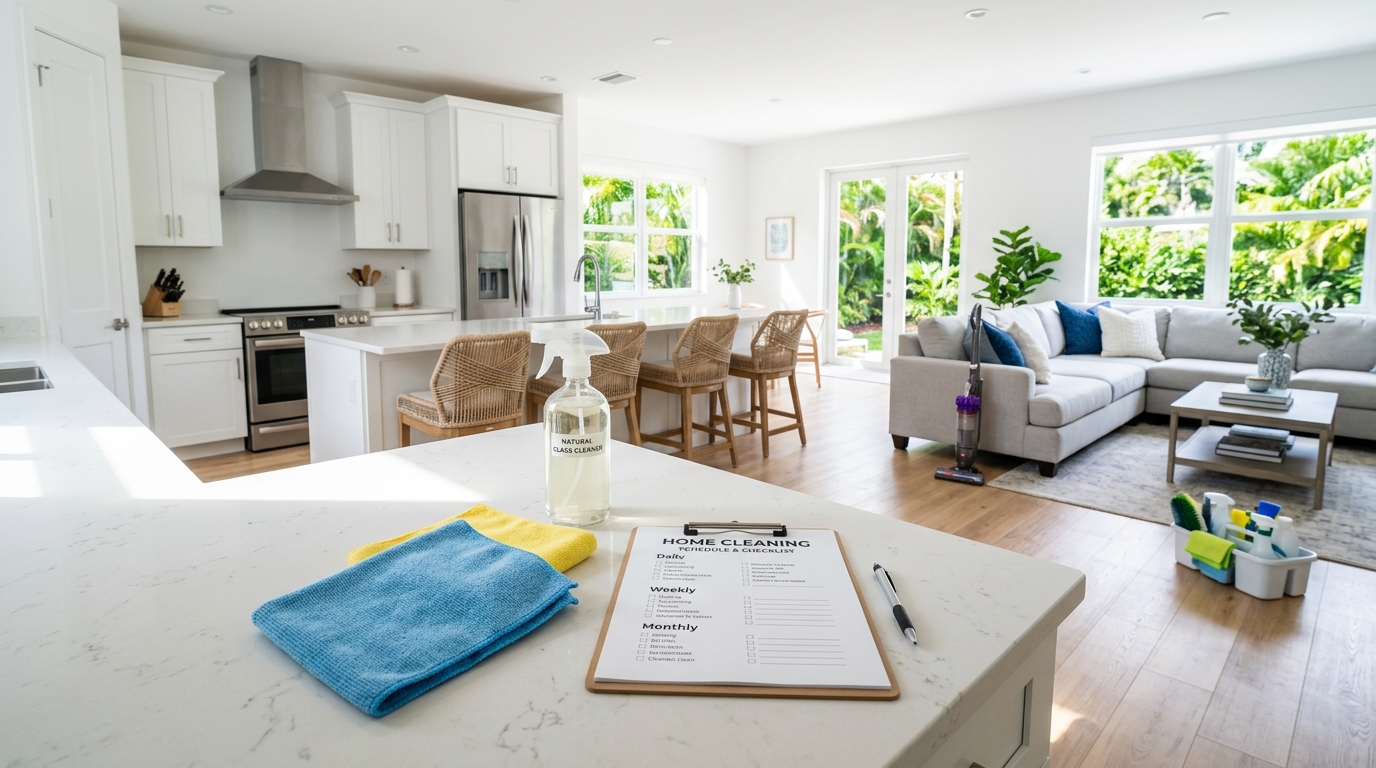
You wipe the counters most nights and the vacuum comes out on weekends. Then one day you notice the shower grout has turned gray and the ceiling fan is wearing a fur coat. If you've ever wondered how often you should clean your house, and every individual thing in it, you're not behind. Most people were simply never handed a real schedule.
We clean homes across South Florida, the St. Petersburg area and the Panhandle coast every week, and we see the same pattern constantly. The visible stuff gets done. The hidden stuff quietly builds up until it becomes a weekend-long project. This guide gives you a daily, weekly, monthly and yearly breakdown, plus a chart you can screenshot. It also covers the Florida-specific adjustments that matter (humidity, sand and pets) and the mistakes that make cleaning take longer than it should.
Why There's No Official Cleaning Schedule (and What Health Agencies Actually Say)
Let's be honest about where cleaning schedules come from. Rules like "wash your sheets weekly" or "deep clean every quarter" come from decades of cleaning-industry experience and common sense. They don't come from clinical studies. No federal agency publishes an official calendar for your baseboards.
What public health agencies do address is the difference between cleaning and disinfecting. According to the joint EPA and CDC cleaning guidance, cleaning with soap and water removes germs, dirt and impurities from surfaces, while disinfecting uses chemicals to kill germs. They are two separate jobs.
The CDC went further in its 2021 update to its household cleaning guidance. It said that in most situations, cleaning surfaces with soap or detergent is enough to reduce risk, and that disinfecting is mainly called for when someone in the home is sick. That's a much calmer message than the "disinfect everything constantly" advice you'll see on a lot of product labels.
So the frequencies below are working rules. They're based on what we see in real homes, shaped by that public health guidance. Treat them as a starting point, then adjust for these factors:
- How many people live there. Two adults and a family of five need very different bathroom schedules.
- Pets. Shedding dogs and cats can double how often floors need attention.
- Cooking habits. Daily frying means more frequent range-hood and backsplash cleaning.
- Allergies or asthma. Dust and bedding need tighter intervals.
- Climate. Florida humidity speeds up mildew in ways a Colorado schedule doesn't account for.
Daily: The 10-to-15-Minute Reset
Daily cleaning isn't about scrubbing. It's about stopping small messes from becoming sticky, stained or smelly ones. Done consistently, this routine takes about as long as one episode of a podcast.
- Empty the sink and wipe it down. Dishes left overnight in a warm Florida kitchen invite ants and odors. Load the dishwasher, then give the basin a quick wipe with dish soap.
- Wipe kitchen counters and the stovetop. Use a microfiber cloth with warm water and a drop of dish soap. Microfiber traps crumbs and grease instead of pushing them around, and dish soap is gentle enough for most sealed stone and laminate.
- Sweep or quick-vacuum the kitchen and entry. Sand travels in on shoes and flip-flops year-round here. A cordless stick vacuum makes this a 90-second job.
- Squeegee the shower after the last use of the day. It takes about a minute and removes most of the water that feeds soap scum and mildew.
- Hang towels spread out, not bunched. Damp, folded towels in a humid bathroom start smelling sour fast.
- Do a two-minute clutter pass. Shoes, mail and dishes go back where they belong. Clutter makes every weekly task slower because you have to move it first.
- Take out food trash if it's full or smelly. In summer, don't wait for the bin to fill up.
How Often Should You Clean Your House Each Week? The Weekly Baseline
Weekly cleaning is the backbone of a home that feels clean. If you only commit to one schedule, make it this one. The goal is to reset every room to "guest-ready" once a week.
Some households can stretch this to every two weeks, especially singles or couples without pets. If you're weighing that tradeoff, we break it down in our guide to weekly vs. biweekly cleaning.
Kitchen
- Wipe appliance fronts, handles and the microwave interior. Heat a bowl of water with a splash of vinegar for two minutes first, and the splatters wipe right off.
- Scrub the sink with baking soda and a soft brush. Baking soda is mildly abrasive, so it lifts stains without scratching stainless steel.
- Mop the floor. Use a pH-neutral floor cleaner for tile and sealed hardwood. Vinegar can dull natural stone.
- Toss expired food from the fridge before grocery day, so you're not stacking new food on old spills.
- Wash dish towels and swap your sponge. In our experience, sponges start to smell within a week or two in a warm kitchen.
Bathrooms
- Clean the toilet inside and out, including the base and the hinges behind the seat, where a lot of grime hides.
- Clean the sink, faucet, counter and mirror.
- Wipe tub and shower surfaces. A weekly pass with a non-abrasive bathroom cleaner stops soap scum before it hardens.
- Mop or wipe the floor, paying attention to the area around the toilet.
- Replace hand towels and bath towels, and wash the bath mat.
Bedrooms and Living Areas
- Change your sheets weekly. This is the classic industry rule. Go sooner if you sweat a lot at night, sleep with pets or have allergies.
- Dust flat surfaces: nightstands, dressers, TV stands and shelves. Use a slightly damp microfiber cloth so the dust stays on the cloth.
- Vacuum rugs and carpets, and mop hard floors.
- Wipe high-touch spots like doorknobs, light switches, remotes and cabinet pulls. Routine cleaning is fine here. Save disinfectant for when someone in the house is sick, in line with the CDC guidance above.
Monthly: The Hidden Spots That Sneak Up on You
This is where most homes fall behind. None of these tasks look urgent on any given day, but skip them for six months and you're looking at caked grease, musty smells and dust bunnies the size of tennis balls. To keep it manageable, we suggest picking two or three items each week rather than tackling the whole list in one Saturday.
- Baseboards and door frames. Wipe them with a damp microfiber cloth. If they're scuffed, a melamine sponge works, but test it on a hidden spot first because it can dull glossy paint.
- Ceiling fan blades. Florida fans run nearly year-round, so they collect dust fast. Slide an old pillowcase over each blade and pull it back so the dust falls inside the case instead of onto your bed.
- Upholstery. Vacuum sofas and chairs, including under the cushions, where crumbs and sand collect.
- Fridge shelves and drawers. Pull them out and wash them in warm, soapy water. Let glass shelves reach room temperature first so they don't crack.
- Dishwasher filter. Most modern dishwashers have a removable filter at the bottom. Rinse it under hot water and scrub it with an old toothbrush. A clogged filter is a common reason dishes come out gritty.
- Washing machine. Run the cleaning cycle (or a hot empty cycle with a cup of white vinegar). On front-loaders, wipe the rubber door gasket, where mildew loves to grow, and leave the door cracked open between loads.
- Range hood filter. Soak it in very hot water with dish soap and a few tablespoons of baking soda for 15 minutes, then scrub it.
- Shower curtain liner. Most fabric and plastic liners can go in the washer on a gentle cycle with a couple of towels to help scrub.
- Sliding door tracks and windowsills. Vacuum the sand and grit with a crevice tool, then wipe the tracks. Grit in the tracks wears out rollers and makes doors hard to slide.
- A/C filter check. Look at it monthly, even if the package says it lasts longer. More on that below.
Every Three to Six Months, and Once a Year
These are the deep-clean tasks. They take longer, but they're also what makes a home feel truly clean rather than just tidy. If you don't have regular help, a full deep clean every three to six months is a solid rule of thumb. With recurring cleaning in place, once or twice a year is usually enough. A professional deep cleaning is a good way to reset the house before starting a maintenance schedule.
| What to clean | How often | Why it matters |
|---|---|---|
| Kitchen counters, stovetop, sink | Daily | Food residue attracts ants and bacteria |
| Shower squeegee | Daily | Removes moisture that feeds mildew |
| Toilets, sinks, mirrors, tub/shower | Weekly | Stops buildup before it needs scrubbing |
| Sheets and towels | Weekly | Body oils, skin cells and dust mites build up |
| Floors (vacuum and mop) | Weekly, more with pets | Sand and grit scratch floors over time |
| Microwave and appliance fronts | Weekly | Splatters harden the longer they sit |
| Baseboards and ceiling fans | Monthly | Dust recirculates through the air |
| Dishwasher and range hood filters | Monthly | Clogged filters mean dirty dishes and greasy air |
| Washer gasket and cleaning cycle | Monthly | Prevents musty laundry |
| Pillows and comforters | Every 3–6 months | Hold sweat and allergens |
| Interior windows and blinds | Every 3 months | Dust and salt film block light |
| Grout and caulk inspection | Every 3 months | Catches mildew and leaks early |
| Shower heads and faucet aerators | Every 3–6 months | Mineral crust reduces water flow |
| Oven interior | Every 3–6 months | Baked-on grease smokes and smells |
| Behind and under appliances | Every 6 months | Crumbs attract pests |
| Mattress (vacuum and rotate) | Every 6 months | Even wear and less dust |
| Carpet deep clean | Once a year | Pulls out embedded dirt vacuums miss |
| Dryer vent duct | Once a year | Lint buildup reduces efficiency and is a fire risk |
| Walls, closets, cabinet interiors | Once a year | General reset and declutter |
A few notes on the trickier items. For shower heads with white crust, fill a zip-top bag with white vinegar, rubber-band it over the head and leave it for an hour or two. For the oven, a paste of baking soda and water left overnight loosens most grime without harsh fumes. For pillows, check the care tag. Many synthetic pillows are machine-washable, but memory foam usually isn't.
Adjusting Your Cleaning Schedule for Florida Homes
A generic cleaning schedule written for a dry climate will let you down here. Florida homes face a few extra challenges, and they all point toward cleaning certain things more often.
Humidity and Mildew
According to the EPA, indoor humidity should be kept below 60 percent to help prevent mold growth. In a Florida summer, bathrooms, closets and the A/C closet can easily go above that. That's why we tighten a few intervals for our Florida clients:
- Clean showers weekly, never every other week, from May through October.
- Run the bathroom exhaust fan for 20 to 30 minutes after every shower.
- Check the A/C filter monthly. Your system runs harder here than the packaging assumes, and a clogged filter means more dust settling everywhere.
- Leave closet doors cracked occasionally and keep items off the floor so air can circulate.
If you're already seeing black spots or smelling mustiness, our guide to humidity and mold in Florida homes walks through what to do.
Sand, Pollen and Salt Air
Coastal homes collect sand at the door and a salty film on glass sliders and windows. Put a coarse mat outside and a soft one inside every entry, and vacuum entry areas two or three times a week. Wipe sliders and exterior-facing windows monthly instead of quarterly if you're near the water.
Pets, Kids and Allergies
With shedding pets, vacuum high-traffic floors two or three times a week and wash pet bedding weekly. With allergies in the house, wash sheets in hot water weekly, use a vacuum with a sealed HEPA filter and dust with a damp cloth rather than a feather duster, which mostly moves dust into the air.
Pro Tip: Tie tasks to triggers instead of dates you'll forget. Check the A/C filter when you pay the electric bill. Change sheets every Sunday morning. Descale shower heads and wash pillows when the clocks change in March and November. When a task is attached to something you already do, it actually happens.
Common Cleaning Schedule Mistakes
We see these in homes all the time, and every one of them makes cleaning slower or less effective.
- Disinfecting instead of cleaning. Spraying disinfectant on a dirty counter doesn't do much, because grime gets in the way. Clean first with soap and water. If you do need to disinfect, follow the label's contact time, which is often several minutes of the surface staying wet.
- Working in the wrong order. Always go top to bottom: fans and shelves first, then counters, then floors. Vacuuming before you dust means vacuuming twice.
- Using one cloth everywhere. Moving the same cloth from the toilet to the kitchen spreads germs. Color-code your microfiber: one color for bathrooms, another for the kitchen.
- Using too much product. Excess cleaner leaves a sticky residue that attracts dirt faster. More soap isn't more clean.
- Forgetting the filters. Dishwasher, range hood, washer and A/C filters quietly cause dirty dishes, greasy air, musty laundry and extra dust.
- Saving it all for one marathon weekend. Spread the monthly tasks out. Twenty minutes a few evenings a week beats an exhausting eight-hour Saturday you'll dread repeating.
Conclusion: A Schedule You'll Actually Keep
So, how often should you clean your house? Do a quick reset of the kitchen and shower daily. Clean bathrooms, floors, kitchen surfaces and bedding weekly. Get to the hidden spots like filters, fans and baseboards monthly. Save the deep tasks for every few months to once a year. In Florida, lean toward the more frequent end for anything that touches moisture, and don't let bathrooms slide in summer.
The best schedule is the one you'll stick to, so start with the daily and weekly lists and add the monthly tasks gradually. If you'd rather leave it to the pros, our recurring cleaning covers the weekly, biweekly or monthly work for you. You get the same cleaner every time, and every one of our cleaners has 2+ years of experience cleaning homes. Recurring service starts at $130 for an apartment under 700 square feet, and larger homes cost more. You can get a quote for your home whenever you're ready.
Frequently Asked Questions
How often should you deep clean your house?
If no one cleans regularly besides you, aim for a full deep clean every three to six months. If you have weekly or biweekly cleaning, once or twice a year is usually enough. A deep clean covers baseboards, inside appliances, grout, blinds and behind furniture.
How often should a house be professionally cleaned?
It depends on your household. Families with kids or pets often do best with weekly cleaning. Couples and singles usually find biweekly keeps things comfortable. Monthly works for very tidy households that handle daily upkeep themselves.
How often should you change your sheets?
Once a week is the standard rule of thumb. Change them more often if you sweat at night, sleep with pets, have allergies or have been sick. Wash pillows and comforters every three to six months.
How often should you clean your bathroom?
Give it a full clean weekly, with a daily shower squeegee and quick sink wipe. In humid Florida summers, don't stretch the shower and tub beyond a week, or mildew gets a head start.
Is it okay to only clean your house once a month?
For most homes, once a month isn't enough on its own. Kitchens, bathrooms and bedding need weekly attention to stay sanitary and odor-free. Monthly can work for the hidden tasks, or as a professional visit if you keep up with daily and weekly basics yourself.