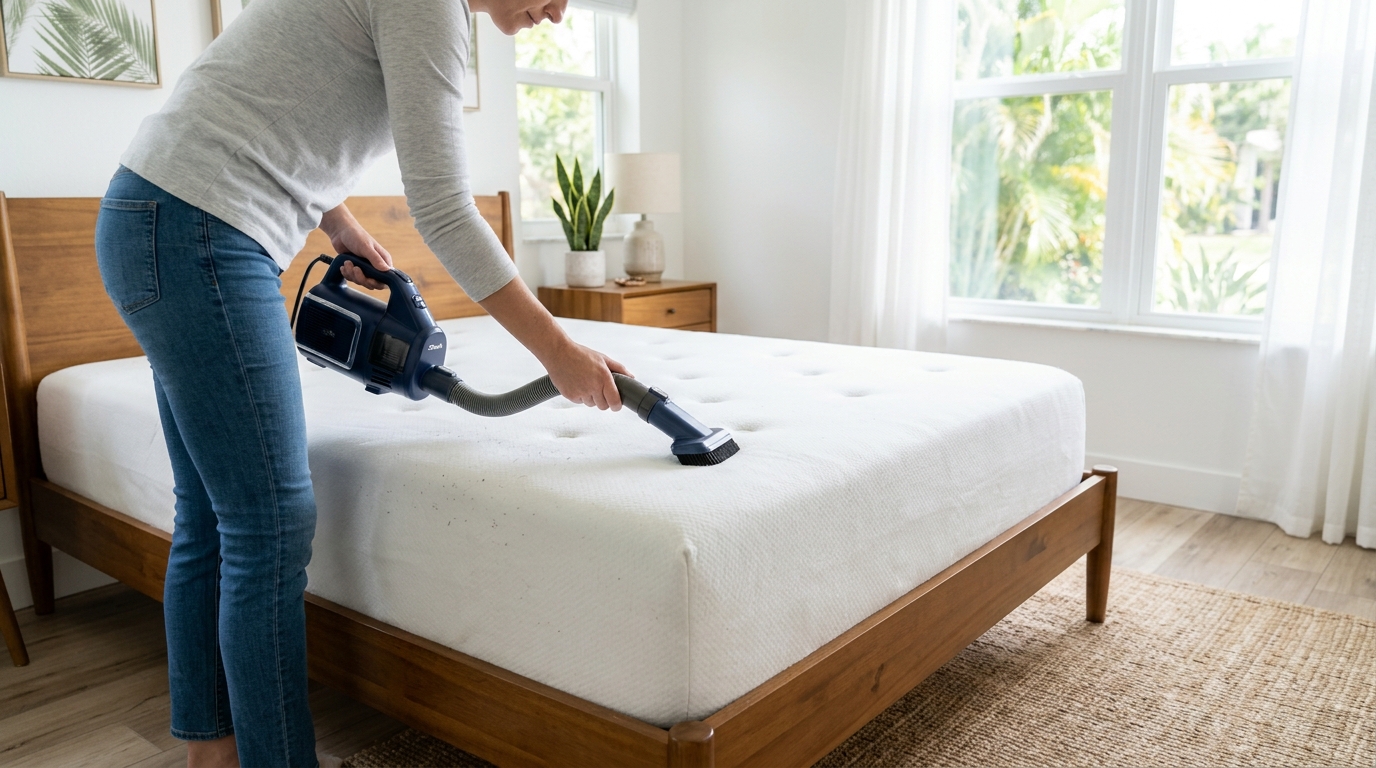
Strip the sheets off most mattresses and you'll find yellow patches, a faint smell you can't quite place, and a surface that's never seen a vacuum. If you're wondering how to clean a mattress without soaking it, ruining the foam or voiding the warranty, you're in the right place. In Florida, where the air stays damp most of the year, a neglected mattress also becomes a comfortable home for dust mites and mildew.
We clean hundreds of Florida homes every month, and bedrooms are where people most often ask us, "What do I do about the mattress?" This guide covers the exact supplies to use, a full step-by-step cleaning routine, stain-by-stain fixes, how to get rid of odors, and what actually reduces dust mites in a humid climate. You'll also learn the mistakes that turn a small stain into a mildew problem.
What You'll Need (and Why Each Item Matters)
You don't need a special machine. Most of what works is already under your sink. Here's the kit we'd put together:
- A vacuum with an upholstery attachment and, ideally, a HEPA filter. The HEPA filter traps fine dust and allergen particles instead of blowing them back into the room.
- Baking soda, a full box for a queen or king. It absorbs moisture and neutralizes odors rather than masking them.
- An enzyme cleaner (sold for pet stains). Enzymes break down proteins in urine, sweat, vomit and blood, which is why they beat general cleaners on body fluids.
- 3% hydrogen peroxide, the standard brown-bottle drugstore kind. It lifts yellowing and old stains, but it can lighten colored fabric, so test first.
- Clear dish soap. Clear matters, because dyed soap can leave its own tint on a white cover.
- White vinegar for fresh urine and odor.
- A spray bottle, several white microfiber cloths and a soft brush. White cloths let you see when the stain is transferring and won't bleed dye.
- A fan, your AC, or a dehumidifier. In Florida, drying is the step that makes or breaks the job.
One safety rule before you start: never mix hydrogen peroxide and vinegar in the same bottle, and never combine bleach with vinegar or ammonia. Use them in separate steps, and rinse between them.
How to Clean a Mattress Step by Step
Plan for most of a day. The active work takes about an hour, but baking soda needs several hours to do its job, and the mattress needs time to dry fully before you make the bed. Start in the morning so you're not sleeping on the couch.
1. Check the care tag first
Look for the law tag and any care label, or search your mattress brand's care page. Many memory foam and latex makers warn against soaking the mattress or using steam, and some warranties can be voided by stains or improper cleaning. Two minutes of reading can save you an expensive argument later.
2. Strip everything and wash it hot
Pull off sheets, pillowcases, the mattress protector and any removable cover that the label says is machine washable. Wash them on the hottest setting the fabric allows, ideally 130°F or hotter, then dry on high heat. Hot water and a hot dryer are among the most reliable ways to kill dust mites in bedding.
3. Vacuum slowly and thoroughly
Use the upholstery tool and go over the whole top surface in overlapping rows, then the sides. Slow passes pick up far more than quick ones. Use a crevice tool along the seams, piping and any tufted buttons, because skin flakes and dust collect there.
4. Spot-treat stains
Work on stains now, before the baking soda goes on. The specific fixes are in the next section. The golden rule: apply cleaner to a cloth or mist it lightly, then blot. Don't pour liquid directly onto the mattress, and don't scrub hard enough to fray the fabric.
5. Deodorize with baking soda
Once spot-treated areas are just damp, not wet, sift a generous, even layer of baking soda over the whole surface. A kitchen sieve gives a smooth coat. Leave it at least several hours, and eight or more if the mattress smells musty. Open the blinds and let sunlight in if you can; it helps the surface dry and freshen.
6. Vacuum again
Vacuum up every bit of baking soda with the upholstery tool. Leftover powder can work into the fabric and feel gritty.
7. Flip or rotate
If your mattress is two-sided, flip it and repeat on the other side. Most modern foam and hybrid beds are one-sided, so just rotate them 180 degrees, head to foot. Rotating every few months evens out wear and body impressions.
8. Dry completely, then protect it
Run the AC and point a fan at the mattress until any damp spots are bone dry. Press a dry paper towel firmly into treated areas; if it picks up moisture, keep drying. Then put on a waterproof, breathable mattress protector before the sheets. That protector does more to keep a mattress clean than any cleaning method.
How to Remove Common Mattress Stains
Fresh stains come out far more easily than old ones, so act fast. Blot, never rub, and always work from the outside of the stain toward the center so it doesn't spread. Test any cleaner on a hidden spot near the bottom edge first.
| Stain | What to use | Key rule |
|---|---|---|
| Sweat / yellowing | Peroxide, baking soda and a drop of dish soap paste | Test first; peroxide can lighten color |
| Urine (fresh) | Blot, then 1:1 vinegar and water, then baking soda | Blot up as much as possible before cleaning |
| Urine (old) / vomit | Enzyme cleaner | Give it the full dwell time on the label |
| Blood | Cold water, then peroxide or enzyme cleaner | Never use hot water; heat sets protein stains |
| Food / drinks | A few drops of clear dish soap in cool water | Rinse with a cloth dampened in plain water |
Sweat and yellow stains
Mix about 1/2 cup of 3% hydrogen peroxide, 2 tablespoons of baking soda and one small drop of clear dish soap into a loose paste. Spread a thin layer on the stain, let it sit 30 to 60 minutes, then blot it off with a cloth dampened in plain water. Mix it fresh each time and don't store it in a sealed container. Old yellowing may need two rounds and may fade rather than disappear completely.
Urine
For a fresh accident, blot with dry towels, pressing hard, until no more moisture transfers. Lightly mist a 50/50 mix of white vinegar and water, blot again, then cover the spot with baking soda and let it dry for several hours before vacuuming. For older urine, or if the smell comes back, switch to an enzyme cleaner. Enzymes break down the uric acid residue that vinegar alone can leave behind.
Blood
Use cold water only. Dab with a cloth dampened in cold water, then apply a little hydrogen peroxide; you'll see it fizz as it works. Blot, repeat until the stain stops transferring, and finish with a cloth dampened in plain water.
Vomit and food
Scrape away solids with a dull knife or spoon first. Treat vomit with an enzyme cleaner. For food and drink, a few drops of clear dish soap in a cup of cool water usually does it, followed by a plain-water blot to remove soap residue that would otherwise attract new dirt.
Pro Tip: Use the least liquid you possibly can. In our experience, the biggest mattress disasters don't come from stubborn stains; they come from someone pouring cleaner into the foam. Moisture that sinks deep can take days to dry in a Florida bedroom and can lead to mildew inside the mattress where you can't reach it. Mist the cloth, not the mattress, and dry the spot with a fan as soon as you finish.
Getting Rid of Mattress Odors
Most mattress smells come from three sources: body oils and sweat, pet accidents, and trapped humidity. The fix depends on which one you're dealing with.
- General staleness: The baking soda treatment above handles it. For stronger smells, leave the baking soda on for a full day and keep the room aired out and cool.
- Pet or urine odor: If the smell lingers after baking soda, there's residue below the surface. An enzyme cleaner, applied lightly and allowed to dwell, is the right tool.
- Musty or mildew smell: This means moisture has been trapped. Dry the mattress thoroughly with AC, fans and a dehumidifier, then deodorize. If you see dark spots or the smell keeps returning, our guide to humidity and mold in Florida homes explains what's going on and when it's time to call a specialist.
Avoid heavy fabric sprays and scented powders as a fix. They cover odor for a day, then mix with the original smell. Some people add a few drops of essential oil to baking soda; that's fine if nobody in the house is sensitive to fragrance, but it's optional, not a cleaning step.
Dust Mites: What Actually Helps in a Humid Florida Home
Dust mites are microscopic relatives of spiders that feed on shed skin. For people with allergies or asthma, their droppings can trigger sneezing, itchy eyes and stuffiness that's worst in the morning. You can't eliminate them completely, but you can cut their numbers dramatically.
Florida makes this harder, because dust mites thrive in warm, humid air and absorb moisture from it to survive. Allergists generally recommend keeping indoor humidity below 50 percent, and many South Florida and Panhandle homes sit well above that for much of the year. That's why a mattress here needs more attention than the same mattress in a dry climate.
Your dust mite routine
- Wash bedding weekly in hot water. Sheets and pillowcases at 130°F or hotter, dried on high heat. Blankets and duvet covers every two to four weeks.
- Vacuum the mattress monthly with a HEPA vacuum, focusing on seams.
- Control humidity. Keep the AC running when you're away instead of shutting it off; a closed-up Florida house gets humid fast. A cheap hygrometer tells you where you stand, and a dehumidifier helps in bedrooms that stay damp.
- Use a zippered allergen-proof encasement on the mattress and pillows. Research on encasements used alone is mixed, so treat them as one part of a routine, not a cure on their own.
- Reduce dust in the room. Fewer throw pillows, stuffed animals and fabric piles mean fewer places for mites to live. Wash or replace pillows regularly, since they collect mites too.
What about steam cleaning?
Steam's high heat can kill dust mites on contact, and some guides recommend it. The trade-off is moisture. Many foam and latex manufacturers advise against steam, and steam forced into a mattress in a humid bedroom can be slow to dry. If your care tag allows it, use a handheld steamer with quick passes, keep the head moving, and dry the mattress thoroughly afterward. If the tag says no, stick with vacuuming and hot-washing your bedding.
Dust mites are only one part of keeping allergens down. Our post on reducing allergens through home cleaning covers the rest of the house, from air filters to ceiling fans.
Common Mattress Cleaning Mistakes
These are the errors we see most often, and nearly all of them are easy to avoid.
- Soaking the mattress. Excess water sinks into foam and padding and may never fully dry. Spray cloths, not mattresses.
- Using hot water on blood or other protein stains. Heat sets the stain permanently. Cold first, always.
- Scrubbing hard. Aggressive scrubbing spreads the stain, pushes it deeper and can pill or tear the cover fabric. Blot.
- Skipping the patch test. Hydrogen peroxide can lighten colored or patterned covers. Test on a hidden spot first.
- Mixing cleaners. Peroxide plus vinegar in one container, or bleach with ammonia or vinegar, creates harmful fumes. Use one product at a time and rinse between steps.
- Making the bed too soon. A mattress that feels dry on top can still be damp underneath. Wait until the paper-towel test comes back dry.
- Trying to save a flood-soaked mattress. After a storm or plumbing flood, a mattress soaked by floodwater, which can carry sewage and bacteria, can't be reliably cleaned at home. Throw it out.
- Skipping the protector. A waterproof protector keeps sweat, spills and accidents off the mattress in the first place and can be tossed in the wash. It's the cheapest insurance your mattress can get.
How often should you do all this?
Here's the schedule we recommend for most Florida households:
- Weekly: Wash sheets and pillowcases hot.
- Monthly: Vacuum the mattress.
- Every 3 months or so: Rotate or flip, wash the mattress protector.
- Every 6 months: Full clean with baking soda, plus any stain treatment.
- Immediately: Any spill, accident or illness.
If you want to see how mattress care fits alongside everything else in the house, our guide to how often to clean everything lays it all out.
The Bottom Line on Mattress Cleaning
Knowing how to clean a mattress comes down to a few habits: vacuum slowly, treat stains with the right product and as little liquid as possible, let baking soda do the deodorizing, and dry everything completely before the sheets go back on. In Florida, add humidity control and weekly hot washes, and you'll keep both dust mites and mildew in check. Finish with a good protector and the next cleaning gets much easier.
A mattress is a manageable weekend project. The rest of the house is a bigger lift, especially the dusty bedroom corners, ceiling fans and baseboards that feed allergens back into your bed. If you'd rather leave that to the pros, our deep cleaning service covers the top-to-bottom work, handled by cleaners with 2+ years of experience cleaning homes. You can get a quote anytime, and a real person answers, 7 days a week.
Frequently Asked Questions
Can you clean a mattress with just baking soda?
Baking soda alone handles general odor and light moisture well. Sprinkle it evenly, leave it for at least several hours (overnight is better), and vacuum it up. It won't remove set-in stains, though; for sweat, urine or blood, you'll need peroxide, vinegar or an enzyme cleaner first.
How do you get old yellow stains out of a mattress?
Use a fresh paste of about 1/2 cup of 3% hydrogen peroxide, 2 tablespoons of baking soda and a drop of clear dish soap. Spread it thinly, let it sit 30 to 60 minutes, then blot it off with a damp cloth and dry the area well. Old yellowing may take two or three rounds and often fades rather than disappearing entirely. Test on a hidden spot first.
How do I get rid of dust mites in my mattress naturally?
Wash bedding weekly in water at 130°F or hotter and dry on high heat, vacuum the mattress monthly with a HEPA vacuum, and keep indoor humidity below about 50 percent with your AC or a dehumidifier. A zippered allergen-proof encasement can help as part of that routine. You won't eliminate mites entirely, but these steps reduce them significantly.
Can you steam clean a memory foam mattress?
Check your manufacturer's care instructions first. Many foam makers advise against steam and soaking, because heat and moisture can damage the foam and moisture is slow to dry, especially in humid climates. If steam isn't allowed, rely on vacuuming, light spot-cleaning and baking soda instead.
How long does a mattress take to dry after cleaning?
Light spot-cleaning usually dries in a few hours with a fan and the AC running. Larger treated areas can take most of a day in a humid Florida home. Don't put sheets back on until a dry paper towel pressed firmly into the spot comes away completely dry.