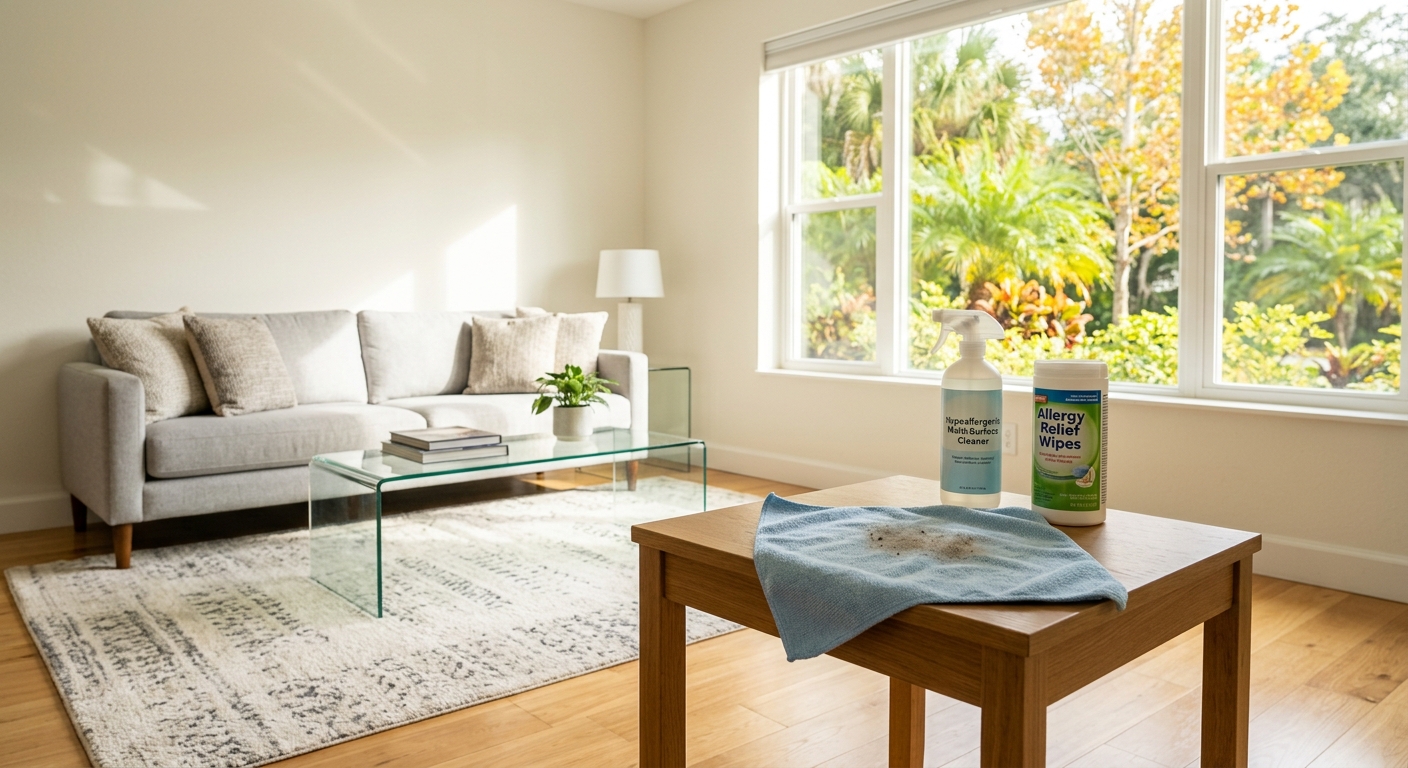
If you've been sneezing your way through September wondering why your "spring allergies" showed up in the fall, you're not imagining things. Fall allergy cleaning ragweed florida season is real, it's long, and it hits harder here than in most of the country. After cleaning hundreds of homes across Miami-Dade, Broward, and Palm Beach counties every fall, our team has a front-row seat to how ragweed pollen and mold spores pile up inside houses long after the windows are closed.
Here's what most people don't realize: ragweed in South Florida doesn't politely end in October like it does up north. In this guide, we'll walk through the actual timeline of our local ragweed season, why your air purifier alone isn't solving the problem, which vacuums and filters are worth your money, and the exact room-by-room routine we use to knock down allergen levels in a real home.
How Long Does Ragweed Season Actually Last in South Florida?
In most of the country, ragweed season wraps up with the first hard frost. We don't get frost. Ragweed season in Miami typically starts in late August and can stretch into early November, with September and October standing out as the worst two months for symptoms.
Because South Florida's growing season never really shuts down, our ragweed and weed pollen exposure often extends through early December rather than stopping in November like it does in cooler climates. Short ragweed, the most allergenic variety, thrives in this stretched-out warm season, and researchers have pointed to climate factors like warmer temperatures and elevated CO2 levels as reasons pollen seasons keep getting longer and more intense here.
There's also an urban twist worth knowing. A 2023 Florida study on ragweed pollen in an urban Jacksonville community with high asthma rates found that ragweed actually flourishes more in cities than in rural areas, likely because of higher atmospheric CO2 concentrations near dense development. Translate that to Miami, Fort Lauderdale, and Boca Raton: dense urban and suburban neighborhoods aren't a safe haven from ragweed. If anything, they can concentrate it.
On top of ragweed, Florida's fall brings a second allergen problem: mold. As temperatures cool slightly and humidity stays high, mold spores thrive in the cool, damp conditions typical of a Florida autumn. So if you're only thinking about pollen, you're solving half the problem.
Why Cleaning Indoors Matters More Than People Think
Here's a stat that changes how most people think about allergy season: the EPA reports that Americans spend up to 90% of their time indoors. That means the vast majority of your ragweed and mold exposure this fall isn't happening on your afternoon walk. It's happening in your living room, your bedroom, and your car.
Common indoor contaminants during fall allergy season include fine particulate matter, mold, and pollen that rides in on shoes, pets, and open windows. Once pollen gets inside, it doesn't just float around waiting to be filtered out. It settles onto carpet, upholstery, blinds, and bedding within minutes.
This is the part that trips up almost everyone: mechanical air filters and purifiers are genuinely good at capturing airborne particles like pollen and dust, but because those particles settle out of the air so quickly, filters alone can't fully clean a room. Every time someone walks across a rug or plops onto a couch, settled pollen gets kicked back into the air, and if your purifier isn't running at that exact moment, it resettles somewhere else before it's ever filtered out.
Pro Tip: Run your air purifier or HVAC fan on a low continuous setting during active cleaning, not just passively in the background. Agitating dust with a vacuum or duster releases far more allergens into the air than normal foot traffic, and you want the filtration system actively working during that window, not sitting idle.
The Hypoallergenic Label Myth (And What to Trust Instead)
Walk down any cleaning aisle and you'll see "hypoallergenic" slapped on everything from sprays to air purifiers. Here's the uncomfortable truth: there's no legal regulation on that term. A product can call itself hypoallergenic without any independent testing to back it up.
What actually means something is the asthma & allergy friendly® Certification, developed jointly by the Allergy & Asthma Foundation of America (AAFA) and Allergy Standards Limited. Products carrying this mark have been tested against strict standards for allergen reduction. If you're shopping for an air purifier or vacuum specifically for fall allergy cleaning, look for that certification mark before you trust the marketing copy on the box.
Vacuums and Filters That Actually Trap Ragweed Pollen
Not all vacuums are created equal when it comes to allergy season, and this is where a lot of well-meaning homeowners waste money. Two ratings matter most:
- MERV rating measures a filter's ability to capture particles between 0.3 and 10 microns. Higher MERV means better capture of fine pollen and dust.
- CADR (Clean Air Delivery Rate) measures how much filtered air a purifier pushes out per minute, with separate scores for pollen, dust, and smoke. Bigger numbers mean faster room clearing.
A true HEPA filter, properly certified, removes up to 99.97% of particles as small as 0.3 microns, which covers the vast majority of ragweed pollen and dust mite debris. That's not marketing fluff, it's an EPA-backed figure, and it's a meaningful upgrade over a standard vacuum bag.
Here's how we'd break down vacuum options by budget:
- Budget tier: The Kenmore 400 Series (bagged, triple HEPA system) runs around $224.89 and is a solid pick because bagged vacuums seal debris inside rather than releasing it during bin emptying, which matters a lot if you're the one sneezing while you empty a canister.
- Mid-range: A Dyson cordless model with dynamic load sensing (roughly $149-$179) adjusts suction automatically based on debris type, which is handy for switching between hardwood and area rugs without changing settings.
- Premium: We prefer the Miele C3 Kona over generic canister vacuums for homes with heavy-pile carpet, because its sealed HEPA system and stronger motor handle embedded pollen and dander that lighter vacuums just push around instead of lifting out.
For air purification, look for units with true HEPA and activated carbon combined, since carbon helps with odor and VOCs that pollen and mold can trigger alongside allergy symptoms. Coverage numbers matter too, a purifier rated for around 280 square feet of effective coverage (roughly 1,100 square feet in an hour of continuous operation) is realistic for a mid-size living room, not a whole house.
Humidity Control: Florida's Hidden Allergy Multiplier
This is the piece generic allergy articles from other climates completely miss. The EPA recommends keeping indoor humidity between 30% and 50% to discourage both mold growth and dust mites. In South Florida, where outdoor humidity regularly sits above 70% for months at a time, hitting that target indoors takes actual effort, not just running the AC.
If your home's humidity creeps above 50%, you're not just risking mold on grout and window sills, you're actively feeding one of Florida's two biggest fall allergens alongside ragweed. A simple humidity gauge from a hardware store costs under $15 and tells you immediately whether your AC is keeping pace.
Pro Tip: Bathrooms and laundry rooms are almost always the first place humidity creeps past 50% in a Florida home. Run exhaust fans for a full 20 minutes after every shower, not just while you're in there, since residual moisture keeps evaporating into the air long after you turn the water off.
A Room-by-Room Fall Allergy Cleaning Routine
This is the exact sequence our teams use during allergy-season deep cleans. It typically takes 2 to 3 hours for an average 3-bedroom home when done thoroughly.
- Start high, work low. Dust ceiling fans, blinds, and shelving first so settled dust falls onto surfaces and floors you'll clean afterward, not the other way around.
- Use microfiber, not feather dusters. Microfiber cloths trap particles through static and fiber structure, while feather dusters just redistribute pollen into the air.
- Vacuum in overlapping passes. Go over carpets and rugs twice, once in each direction, since a single pass typically leaves 20-30% of embedded debris behind.
- Wash bedding weekly in hot water. Fall allergy season is exactly when to switch from a monthly to a weekly wash cycle for sheets and pillowcases, since bedrooms account for roughly one-third of your total time at home.
- Wipe down window sills and tracks. Pollen collects heavily here from air infiltration, even with windows closed.
- Run HVAC on recirculate. Keeping windows and doors closed and setting your AC to recirculate reduces the amount of outdoor ragweed pollen pulled into your home during peak September and October counts.
One of the trickiest situations we encounter is homes with wall-to-wall carpet in bedrooms. If replacing carpet isn't realistic, low-pile washable throw rugs over hard flooring make a noticeable difference, since bare floors are far easier to keep allergen-free than deep carpet fibers.
What Most Homeowners Get Wrong About Fall Allergy Cleaning
After hundreds of allergy-season cleanings, we consistently see the same handful of mistakes:
- Relying on the air purifier alone. As covered above, settled pollen needs physical removal through vacuuming and damp dusting. A purifier running in an empty room isn't touching what's already on your couch cushions.
- Changing HVAC filters too infrequently. During peak ragweed months, a filter that's fine in June can be overwhelmed by August. Check monthly, not seasonally.
- Trusting bagless vacuums without checking the filter type. Not every bagless vacuum has a true HEPA filter, and emptying an unsealed dustbin can release a cloud of the exact pollen you just vacuumed up.
- Ignoring the AC drip pan and vents. Mold loves the cool, damp conditions inside AC components, and it's rarely on anyone's cleaning checklist.
- Assuming ragweed season ends in October. As we covered, Florida's warm climate regularly pushes ragweed exposure into early December.
If your allergies are worse at home than outdoors, it's usually one of these five issues, not a mystery allergen you haven't identified yet.
Frequently Asked Questions
When does ragweed season end in South Florida?
Ragweed pollen typically peaks in September and October, but South Florida's warm climate often extends measurable ragweed exposure into early November and sometimes early December, longer than most northern states experience.
Do air purifiers actually help with ragweed allergies?
Yes, but only as a supplement to physical cleaning. True HEPA purifiers capture up to 99.97% of airborne particles down to 0.3 microns, but pollen that has already settled onto surfaces needs to be vacuumed or wiped away, since purifiers can't catch what's no longer airborne.
What humidity level is best for reducing mold and dust mites in Florida homes?
The EPA recommends keeping indoor humidity between 30% and 50%. In South Florida this often requires active monitoring with a humidity gauge, since outdoor humidity levels regularly exceed 70% for months at a time during fall.
Is a "hypoallergenic" vacuum or air purifier actually better?
Not necessarily. The term "hypoallergenic" isn't regulated, so look instead for the asthma & allergy friendly® certification from AAFA and Allergy Standards Limited, or check for a true HEPA rating with documented MERV and CADR numbers.
Bringing It All Together
Fall allergy cleaning for ragweed in Florida isn't a one-and-done task, it's a seasonal routine that runs from late August through early December. Between the extended ragweed timeline, Florida's stubborn humidity, and the reality that filters alone won't remove settled pollen, staying ahead of symptoms takes consistent, hands-on cleaning, not just a new air purifier plugged into the corner.
If you'd rather leave the vacuuming, dusting, and humidity battle to people who do this every day, our teams at Catalina Cleaning handle allergy-focused deep cleaning and ongoing recurring cleaning for homes throughout Miami, Fort Lauderdale, and Boca Raton. For a closer look at what a seasonal deep clean typically costs, check out our house cleaning cost guide before your next allergy flare-up hits.