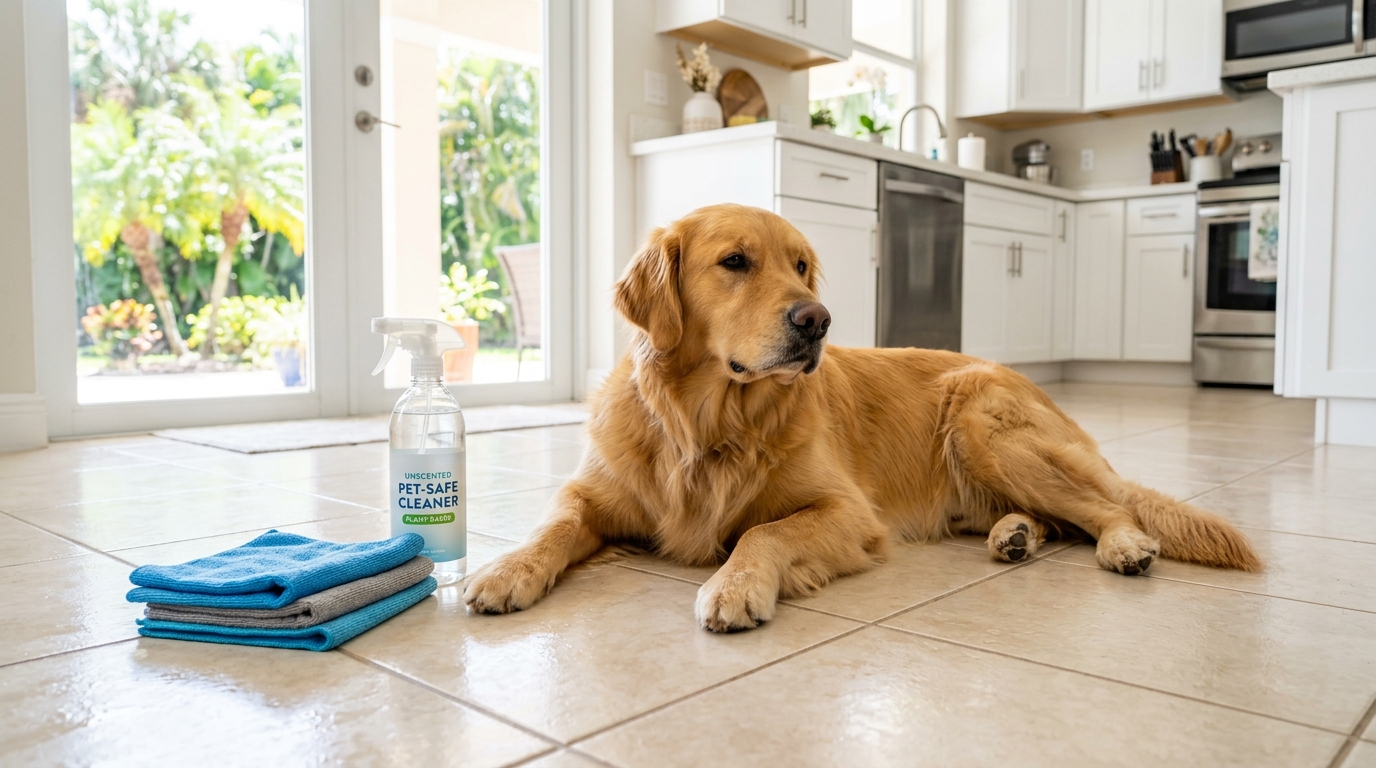
Your dog licks the kitchen floor you just mopped. Your cat walks across the counter you just sprayed, then sits down and cleans her paws. If you've ever wondered which pet-friendly cleaning products are actually safe, and which ones just have a paw print on the bottle, you're asking the right question.
We clean Florida homes with dogs, cats, birds and the occasional bearded dragon every week. In our experience, most pet-related cleaning problems don't come from one scary chemical. They come from the wrong product on the wrong surface, used at the wrong strength, and never rinsed off.
In this guide you'll learn why pets react to cleaners differently than people do, which ingredients to avoid or handle carefully, and how to read a label so marketing doesn't fool you. We'll also cover a room-by-room routine, how to disinfect without putting your animals at risk, and a few things specific to Florida homes.
Why Pets React to Cleaners Differently Than We Do
A person wipes a counter and walks away. A pet lives at floor level, walks barefoot through whatever you left behind, and then licks it off. That's the core difference, and it changes how you should clean.
- Paws and tongues. Residue on floors ends up on paw pads, and grooming carries it into the mouth. Cats are especially thorough groomers.
- Body size. A small dog or cat gets a much bigger dose of residue or fumes relative to its weight than you do.
- Nose height. Pets breathe the air right above freshly mopped floors, where fumes are strongest.
- Cat metabolism. Cats process certain compounds, including phenols and some essential oils, poorly. Something that's a mild irritant for a dog can be a bigger problem for a cat.
- Bird lungs. Birds have very efficient respiratory systems, which makes them more sensitive to aerosols, fumes and overheated non-stick cookware than mammals.
The good news is that the fix is usually about technique, not throwing out every bottle under your sink. The ASPCA's list of poisonous household products is a useful reminder that the risk depends heavily on how a product is used and stored, not just what's in it.
Ingredients to Avoid or Use With Real Care
No ingredient list can promise zero risk, and some of the research on longer-term effects is still debated. But veterinary toxicology sources keep returning to the same handful of culprits. Here's how we think about them.
| Ingredient | Where you'll find it | The concern | Most at-risk pets |
|---|---|---|---|
| Chlorine bleach (sodium hypochlorite) | Bleach, mildew sprays, some toilet cleaners | Concentrated bleach can irritate or burn mouths, skin and eyes; fumes irritate airways. Mixing it with ammonia or acids releases toxic gas. | All pets, birds especially for fumes |
| Ammonia | Some glass and multi-surface cleaners | Strong airway irritant; dangerous if mixed with bleach | All pets, birds |
| Phenols and pine oil | Pine-scented cleaners, some older-style disinfectants | Cats metabolize phenols poorly | Cats |
| Quaternary ammonium compounds ("quats") | Many disinfecting wipes and sprays (look for "benzalkonium chloride" or "...ammonium chloride") | Can irritate mouths and skin if residue is licked or concentrated product is contacted | Cats, then dogs |
| Essential oils (tea tree, pine, citrus, eucalyptus and others) | "Natural" cleaners, diffusers, scented sprays | Several oils are toxic to cats; concentration matters a lot | Cats, birds |
| Aerosols and heated non-stick (PTFE) pans | Air fresheners, spray polishes, overheated cookware | Fumes can be dangerous to birds | Birds |
Veterinary Partner, the VIN-run site for pet owners, singles out phenol-based disinfectants as a particular problem for cats, which is why we never reach for a pine-oil cleaner in a cat household. Pet Poison Helpline also flags quats and concentrated products as the categories most likely to cause trouble, mostly through direct contact or licking.
A note on "natural" products
Natural doesn't mean safe for animals. Some of the most cat-unfriendly ingredients on the market are plant oils. How much risk a diluted essential oil cleaner actually poses is debated, but if you have cats or birds, we'd skip heavily scented "botanical" products rather than gamble.
How to Tell If Pet-Friendly Cleaning Products Are Actually Safe
"Pet safe," "pet friendly" and "non-toxic" aren't regulated terms on cleaning products. A brand can print them without any independent review. So you have to read past the front of the bottle.
- Turn the bottle around. Look for a full ingredient list, not just "plant-based surfactants" and "fragrance." Brands that disclose everything are easier to judge.
- Look for the EPA Safer Choice label, and know what it means. According to the Environmental Defense Fund, the Safer Choice label tells you the product's ingredients have been reviewed against EPA criteria for human health and the environment. That's a solid starting point, but it isn't a pet-safety certification. You still need to check for essential oils if you have cats.
- Check for an EPA registration number. Any product that claims to kill germs is legally a pesticide and carries an "EPA Reg. No." on the label. That number means its directions, including contact time and rinsing, are part of the law, not suggestions.
- Read the signal word. Registered disinfectants carry "Caution," "Warning" or "Danger." Caution is the mildest. If a product says Danger, keep it far away from pet areas.
- Read the first-aid and "keep away from" text. If the label tells you to keep pets off treated surfaces until dry, believe it.
- Skip anything with "fragrance" if you have birds. Unscented is the safer default for sensitive animals.
We go deeper on individual brands and simple homemade options in our guide to the best natural cleaning products.
Our Room-by-Room Pet-Safe Cleaning Routine
The general rule we follow in pet homes: use the mildest product that will do the job, and rinse anything a pet can lick or lie on. Here's what that looks like in practice.
Floors (where pets spend their lives)
Most South Florida homes have porcelain or ceramic tile, and plenty of older homes and condos still have terrazzo or marble. Those natural stones contain calcite, so acidic cleaners like vinegar will etch them over time.
- Dry-mop or vacuum first. Pet hair turns into wet clumps if you mop over it.
- Mop with warm water and a small amount of pH-neutral floor cleaner, following the label dilution. More product isn't cleaner; it's more residue.
- Go over the floor again with a mop dampened in plain water. This rinse step is the one most people skip.
- Keep pets in another room until the floor is fully dry, usually 15 to 30 minutes with the AC or a fan running.
For accidents on rugs and carpet, an enzyme cleaner breaks down the proteins in urine so your pet doesn't keep returning to the spot. Our step-by-step guide to removing pet stains from carpet walks through blotting, dwell time and drying.
Kitchen
- Clean counters with dish soap and warm water for everyday wipe-downs. It cuts grease and leaves nothing a curious cat will mind.
- Use a 50/50 white vinegar and water spray on glass and laminate if you like, but never on granite, marble or terrazzo.
- If you cook with non-stick pans and keep birds, never preheat an empty pan and keep the bird out of the kitchen while cooking.
Bathrooms
Bathrooms are where the strongest products live, and also where pets drink from toilets. We clean toilets with the lid down afterward, flush twice after using any bowl cleaner, and never use drop-in tank tablets in homes where a dog drinks from the bowl.
Pet zones: bowls, beds and litter boxes
- Bowls: wash food and water bowls daily in hot, soapy water, or run stainless and ceramic bowls through the dishwasher. Rinse well.
- Bedding: wash weekly in hot water with an unscented detergent. Skip dryer sheets on pet bedding.
- Litter boxes: scoop daily, and every week or two empty the box and scrub it with mild dish soap and hot water. Strong-smelling cleaners can put cats off the box entirely.
- Toys: hard rubber toys can go in the top rack of the dishwasher; soft toys go in with the bedding.
Disinfecting Without Putting Your Pets at Risk
Everyday cleaning rarely needs a disinfectant. But after vomit, diarrhea, a sick pet or raw meat prep, you'll want one. The trick is using it the way the label intends.
- Move pets out of the room and close the door.
- Clean first. Pick up the mess and wash the surface with soap and water. Disinfectants don't work well through dirt.
- Apply the disinfectant and leave it wet for the full contact time printed on the label. Many people wipe after a few seconds, which mostly just spreads chemical around without disinfecting.
- Rinse surfaces pets touch with clean water, then dry. Floors, crates, bowls and toys all count.
- Ventilate. Run the bathroom fan or a box fan, and keep birds well away until the smell is gone.
Hydrogen peroxide-based and alcohol-based disinfectants are often suggested as lower-risk options around pets, because they break down or evaporate rather than leaving a film. They still need their dwell time and ventilation. If your vet has told you to disinfect for a specific illness, use the product and dilution they recommend.
If you do use bleach, dilute it exactly as the label says, use it alone, rinse, and let the area dry completely. Pet Poison Helpline ran a whole campaign, #StopBleachingFido, around one mistake we still see: people wiping pets' paws or fur with bleach wipes or disinfectant. Don't. Use a damp cloth or a pet-specific wipe instead.
Pro Tip: Keep a separate, clearly labeled spray bottle of plain water and a dedicated microfiber cloth just for "rinse passes." When you finish any cleaner on a surface your pet touches, spritz and wipe once more. It adds about a minute per room and removes most of the residue that ends up on paws and tongues.
Florida Homes and Pets: What's Different Here
Humidity and mold
In South Florida, St. Pete and along the Panhandle, mildew shows up in bathroom grout, AC closets and window tracks fast. People reach for bleach, which is fine with good technique. The danger is mixing it with an ammonia-based cleaner, or using it in a closed bathroom while the cat sits outside the door. Keep pets out, run the exhaust fan, and rinse. We cover the bigger picture in our guide to humidity and mold in Florida homes.
Fleas all year
Florida doesn't get a hard winter to break the flea cycle. Frequent vacuuming of carpets, rugs and upholstery, plus weekly hot-water washing of pet bedding, does a lot of the work. Flea sprays and foggers are pesticides, so treat them like one: follow the label to the letter, and ask your vet before using any home product, especially in a home with cats.
Closed-up, air-conditioned houses
Most of the year, Florida homes stay sealed with the AC running. That means fumes linger. Open windows briefly after strong cleaning when the weather allows, or run fans, and save the heavy-duty jobs for times when pets can be out on the lanai or out of the house.
Garages and hurricane supplies
Hurricane prep often means extra bleach, generator fuel and cleanup chemicals stored in the garage. Keep them on high shelves with lids tight, especially if your dog hangs out there during storms.
Common Mistakes We See in Pet Homes
- Trusting the paw print. "Pet friendly" on the front means nothing without a readable ingredient list on the back.
- Using too much product. Doubling the dilution doesn't double the clean. It doubles the residue on the floor.
- Skipping the rinse. Most floor cleaners are meant to be rinsed or used at a dilution low enough not to need it. Either way, the pet is walking on whatever stays.
- Letting pets back in too soon. Wet floors mean wet paws. Wait until it's fully dry.
- Mixing products. Bleach plus ammonia, or bleach plus vinegar, creates toxic gases. One product at a time, rinse between.
- Essential oil diffusers in cat homes. Even if your cleaners are fine, a diffuser running all day is a constant exposure.
- Vinegar on stone. Pet-safe, yes. Terrazzo-safe, no.
- Leaving buckets out. A mop bucket of cleaner is a water bowl to a thirsty dog.
Making Your Home Clean and Pet Safe
Choosing pet-friendly cleaning products that are actually safe comes down to a few habits: read the full label, avoid phenols, quats and essential oils around cats, keep fumes away from birds, follow disinfectant contact times, and rinse anything a pet can lick. Do that and you can keep a genuinely clean home without worrying every time your dog licks the floor.
If you'd rather leave it to the pros, our team cleans homes with pets across South Florida, St. Pete and the Panhandle every week. Many pet owners like recurring cleaning because regular visits keep hair and dander from building up, and we send the same cleaner whenever possible. Tell us about your animals and any products you want us to skip, and you can get a quote here.
Frequently Asked Questions
Is vinegar safe to clean with around dogs and cats?
Diluted white vinegar is a low-risk cleaner around dogs and cats, and the smell fades as it dries. The bigger concern is surfaces: don't use it on marble, terrazzo, granite or other natural stone, because the acid etches them.
Are disinfecting wipes and sprays safe for pets once they dry?
Many common wipes and sprays use quaternary ammonium compounds, which can leave a residue. Once dry, the risk is lower, but on surfaces pets lick or lie on, rinse with plain water after the label's contact time. Never use disinfecting wipes on your pet's paws or fur.
Are essential oil cleaners safe for cats?
We don't recommend them in cat households. Several essential oils, including tea tree, are known to be toxic to cats, and while the risk from diluted cleaners is debated, unscented products remove the question entirely.
Does EPA Safer Choice mean a product is pet safe?
Not exactly. The Safer Choice label means the EPA has reviewed the ingredients against its criteria for human health and the environment. It's a good sign, but it doesn't certify pet safety, so still check for essential oils if you have cats or birds.
What should I do if my pet licks or eats a cleaning product?
Move your pet away from the product, keep the bottle so you can read the ingredients, and call your vet or an animal poison control line such as the ASPCA Animal Poison Control Center or Pet Poison Helpline. Both list their numbers online and charge a consultation fee. Don't try to make your pet vomit unless a vet tells you to.