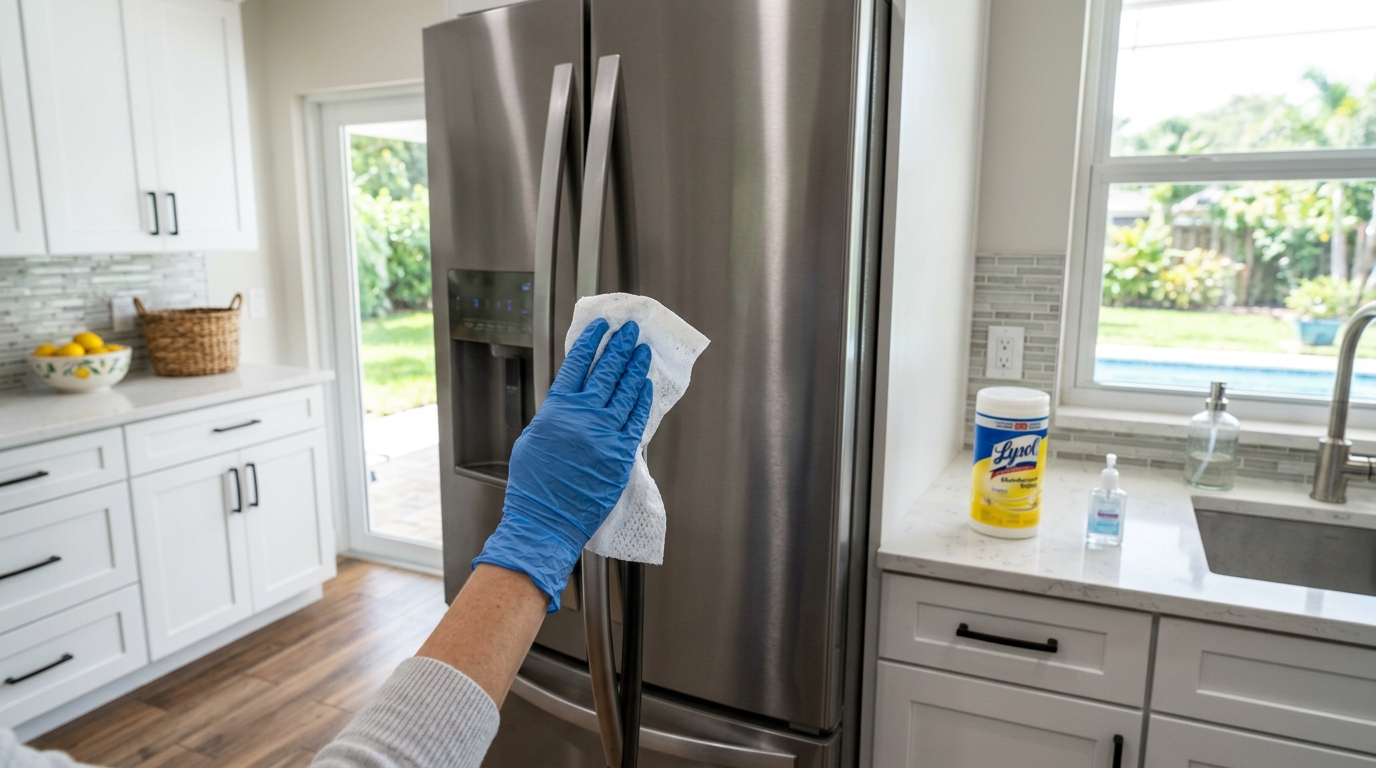
One person brings home a cold, and within a week the whole household is passing tissues. If you want to clean your home to prevent cold and flu from spreading, it helps to know where cleaning makes a real difference. It also helps to know where it doesn't. Most people wipe the wrong things, use the wrong product, or wipe it off too fast.
We clean hundreds of Florida homes a month, and we see the same habits over and over. This guide covers what surface cleaning can and can't do and how to tell cleaning from disinfecting. You'll also get a weekly high-touch routine, a sick-room plan, and what to do about the air inside a closed-up, air-conditioned Florida house.
What Cleaning Can (and Can't) Do Against Colds and Flu
Be realistic first. Cold and flu viruses spread mostly through the air and through close contact with someone who's sick. Germs on surfaces are a smaller route. That's why the CDC's respiratory illness prevention guidance treats cleaner air, hand hygiene and vaccination as core strategies, not just wiping things down.
Surfaces still matter, though. A widely cited study in the Journal of Infectious Diseases found that influenza A and B survived 24 to 48 hours on hard, nonporous surfaces like stainless steel and plastic. On cloth, paper and tissues they survived less than 8 to 12 hours. The researchers could also transfer live virus from stainless steel to hands for up to 24 hours.
That was a lab study, and lab survival isn't the same as real-world infection risk. But the practical point holds. Hard surfaces that lots of hands touch, like faucet handles, fridge doors and remotes, are where cleaning earns its keep.
The three layers that actually work together
- Hands: The CDC's hygiene guidance says to wash with soap and water for at least 20 seconds, especially after coughing, sneezing or blowing your nose.
- Surfaces: Regular cleaning of high-touch spots, plus disinfecting when someone in the house is sick.
- Air: Fresh air, better filtration and sensible humidity. We cover this below because Florida homes have a specific problem here.
Cleaning vs. Disinfecting: The Difference That Matters
The CDC draws a clear line between the two. Cleaning uses soap or detergent and water to physically remove dirt and germs. Disinfecting uses a chemical to kill germs that are left on the surface. When nobody in the house is sick, routine cleaning is often enough. When someone has a cold or the flu, disinfect the high-touch spots too.
Order matters. Disinfectants don't work well on grimy surfaces, because the residue shields the germs. Clean first, then disinfect.
How to pick a disinfectant that works on flu
Look for an EPA registration number on the label. The EPA keeps lists of registered disinfectants and the pathogens they're tested against. Check that influenza is named on your product's label. Common options:
- Disinfecting wipes and sprays (quaternary ammonium or hydrogen peroxide based): Convenient for handles and switches. Hydrogen peroxide products tend to be gentler on most finishes and leave less residue.
- Diluted household bleach: Cheap and effective on non-porous surfaces. CDC household guidance has given a mix of 5 tablespoons (1/3 cup) of bleach per gallof room-temperature water, or 4 teaspoons per quart. Use only unexpired bleach meant for disinfecting, and never mix it with ammonia or any other cleaner.
- Alcohol solutions of at least 70%: Good for electronics like phones and remotes, where you don't want liquid pooling.
Natural products like vinegar are fine for general cleaning. They aren't registered disinfectants against flu, though. If you prefer gentler products day to day, our guide to natural cleaning products covers what each one is actually good for.
Contact time: the step almost everyone skips
Every disinfectant label lists a contact time (also called dwell time). That's how long the surface has to stay visibly wet for the product to work. The CDC's Project Firstline training on contact time makes the point plainly: if the surface dries early, you haven't disinfected it.
Contact times vary a lot between products, and many run several minutes, so read yours. A quick swipe that dries in 15 seconds is cleaning, not disinfecting. This is where "kills 99.9% of germs" claims fall apart in real homes.
Pro Tip: Work in batches. Spray or wipe five or six high-touch spots in one room, set a phone timer for the label's contact time, and re-wet anything that starts to dry. When the timer goes off, wipe food-contact surfaces and anything little hands touch with a clean damp cloth. In our experience, this turns a rushed wipe-down into a real disinfection in about the same total time.
How to Clean Your Home to Prevent Cold and Flu: The Weekly Routine
You don't need to disinfect the whole house every day. Spend your effort on the surfaces most hands touch. Our post on the germiest spots people miss goes deeper, but here's the core list.
High-touch surfaces to hit
| Area | Surfaces | Healthy household | Someone sick |
|---|---|---|---|
| Entry and halls | Door handles, deadbolts, light switches, garage door button | Clean weekly | Disinfect daily |
| Kitchen | Fridge and freezer handles, microwave keypad, faucet, cabinet pulls, countertops | Clean daily (counters), weekly (handles) | Disinfect daily |
| Bathroom | Faucet handles, toilet flush lever and seat, towel bars, cabinet pulls | Clean weekly | Disinfect daily, or after each use if shared |
| Living areas | TV remotes, game controllers, thermostat, chair arms | Clean weekly | Disinfect daily |
| Electronics | Phones, tablets, keyboards, mouse | Wipe weekly with 70% alcohol | Wipe daily |
The 15-minute high-touch sweep
- Grab a caddy. Bring a disinfectant, a stack of microfiber cloths (one per room so you don't carry germs around) and a trash bag.
- Start at the front door and work through the house in one direction. Do handles, deadbolts and switches as you pass them.
- Do the kitchen next. Clean counters with dish soap and water, then disinfect handles, faucet and appliance keypads.
- Do bathrooms last, using a separate cloth that goes straight into the laundry afterward.
- Finish with electronics. Use alcohol wipes, not sprays, so liquid doesn't get into ports.
In Florida, flu season doesn't always follow the neat winter peak people up north expect. Florida Department of Health surveillance often shows activity that's less sharply defined. In our experience, it's worth stepping up this routine from October through spring, and any time someone in the house is coughing.
When Someone Gets Sick: A Sick-Room Cleaning Plan
This is when disinfecting really pays off. Your goal is to keep the virus contained to one person and one room as much as you can.
- Pick one room and, if possible, one bathroom for the sick person. Keep a lined trash can by the bed.
- Tissues go straight into the lined can. In the same Journal of Infectious Diseases study, virus transferred from tissues to hands for up to 15 minutes. That's short, but used tissues left on a nightstand get handled.
- Give them their own towels, cup and toothbrush holder. Shared hand towels in a bathroom are one of the easiest ways to pass a cold along.
- Disinfect the sick person's high-touch spots once a day: bedside lamp switch, door handle, faucet, toilet flush lever, remote and phone.
- Ventilate the room. Open a window if the weather allows, or run a HEPA air purifier in there.
- Wash dishes in hot water or run them through the dishwasher. They don't need separate handling beyond that.
After the illness passes
Once everyone has recovered, do one final round. Wash all bedding, pillowcases and throw blankets from the sick room. Disinfect every hard surface in that room and bathroom. Swap toothbrushes too. That's cheap insurance against round two.
Soft Surfaces, Laundry and Kitchen Tools
Viruses don't survive as long on fabric as on hard surfaces, but soft items still need attention when someone's sick.
- Bedding and towels: Wash on the warmest setting the fabric label allows and dry completely. Don't shake dirty laundry, and wash your hands after loading the machine.
- Hampers: Use a removable liner bag you can wash, or wipe the hamper with disinfectant.
- Throw pillows and couch cushions: Wash removable covers. For fixed upholstery, vacuum and use a fabric-safe sanitizing spray if the label allows it.
- Kids' toys: Hard plastic toys can go in the dishwasher's top rack or be washed in hot soapy water. Plush toys go through the washer.
The kitchen sponge deserves its own mention. It stays damp, it touches every dish, and it moves germs from one surface to the next. During cold season, swap to fresh dishcloths daily or sanitize sponges regularly. Our guide on how to clean and disinfect kitchen sponges walks through methods that actually work.
Don't Forget the Air: Ventilation, Filters and Florida Humidity
Since flu and colds spread mainly through the air, this is where many households can make the biggest gain. The CDC's guide to cleaner air for respiratory virus prevention focuses on three moves: bring in fresh outdoor air, filter the air you have, and move air around.
What that looks like in a Florida home
- Fresh air: Many South Florida and Panhandle homes stay sealed with the A/C running most of the year. On milder days, crack windows on opposite sides of the house for cross-ventilation. In condos without opening windows, run bathroom and kitchen exhaust fans.
- HVAC filters: Use the highest-rated filter your system is designed to handle, and change it on schedule. Florida systems run hard, so filters load up faster than the package suggests. Check them monthly.
- Portable HEPA purifiers: Put one in the sick room and one in the main living area. Size it to the room's square footage.
- Fan setting: Running the HVAC fan more often (not only when cooling) pushes more air through the filter.
Humidity: the Florida twist
The EPA recommends keeping indoor humidity below 60%, ideally between 30% and 50%, to control mold and dust mites. In Florida the challenge is almost always too much moisture, not too little. A damp house won't spread flu by itself, but mold and dust mites irritate airways that are already struggling.
A cheap hygrometer tells you where you stand. If you're regularly above 60%, a dehumidifier or an A/C service is worth it. Our post on humidity and mold in Florida homes has more on this.
Common Mistakes That Undo Your Cleaning
- Wiping disinfectant off right away. If it doesn't stay wet for the label's contact time, it hasn't disinfected.
- Disinfecting dirty surfaces. Grease and grime protect germs. Clean first, then disinfect.
- Using one cloth for the whole house. You end up spreading bathroom germs onto the fridge handle. Use one cloth per room and launder them hot.
- Mixing products. Bleach plus ammonia, or bleach plus vinegar, releases toxic gases. Use one product at a time and rinse between.
- Fogging the whole house with spray. Spraying air freshener or disinfectant into the air doesn't clean the air and can irritate lungs. Spend that effort on ventilation and filtration.
- Forgetting the phone. It goes everywhere, including the bathroom, and gets touched constantly.
- Over-disinfecting a healthy home. Daily bleach on every surface when no one is sick adds fumes and wear without much benefit. Routine cleaning is usually enough until someone gets sick.
The Bottom Line
When you clean your home to prevent cold and flu, focus beats volume. Keep up routine cleaning of high-touch surfaces. Switch to real disinfecting, with full contact time, when someone gets sick. Contain the sick room, wash hands often, and give the air in your sealed-up Florida house the same attention you give the countertops.
Some households also start cold season with a reset, a thorough clean of the spots that get skipped all year, then keep it up with regular visits. If you'd rather leave it to the pros, our team handles deep cleaning (starting at $312 for apartments under 700 sq ft) and recurring cleaning (from $130). Bigger homes cost more, and you can get a quote for yours.
Frequently Asked Questions
How long does the flu virus live on surfaces?
In a well-known lab study published in the Journal of Infectious Diseases, influenza survived 24 to 48 hours on hard, nonporous surfaces like stainless steel and plastic. It survived less than 8 to 12 hours on cloth, paper and tissues. Real-world survival depends on temperature, humidity and how much virus was there to begin with.
Do disinfecting wipes kill the flu virus?
Many do, if influenza is listed on the label and the surface stays wet for the full contact time printed there. A quick swipe that dries in seconds mostly just cleans. Check the label, and use more than one wipe on large areas so the surface stays wet.
Should I disinfect my house after someone has the flu?
Yes. Disinfect high-touch surfaces daily while the person is sick, then do a final round once everyone has recovered. That means washing their bedding and towels and disinfecting their room and bathroom. You don't need to disinfect walls, floors or rarely touched surfaces.
Is cleaning enough, or do I need to disinfect every day?
The CDC distinguishes the two. In a healthy household, routine cleaning with soap or detergent usually does the job. Add disinfecting for high-touch surfaces when someone in the home is sick or at higher risk.
Do air purifiers help prevent colds and flu?
Because these viruses spread mainly through the air, the CDC includes filtering indoor air among its steps for cleaner air. A properly sized HEPA purifier in the sick person's room and main living space, plus a good HVAC filter changed on schedule, can help. It works alongside handwashing and vaccination, not instead of them.