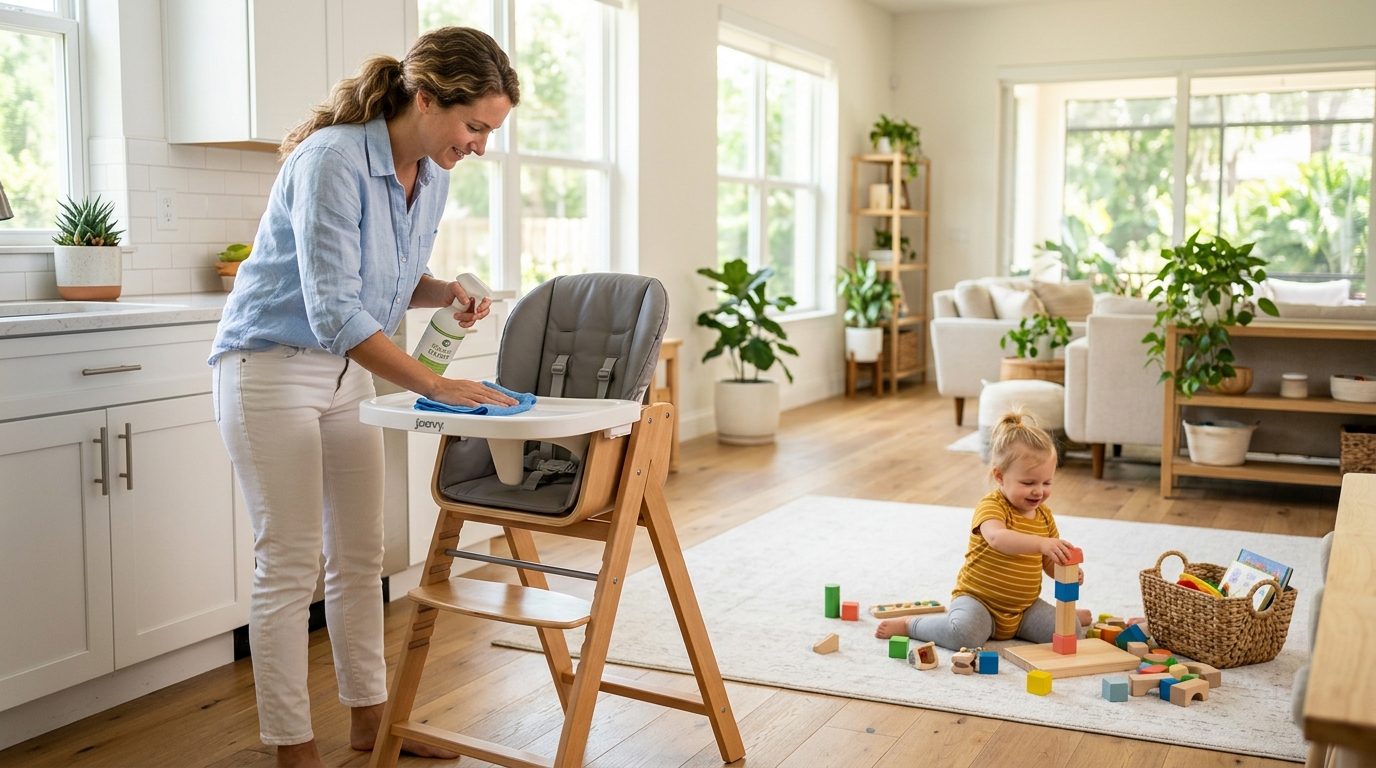
The day your baby starts crawling, the floor becomes a dinner plate and every low cabinet becomes a treasure chest. The cleaning routine that worked for two adults suddenly feels risky: too many sprays, too many bottles under the sink, and a small person who puts everything in their mouth. These cleaning tips for homes with babies and toddlers come from what we see every week in Florida homes with little kids.
Below, you'll learn how to store products so curious hands can't reach them, and when plain soap and water is enough (most of the time). We'll cover how to read a disinfectant label properly, which spots matter most at crawl height, and how Florida's humidity and bugs change the playbook. Then we'll walk through the mistakes we see most often and answer the questions parents search for.
Lock It Up Before You Wipe Anything
Safety starts before any cleaning happens. According to America's Poison Centers, cleaning products are consistently one of the most common categories of poison exposures in children under 6. Researchers take this seriously. One peer-reviewed analysis of National Poison Data System records from 2000 to 2015 focused entirely on unintentional child exposures to household cleaning products.
Most of these incidents happen during ordinary moments. A bottle gets left on the tub ledge, or a cabinet has no latch. Here's the setup we recommend:
- Move everything up and in. The cabinet under the sink is the most convenient spot for you, and also for a crawler. Move cleaners to a high cabinet above counter height, and add a latch anyway. Toddlers climb.
- Keep products in their original containers. Never pour bleach or degreaser into an unlabeled spray bottle, and never into a drink bottle. The label carries the ingredient and first-aid information that poison control will ask you about.
- Treat laundry pods as a top hazard. Researchers at Nationwide Children's Hospital, publishing in the journal Pediatrics, linked single-load laundry packets to thousands of child exposures a year. Pods are squishy, brightly colored and candy-sized. Keep the tub closed, latched and out of sight. Or switch to liquid or powder detergent until your youngest is older.
- Carry one caddy. Keep the products for a cleaning session in a single tote. When you step away to answer the door, the caddy goes with you or goes up high. Many accidents start with a spray bottle left on the coffee table for just a minute.
- Save the number now. The Poison Help line, 1-800-222-1222, is free, open 24/7, and connects Florida callers to a regional poison center. Save it in your phone, and tape it to the fridge for babysitters and grandparents.
Clean First, Disinfect Only When It Counts
Many parents assume more disinfectant means a safer baby. For everyday surfaces, we've found the opposite is closer to the truth. Cleaning with soap, water and friction removes dirt and most germs. Disinfecting kills what's left, and you only need it in specific situations.
Child-care health resources, such as those from the UCSF California Childcare Health Program, treat cleaning, sanitizing and disinfecting as separate jobs with separate products. Here's how that looks in a home with a baby:
| Surface or situation | What to use | How often |
|---|---|---|
| High chair tray, kitchen table, counters | Unscented dish soap and warm water, then a clean-water wipe | After every meal |
| Toys that go in the mouth | Soap and water, rinse, air dry | Several times a week, or when visibly grimy |
| Changing area, or anything with vomit, diarrhea or blood | An EPA-registered disinfectant, used exactly as labeled | After each incident |
| Counters after raw meat or poultry | Wash first, then disinfect per label, then rinse | After prep |
| Crawl-zone floors | Damp mop with water and a few drops of mild cleaner | Several times a week |
How to use a disinfectant so it actually works
- Clean the surface first. Grime shields germs. Wipe away visible mess with soap and water before you disinfect.
- Respect the contact time. EPA guidance on registered disinfectants says the surface has to stay visibly wet for the full contact time printed on the label. That's often several minutes. If you spray and wipe right away, you've cleaned, not disinfected.
- Keep the baby out of the room and open a window. Run the bathroom fan or the kitchen hood while you work.
- Rinse when the label says so. EPA guidance notes that food-contact surfaces often need a clean-water rinse after disinfecting. We'd treat high chair trays and teething-height furniture the same way. Let everything dry before little hands touch it.
- Never mix products. The CDC's National Institute for Occupational Safety and Health and poison control centers both warn that mixing bleach with ammonia or with acids releases toxic gases. Vinegar and some toilet bowl cleaners are acids. Use one product at a time, and rinse between products.
Pro Tip: Write the contact time on the cap of your disinfectant in permanent marker, then set a phone timer every time you use it. It takes five seconds. It's also the single habit that most separates real disinfecting from wiping things down with a nice-smelling chemical.
How to Pick Products When a Baby Lives Here
The cleaning aisle is full of words like natural, green and non-toxic. None of those are regulated terms, so they don't promise anything. Some natural products, especially those with concentrated essential oils, can irritate a small child's skin and airways or be dangerous if swallowed. Vinegar is a fine cleaner for glass and hard-water spots. But it doesn't meet EPA standards to be called a disinfectant.
A more useful signal is the EPA Safer Choice label. It marks products whose ingredients meet EPA's safety criteria. Keep one caveat in mind: Safer Choice doesn't mean a product is safe to drink. It still goes up high and behind a latch.
We also lean toward fragrance-free products in nurseries and play areas. A Canadian study known as the CHILD cohort, published in the Canadian Medical Association Journal in 2018, found an association between frequent use of household cleaning products in early infancy and later wheeze and asthma. That's an association, not proof that the products caused it. Still, it's a reasonable nudge toward using fewer sprays and fewer scents.
A short, baby-friendly cleaning kit
- Unscented dish soap. It cuts food grease, rinses clean, and handles most daily jobs when diluted in warm water.
- A stack of microfiber cloths. Microfiber grabs dust and grime with just water, so you need less product. Color-code them: one color for the kitchen, one for bathrooms, one for toys.
- A vacuum with a HEPA filter. It traps fine dust instead of blowing it back into the room at baby height.
- One EPA-registered disinfectant for diaper blowouts, stomach bugs and raw meat. One product is enough.
- A refillable bottle of soapy water. Mix it fresh every few days. It replaces half the bottles under most sinks.
When you do use a spray, spray the cloth, not the surface. That keeps mist out of the air your baby breathes. For more on ingredient labels, see our guide to the best natural cleaning products and what they can and can't do.
Cleaning Tips for Homes With Babies and Toddlers, Spot by Spot
Floors and rugs
According to the American Academy of Pediatrics and the EPA, babies and toddlers spend more time on the floor and put their hands in their mouths far more than adults do. Household dust can carry residues tracked in from outside, including lead and pesticides. Frequent damp-mopping and HEPA vacuuming are the practical way to cut that down.
- Make it a shoes-off house, and put a washable mat at every entry.
- Vacuum crawl zones every two to three days, slowly, with overlapping passes.
- Damp-mop hard floors at least weekly. Use a well-wrung mop, because puddles on tile are a slipping hazard for new walkers.
- Wipe foam play mats with soapy water and rinse them. Lift them weekly to clean the floor underneath, where crumbs and moisture collect.
Toys and teethers
Hard plastic toys can go in a mesh bag on the dishwasher's top rack if the maker allows it. Otherwise, wash them in a sink of soapy water, rinse and air dry. Plush toys go in a pillowcase on the gentle cycle, then dry completely.
Bath toys with a squeeze hole deserve special attention in Florida. They trap water, and the inside can grow mold in days. Squeeze them dry after every bath. Or seal the hole with a dab of hot glue. If you see black specks inside, throw the toy away.
High chair and kitchen
Take the tray off after each meal and wash it in the sink, not with a quick wipe. Once a week, pop the seat cover off, and clean the straps and buckle crevices with an old toothbrush. Food packed into those gaps is exactly what draws roaches and ants.
Nursery and bathroom
Wash crib sheets weekly, more often during teething or illness. Dust ceiling fans and blinds above the crib with a damp microfiber cloth so dust doesn't rain down. Wipe the changing pad with soapy water daily, and disinfect it after a messy change. In the bathroom, clean the tub before the baby's bath, not after, so no cleaner residue is sitting where a baby will soak.
When to Clean, and What to Do With Your Toddler
Timing matters as much as products. Save anything that needs a disinfectant or creates fumes for nap time or after bedtime, with windows open. Do floors when the baby is in a high chair or carrier, not when they're crawling behind your mop.
Toddlers love to help. Give them real but safe jobs:
- A small spray bottle filled with plain water and their own cloth
- Matching socks or sorting toys into bins
- Wiping low cabinet doors and the fridge door with a damp cloth
- Carrying unbreakable items back to where they belong
Never hand a toddler a product bottle, even an empty one. It teaches them that those bottles are toys.
Most parents we clean for find that one daily 15-minute reset beats a weekend marathon. Do the kitchen and high chair after dinner, a quick crawl-zone vacuum, and toys back in bins. That's realistic. Bigger jobs like scrubbing grout, baseboards and the inside of appliances can wait for a set day, or for help.
The Florida Factor: Humidity, Mold and Bugs
Raising a baby in Florida adds two challenges most national guides skip: moisture and pests.
Keep humidity in check
The EPA recommends keeping indoor relative humidity between 30 and 50 percent. South Florida's air regularly sits well above that, and summer storms push it higher. An inexpensive hygrometer in the nursery tells you where you stand.
- Run your A/C consistently rather than shutting it off during the day. Change the filter on schedule.
- Put a small dehumidifier in the nursery or a closet that smells musty, and empty it daily.
- Leave closet doors cracked so air moves around stored baby clothes.
Act fast on leaks
EPA mold guidance says water-damaged materials should be dried within 24 to 48 hours to prevent mold growth. That applies to an A/C drip line, a leaking window during a summer storm, or a spill under the sink. Pull wet items out, run fans, and dry fully. Small surface mildew on tile you can clean yourself. Our guide to humidity and mold in Florida homes walks through it. Mold behind walls, under flooring, or covering a large area is different. Florida licenses mold assessors and remediators, and that's the moment to call one rather than scrub around a baby.
Handle bugs without spraying the floor
Roaches and ants make many Florida parents reach for a bug spray. UF/IFAS and the EPA both favor integrated pest management instead. That means bait stations placed out of a child's reach, sealing gaps around pipes and doors, and cutting off food. Spraying broadly across floors where a baby crawls is the opposite of what you want. Cleaning is pest control here: crumbs under the high chair and sticky juice spots are an open invitation.
Common Mistakes We See in Homes With Little Kids
- Disinfecting everything, every day. It adds chemical residue without much benefit. Save disinfectant for diapers, illness and raw meat.
- Wiping disinfectant off immediately. Without the full contact time, it isn't disinfecting.
- Mixing bleach and vinegar to make it stronger. It makes toxic gas, not a better cleaner.
- Leaving the mop bucket out. A toddler can tip headfirst into a bucket of water. Empty it the moment you're done.
- Storing pods and cleaners on top of the washer. Toddlers climb laundry baskets to reach them.
- Covering diaper smells with plug-in air fresheners. Empty the diaper pail daily and wash it weekly instead. Fragrance doesn't remove anything.
- Ignoring musty smells. In Florida, a musty closet usually means moisture, and moisture means mold is coming.
The Bottom Line on Cleaning a Home With Babies and Toddlers
The best cleaning tips for homes with babies and toddlers come down to a few habits. Lock products up high. Clean with soap and water most of the time. Disinfect only when it counts, and give it the full contact time. Focus your effort at crawl height, and in Florida, stay ahead of humidity and crumbs.
If you'd rather leave it to the pros, our team can handle it. Our cleaners have 2+ years of experience cleaning homes, and you get the same cleaner every time. Parents tell us that matters when a little one is napping down the hall. Many families start with a deep cleaning before the baby arrives or starts crawling, then move to recurring cleaning, which starts at $130 for apartments under 700 square feet. Let your cleaner know which products you want used in the nursery and play areas. When you're ready, you can get a quote for your home.
Frequently Asked Questions
What cleaning products are safe to use around babies?
For most daily jobs, unscented dish soap and warm water is enough. The EPA Safer Choice label is a helpful guide to products with safer ingredients. Keep one EPA-registered disinfectant for diapers, illness and raw meat. No cleaning product is safe to swallow, so store everything locked and up high.
Is it safe to clean with a baby in the room?
Wiping with soap and water or vacuuming nearby is generally fine. For disinfectants, bleach or anything with strong fumes, keep the baby in another room, ventilate well, and let surfaces dry before they touch them. Nap time is ideal for those jobs.
What should I do if my toddler swallows a cleaning product?
Call the Poison Help line at 1-800-222-1222 right away. It's free and open 24/7. Have the product container in hand and follow their instructions, and don't try to make your child vomit unless told to. If your child is unconscious, having trouble breathing or having a seizure, call 911.
Does vinegar disinfect well enough for a baby's high chair?
No. Vinegar works for some cleaning jobs, but it doesn't meet EPA standards as a disinfectant. For a high chair, washing with dish soap and water after every meal is the right everyday approach. Use a registered disinfectant only after raw meat contact or illness, then rinse with clean water.
How often should I clean my toddler's toys?
Wash toys that go in the mouth several times a week with soap and water, and right away after they've been dropped somewhere dirty or used by a sick child. Wash plush toys every week or two. Squeeze bath toys dry after every bath to prevent mold inside.