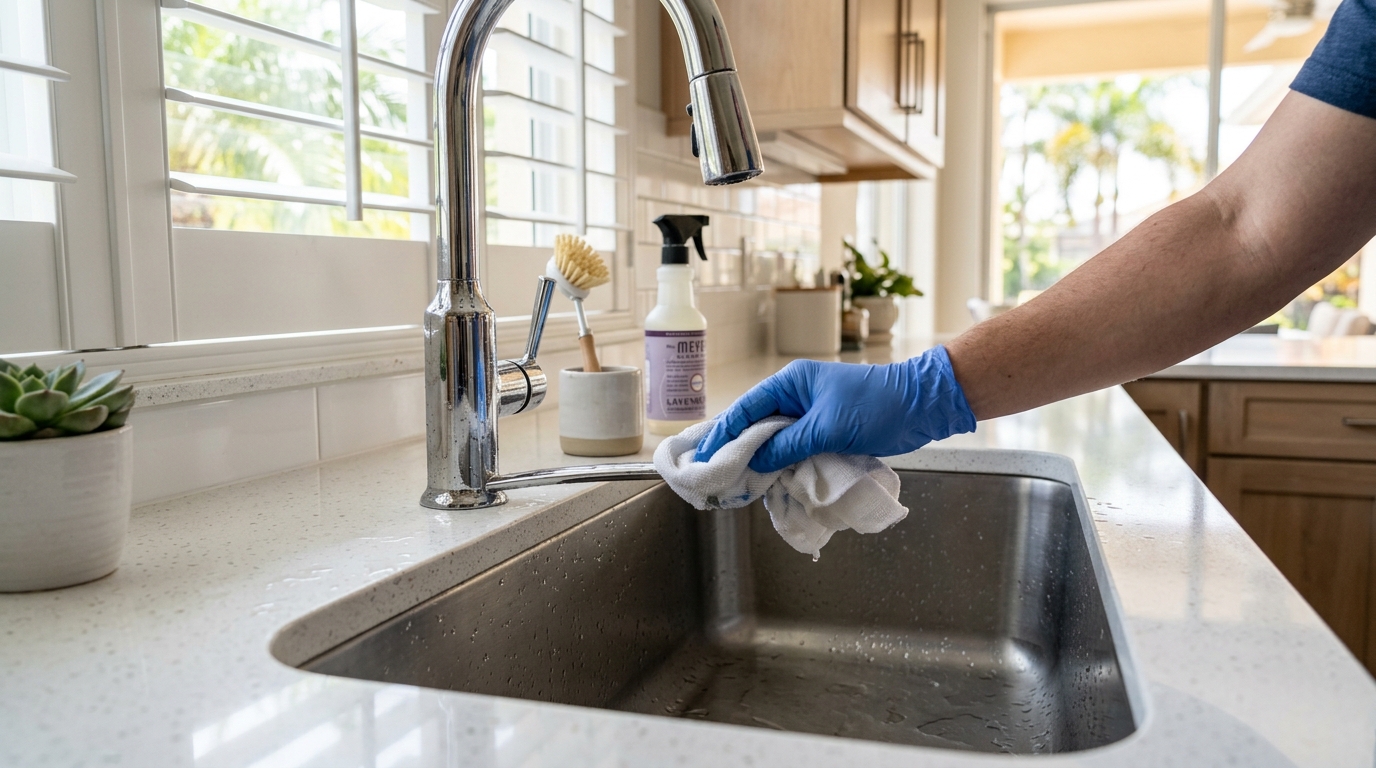
You mop the floors, scrub the toilet and wipe the counters, yet the germiest spots in your home are often the ones you're missing entirely. In our experience cleaning hundreds of Florida homes every month, the worst offenders are rarely the obvious ones. They're the damp, high-touch, out-of-sight places that never make it onto a weekly checklist.
This guide covers where those spots are, why they collect bacteria and mold, and exactly how to clean each one. That includes the products we use and why, how long to leave a disinfectant on, and a simple schedule you can stick to. We also cover the Florida-specific problem nobody else talks about: humidity.
Why You're Missing the Germiest Spots in Your Home
Most people clean what looks dirty. Germs don't care about looks. The places that harbor the most bacteria tend to share three traits: they stay damp, they get touched constantly, or they hold food residue. Often they hit all three.
The best-known ranking comes from NSF's widely cited household germ study from 2011. Volunteers swabbed everyday items, and the dish sponge or rag, kitchen sink, toothbrush holder, pet bowls and coffee maker reservoir came out near the top. NSF also reported finding coliform bacteria, a family that includes bacteria associated with fecal contamination, in many of the homes tested. The study is old, but the pattern still matches what we see on the job.
Cleaning and disinfecting are not the same thing
According to the CDC, cleaning removes germs and dirt from a surface, while disinfecting uses chemicals to kill germs. The CDC recommends cleaning first and then disinfecting when needed, such as when someone in the house is sick or for high-touch surfaces. A disinfectant sprayed over grime works poorly because the dirt shields the bacteria underneath.
The other piece people skip is contact time. The EPA notes that a disinfectant has to stay visibly wet on a surface for the full contact time listed on its label, which is frequently several minutes. Spray-and-wipe-immediately is cleaning, not disinfecting. The CDC's own training material on contact time makes the same point. If you want to check whether a product is actually registered as a disinfectant, the EPA keeps a searchable List N database.
The Kitchen: Sponges, Sinks and the Coffee Maker
The kitchen, not the bathroom, is where most of the NSF hotspots live. Food residue plus water plus warmth is an ideal setup for bacteria.
The dish sponge
A 2017 study published in Scientific Reports by German researchers identified about 362 bacterial species in used kitchen sponges. The same team found that regularly sanitized sponges didn't reliably carry fewer bacteria over time. Earlier USDA research reached a different conclusion, finding that microwaving or running sponges through the dishwasher did reduce bacteria. Our take: sanitizing helps in the short term, so do it, but replace sponges often.
- Rinse the sponge thoroughly and squeeze out food bits after every use.
- Every day or two, sanitize it. Either run it on the top rack of the dishwasher with a heated dry cycle, or microwave a fully wet, metal-free sponge for about a minute. Never microwave a dry sponge; it can catch fire.
- Store it upright or in a caddy that drains, not flat in a puddle by the faucet.
- Throw it out every week or two, sooner if it smells.
For a full breakdown, see our guide on how to clean and disinfect kitchen sponges. Better yet, switch to a dish brush, which dries faster, and rotate in fresh cotton dishcloths daily.
The sink and drain
People rinse raw chicken juices, vegetable dirt and plate scraps into the sink, then assume running water rinsed it all away. It didn't.
- Clear the sink and scrub the basin with hot water and dish soap. Dish soap's surfactants break up the greasy film that bacteria cling to.
- Scrub around the drain flange, the stopper and the faucet base with an old toothbrush. This is where gunk builds up.
- Rinse, then spray with an EPA-registered disinfectant and leave it wet for the full label contact time.
- Pull the drain strainer and wash it in hot soapy water. Do the faucet handles and sprayer head too.
The coffee maker reservoir
NSF flagged the reservoir because it sits dark, damp and warm between uses. Here's our monthly routine for drip machines (always check your manufacturer's instructions first):
- Fill the reservoir with equal parts white vinegar and water.
- Run half a brew cycle, turn the machine off and let it sit for 30 minutes, then finish the cycle.
- Run two or three full cycles of plain water to flush the vinegar taste.
- Leave the lid open between uses so the reservoir can dry.
Vinegar's mild acidity dissolves mineral scale, which gives bacteria and biofilm somewhere to hide. It isn't a registered disinfectant, but removing the scale and letting the tank dry does most of the work.
The Bathroom Spots Beyond the Toilet
Everyone scrubs the bowl. Fewer people think about what's three feet away from it.
The toothbrush holder
This one surprised a lot of people in the NSF study. Water drips down from wet brushes and pools at the bottom of the cups, and that residue sits there for weeks.
- If it's dishwasher safe, run it through the hot cycle once a week.
- If not, soak it in hot soapy water, scrub the inside slots with a bottle brush or pipe cleaner, rinse and let it air dry completely.
- Keep it as far from the toilet as your counter allows, and close the lid before flushing.
Toilet handle, faucet handles and the light switch
These get touched right after, or right before, hand-washing. Spray them with disinfectant at the start of your bathroom clean so they sit wet while you do the mirror and sink, then wipe them dry at the end.
Shower grout and the exhaust fan
Grout is porous, so it soaks up moisture and soap scum. Mold and mildew follow. Scrub it weekly with a stiff grout brush and a bathroom cleaner. For stubborn dark spots, 3% hydrogen peroxide left on for 10 minutes before scrubbing works well and doesn't carry bleach's fumes. Our guide to humidity and mold in Florida homes goes deeper on why this keeps coming back.
Then look up. The exhaust fan cover collects a fuzzy layer of dust that traps moisture. Every few months, switch off the fan, pop the cover off, wash it in soapy water and vacuum the housing.
High-Touch Surfaces and Pet Items Everyone Forgets
These spots don't look dirty, which is exactly why they get skipped. Each one passes through dozens of hands a week, often unwashed ones.
The high-touch list
- Refrigerator, microwave and oven handles: touched mid-cooking with raw-food hands.
- Door knobs and lever handles: especially the front door, garage door and bathroom doors.
- Light switches and switch plates: look closely and you'll often see a gray halo.
- TV remotes and game controllers: shared, snacked over, rarely cleaned.
- Phones and tablets: small studies suggest phones can carry a surprising amount of bacteria. The evidence is thin, but your phone goes everywhere your hands go, including the bathroom.
- Cabinet pulls, stair railings and the trash can lid.
For hard surfaces like handles and switch plates, clean with a damp microfiber cloth and a drop of dish soap, then apply a disinfectant spray to the cloth (not the switch) and let the surface stay wet for the label time. For electronics, use the manufacturer's guidance; many allow a 70% isopropyl alcohol wipe on a powered-off device. Never spray liquid directly onto a remote or phone.
Pet bowls and toys
Pet bowls made NSF's top list, and it makes sense: wet food, saliva and a constant film of slime. Wash food bowls daily and water bowls at least every couple of days in hot soapy water, or put them through the dishwasher if they're stainless or ceramic. Plastic bowls scratch, and scratches hold bacteria, so we suggest swapping them for stainless steel.
Wipe down the mat underneath, too. Soft toys can go in the washing machine monthly, and rubber toys can go on the top rack of the dishwasher.
Florida's Hidden Moisture Spots: AC Vents, Drip Pans and Window Tracks
Here's where Florida homes differ from the generic lists. The EPA recommends keeping indoor humidity below 60%, ideally between 30% and 50%, to control mold. In South Florida, St. Pete and along the Panhandle coast, staying under that line takes constant effort, and damp spots appear where you'd never think to look.
AC supply vents and return grilles
Cold air hitting humid air creates condensation on vent louvers. Add dust, and you get black speckling that people often mistake for dirt. Every month or two, vacuum the vents with a brush attachment, then wipe each louver with a microfiber cloth dampened with soapy water. Dry them afterward. If the black spots come back within days, have an HVAC technician look at the system, because it may be oversized or short-cycling and not pulling enough moisture out.
Change your AC filter on the schedule your system calls for. A clogged filter cuts airflow, and reduced airflow makes humidity control worse.
The condensate drip pan and drain line
Your air handler pulls gallons of water out of the air, and that water drains through a pan and a line. When the pan holds standing water, slime and mold grow fast. If you can safely reach the pan, check it every few months for standing water or a slimy film. A common maintenance step is pouring a cup of white vinegar into the condensate line's access port every month or two to discourage buildup, but check your system's manual or ask your HVAC tech first. A backed-up line can also trip a float switch or leak into ceilings.
Window and sliding door tracks
Condensation runs down the glass and pools in the tracks, which also catch sand, pollen and dead bugs. That mix turns into a black paste. Vacuum the track with a crevice tool, scrub with an old toothbrush and soapy water, wipe it out with a cloth and leave the door open a few minutes to dry.
An inexpensive hygrometer will tell you where your indoor humidity actually sits. If you're regularly above 60%, run a dehumidifier in the worst rooms. If mold covers a large area, roughly more than 10 square feet, the EPA suggests following its mold guidance and considering professional help rather than scrubbing it yourself.
Pro Tip: Work in the order that lets disinfectant do its job. Walk into a room and spray every high-touch point first: handles, switches, faucet levers. Then dust, wipe mirrors and do everything else. By the time you circle back, the disinfectant has sat for its full contact time and you simply wipe it dry. It costs zero extra minutes and it's how our cleaners work through a kitchen or bathroom.
A Realistic Schedule for Germ Hotspots
You don't need to disinfect your whole house daily. You need to hit the right spots at the right frequency. Here's the rhythm we recommend for a typical Florida household:
| Spot | How often | Method |
|---|---|---|
| Dish sponge | Sanitize every 1-2 days; replace every 1-2 weeks | Dishwasher or wet microwave |
| Kitchen sink and faucet | Daily rinse; weekly scrub and disinfect | Dish soap, then registered disinfectant |
| Pet food bowls | Daily | Hot soapy water or dishwasher |
| High-touch handles and switches | Weekly; daily when someone is sick | Clean, then disinfect with full contact time |
| Toothbrush holder | Weekly | Dishwasher or soak and scrub |
| Shower grout | Weekly | Grout brush; peroxide for spots |
| Coffee maker reservoir | Monthly | Vinegar cycle, then water flushes |
| AC vents and window tracks | Every 1-2 months | Vacuum, wipe, dry |
| Bathroom fan cover | Every 3 months | Wash and vacuum housing |
If keeping up with the weekly items is the hard part, that's exactly what recurring cleaning is built for. Because the same cleaner comes every time, they learn which spots in your home build up fastest.
Common Mistakes That Spread Germs Instead of Removing Them
- Wiping disinfectant off immediately. If the surface isn't wet for the label's contact time, you haven't disinfected it.
- Disinfecting a dirty surface. Grime shields bacteria. Clean first, as the CDC advises.
- Using one cloth for the whole house. A rag that touched the toilet handle shouldn't touch the kitchen counter. We color-code microfiber: one color for bathrooms, another for kitchens.
- Mixing products. Never combine bleach with ammonia or with acids such as vinegar. The CDC and poison control both warn this creates toxic gases. If it happens, get to fresh air and call the Florida Poison Information Center at 1-800-222-1222.
- Leaving things wet. In Florida especially, a damp sponge, a wet bath mat or a dripping toothbrush cup is an invitation. Drying is half the job.
- Assuming natural means disinfecting. Vinegar and baking soda are great cleaners, but they aren't registered disinfectants. Use them for cleaning and descaling, not for killing germs after someone's been sick.
For more on safer approaches, the National Center for Healthy Housing's healthy homes cleaning guide is a solid, practical read.
The Bottom Line
The germiest spots in your home that you're probably missing aren't mysterious. They're the damp, high-touch places your eyes skip over: the sponge, the sink drain, the toothbrush holder, the pet bowl, the coffee reservoir, and in Florida, the AC vents and window tracks. Clean them first, disinfect when it counts, give the product time to work and let everything dry.
If you'd rather leave it to the pros, our team hits these spots as part of every deep cleaning, with deep cleans starting at $312 for an apartment under 700 square feet and recurring visits from $130. Larger homes cost more, and you can get a quote for yours anytime.
Frequently Asked Questions
What is the germiest thing in a house?
In NSF's widely cited household germ study, the kitchen sponge or dish rag ranked as the germiest item, followed by the kitchen sink, toothbrush holder, pet bowls and coffee maker reservoir. The common thread is moisture combined with food residue or frequent use.
How often should I disinfect high-touch surfaces?
For most healthy households, cleaning high-touch surfaces weekly is enough, with disinfecting focused on the kitchen and bathroom. When someone in the home is sick, the CDC suggests disinfecting high-touch surfaces more often, daily is a reasonable rule, and always cleaning off visible dirt first.
Is vinegar a disinfectant?
Vinegar is a useful cleaner and descaler, but it is not an EPA-registered disinfectant. If you need to kill germs, for example after a stomach bug, use a product registered as a disinfectant and leave it wet for the contact time on the label.
How often should you replace a kitchen sponge?
We recommend replacing it every week or two and sanitizing it every day or two in between. Research is mixed on how well microwaving or dishwashing sponges works over time, so frequent replacement is the safest approach.
Why do my AC vents get black spots in Florida?
Black speckling on vents is usually condensation combined with dust, which can lead to mold growth. Florida's humidity makes it hard to stay below the EPA's recommended 60% indoor humidity. Clean and dry the vents regularly, change filters on schedule and have an HVAC technician check the system if the spots return quickly.