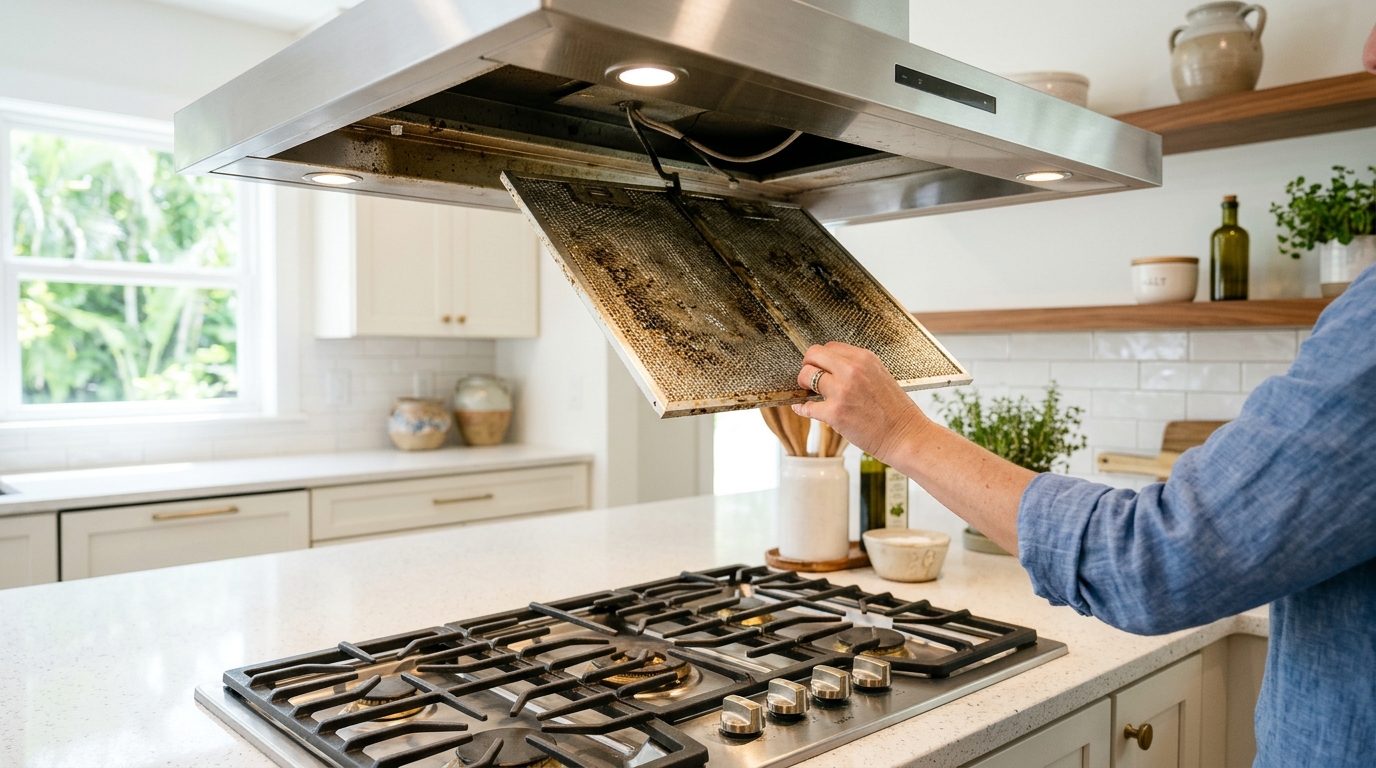
You pull the turkey out of the oven, the pan of onions is sizzling, and the range hood is roaring away while the kitchen still smells like last month's fried fish. If you've never taken the filter out, that greasy film is the likely culprit. Knowing how to clean a range hood filter is one of the quickest ways to get your kitchen ready for a heavy week of holiday cooking.
Thanksgiving is Thursday, November 26, so you have about two weeks. In this guide we'll cover how to tell which type of filter you have, three cleaning methods that work, what to do about the hood itself, how often to repeat it, and the mistakes we see most. The whole job takes about 30 minutes of hands-on time, plus a soak.
Why a Greasy Hood Filter Matters Before the Holidays
The filter's job is to catch airborne grease before it reaches the fan, the duct and the rest of your kitchen. Once it's coated, it catches less, moves less air and holds on to old cooking smells. In our experience, a hood that seems to have stopped working usually just needs a clean filter.
The holidays also raise the stakes. According to NFPA data reported by Campus Safety Magazine, Thanksgiving is the leading day of the year for home cooking fires in the U.S. A local news report on the same NFPA findings, Local 3 News, put it at 80% of Thanksgiving house fires involving cooking equipment.
To be clear, a dirty filter isn't what causes most of those fires. Unattended pans and hot oil are the bigger problems, and NFPA's Thanksgiving safety tips focus on staying in the kitchen and keeping flammables away from the stove. But built-up grease is fuel you don't need above a burner running for hours. Cleaning the filter is cheap insurance.
Step One: Identify Which Filter You Have
Don't scrub anything until you know what you're holding. Hood filters come in three common types, and they are not cleaned the same way.
| Filter type | What it looks like | Washable? |
|---|---|---|
| Aluminum or stainless mesh | Flat metal panel with layered mesh, usually a small latch or tab | Yes |
| Baffle | Metal panel with interlocking ridges or slats, common on higher-end hoods | Yes |
| Charcoal (carbon) | Thick pad or round disc, black or gray, often behind or above a mesh filter | No, replace it |
If your hood vents outside, you'll have a mesh or baffle filter. If it's a recirculating (ductless) hood, which in our experience is common in South Florida condos and apartments, you'll likely have both: a washable metal filter and a charcoal filter that cleans the air before it goes back into the room.
Charcoal filters can't be washed. Wetting them ruins them. They need to be swapped on the schedule in your owner's manual. A replacement is easy to find at big-box stores and online; for instance, Home Depot lists a 2-pack, part W10272068. Check your hood's model number before buying, because the shapes vary.
What You'll Need
- A sink or large tub that fits the filter flat (a clean plastic storage bin works)
- Hot water, as hot as your tap gets
- Dish soap with grease-cutting power
- Baking soda (for the heavy-grease method)
- A non-scratch brush or an old soft toothbrush
- A dry microfiber cloth and a second damp one
- Rubber gloves
- A degreaser made for kitchens, only if the filter is really bad
- A step stool and a towel to lay over the stovetop
How to Clean a Range Hood Filter, Step by Step
1. Turn everything off and cover the stove
Switch off the fan and the hood light, and let the bulbs cool if they've been on. Lay a towel over the cooktop to catch drips. Grease falls off the filter in strings, and you don't want it on your burners.
2. Remove the filter
Most mesh filters release with a spring latch or a tab you slide toward the center. Support the panel with your other hand as it drops, since it's usually heavier than it looks. Take a photo of how it sits before you pull it, so you can put it back the right way.
3. Choose your method
Start with the gentlest option and work up.
Method A: Hot water and dish soap (best for light to moderate grease)
- Fill the sink or tub with the hottest tap water and a generous squirt of dish soap.
- Submerge the filter and soak 10 to 15 minutes.
- Scrub both sides with a soft brush, working along the mesh rather than across it so you don't bend it.
- Rinse under hot water until it runs clear.
If you cook weeknight meals and wipe the stove regularly, this is usually all you need.
Method B: Baking soda and boiling water (best for heavy buildup)
This one is repeated everywhere online: a pot or tub of very hot water with about 1/4 cup of baking soda stirred in. The baking soda helps break the grease down so it floats off the metal. Soak for 10 to 15 minutes, scrub, and rinse.
One caution. Plain aluminum can darken or dull with baking soda and very hot water, and manufacturers don't agree on what's safe. Some say to use mild dish soap only, others allow stronger solutions. We couldn't find a single authoritative standard, so check your owner's manual first. If the filter is stainless steel, you're generally on safer ground. If you're unsure, test a corner or stay with Method A.
Method C: A kitchen degreaser (for the neglected filter)
If the filter hasn't been cleaned in a year, spray both sides with a kitchen degreaser, let it sit for the time on the label, then wash with hot soapy water. Never combine a degreaser with bleach or ammonia products. Our guide on cleaning products you should never mix explains why, but the short version is to rinse fully between products and don't layer chemicals.
What about the dishwasher?
Some manufacturers say metal mesh filters are dishwasher-safe, and others warn against it because harsh dishwasher detergent can discolor aluminum. We'd call this contested. If your manual says yes, run it alone on the top rack with no other greasy dishes. If it's silent, hand-wash.
4. Dry completely and reinstall
Shake off the water, then dry with a clean microfiber cloth or let the filter air-dry on a towel for about an hour. Don't put it back wet. Damp mesh grabs fresh grease and can smell musty, which matters in a humid Florida kitchen. Slide it back in, make sure the latch clicks, and check against your photo.
Clean the Hood While the Filter Is Out
With the filter removed, you can finally see what the filter has been protecting. Take five minutes to wipe the inside of the hood and the underside of the housing.
- Wipe the interior surfaces with a cloth dampened with warm soapy water.
- Use a degreaser only on the hood's inside, not the fan blades or motor.
- Wipe the exterior in the direction of the grain if it's stainless steel, then dry it to prevent streaks.
- Wipe the light cover, and replace any bulb that has burned out while you're at it.
Don't spray liquid into the fan motor or control panel. Use a barely damp cloth around the buttons.
Pro Tip: Clean the filter right after a big cooking day, not before one. Grease is easier to remove while it's still soft, and you won't be racing a deadline. If you want a head start on Thanksgiving, do it this weekend, then give the hood a quick wipe-down on Wednesday night once the prep is done.
How Often to Clean and When to Replace
Manufacturers give different intervals, so your owner's manual is the source to trust. As a rule of thumb from our own work in kitchens, here's what we'd suggest.
- Heavy cooking (frying, searing, wok cooking several times a week): monthly.
- Normal home cooking: every two to three months.
- Before a holiday cooking stretch: once, even if you're not due.
- Charcoal filters: replace per the manual, not by sight, since they look the same when they're spent.
Replace a metal filter if it's bent, corroded, has holes in the mesh, or still feels sticky after two good cleanings. A warped panel doesn't seal properly and lets grease pass straight through to the fan.
Common Mistakes to Avoid
- Washing a charcoal filter. It won't get clean and it will stop absorbing odors. Replace it.
- Scrubbing with steel wool. It scratches the finish and leaves grooves where grease collects faster next time.
- Skipping the dry time. Reinstalling a wet filter leads to musty smells and dripping.
- Mixing chemicals. Bleach and ammonia-based products together can release dangerous fumes. One product at a time, rinsed in between.
- Forgetting the hood itself. A spotless filter in a sticky hood only gets you halfway.
- Assuming commercial rules apply. Fire standards like NFPA 96 are written for commercial kitchens. Home kitchens follow your manufacturer's guidance and local building code, so don't expect an inspection schedule, but also don't treat that as permission to ignore it.
- Running the hood on low during big meals. A clean filter helps only if you actually use the fan. Turn it on before you start cooking and leave it on a few minutes after you finish.
Where This Fits in Your Holiday Kitchen Prep
The filter is one item on a longer list. A good order of operations: filter and hood first, then the oven, then the fridge and counters. If you want the full kitchen picture, how to deep clean your kitchen covers everything in sequence, and our guide to getting your home ready for holiday guests handles the rest of the house.
Wrapping Up: A Cleaner Hood Before the Big Meal
Learning how to clean a range hood filter takes one soak and a little scrubbing, and it pays off the moment the first pan hits the heat. Identify your filter type, pick the gentlest method that works, dry it fully, and wipe down the hood while you're up there. Then put a reminder on the calendar so you're not doing this again next November.
If you'd rather leave it to the pros, Catalina Cleaning is a family-owned, licensed and insured company serving South Florida, the St. Petersburg area and the Panhandle coast. A deep cleaning is the service built for stubborn kitchen buildup, with starting prices from $312 for an apartment under 700 sq ft (larger homes cost more). Mention the hood when you request a quote and we'll talk through what makes sense for your kitchen.
Frequently Asked Questions
Can I clean a range hood filter with just dish soap and hot water?
Yes, and for most homes that's the right first move. Soak the filter 10 to 15 minutes in hot water with dish soap, scrub gently, and rinse. Go to baking soda or a degreaser only if grease remains after the first pass.
How often should I clean my range hood filter?
It depends on how you cook. In our experience, monthly is right for frequent frying or searing, and every two to three months for lighter cooking. Check your owner's manual too, since manufacturer guidance varies.
Can I put a range hood filter in the dishwasher?
Maybe. Some manufacturers allow it for metal mesh filters, while others warn that dishwasher detergent can discolor aluminum. Read your manual, and if it doesn't say, wash by hand to be safe.
Can you wash a charcoal range hood filter?
No. Charcoal (carbon) filters in ductless hoods absorb odors and can't be washed or restored. Replace them following the schedule in your hood's manual, and keep washing the metal grease filter separately.
Why is my range hood filter still sticky after cleaning?
Old, baked-on grease sometimes needs a second round. Try a kitchen degreaser followed by a hot soapy soak. If the mesh is still tacky or visibly corroded after two tries, it's time to replace it.