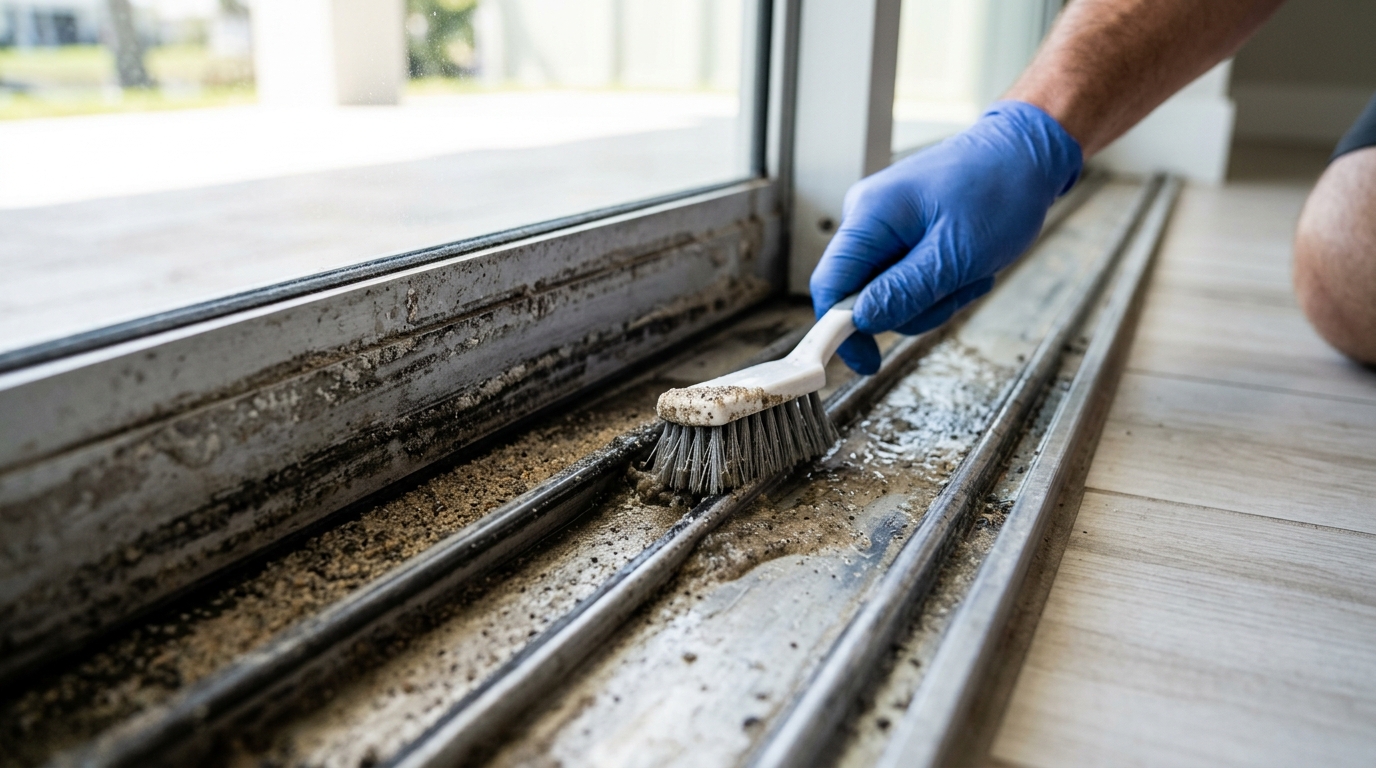
If your sliding glass door grinds, sticks or jumps when you open it, the track is almost always the problem. In Florida, that narrow aluminum channel collects beach sand, salt spray, pollen, dead bugs and pet hair. Add humidity and it turns into a gritty paste. This guide shows you how to clean sliding door tracks properly, from the first vacuum pass to the final lubricant, so the door glides again and water drains the way it should.
You'll learn which tools actually work and which products to keep away from your track. We'll also cover how to clear the weep holes that keep rain out of your living room, what to do about salt crust and mildew, and how often a Florida track really needs attention. Set aside 20 to 40 minutes per door, depending on how long it's been.
Why Florida Sliding Door Tracks Get So Bad
Sliding doors in Florida face a harder life than almost anywhere else. They're usually the main route to the pool deck, lanai, balcony or beach. That means sand riding in on feet, towels and pets every single day.
Sand is only part of it. Salt air speeds up corrosion on aluminum tracks and on the rollers and hardware, which is a point coastal door specialists make repeatedly in guides on salt air corrosion on Florida sliding doors. Humidity encourages mildew in the corners of the track and along the rubber weatherstripping. Together, they create a layer of grime that's part abrasive, part sticky and part biological.
In our experience, the homes with the worst tracks aren't neglected homes. They're beachfront condos and pool homes where the door is opened 30 times a day. If that's you, don't feel bad. Just plan on cleaning the track more often than the guidebooks suggest.
Tools and Products You Need (and Why)
You don't need a special kit. Most of this is already under your sink. What matters is choosing gentle tools that won't scratch aluminum or tear seals.
- Vacuum with a crevice tool: Removes loose sand before you add any water. A cordless handheld works, but a full-size vacuum has more suction for packed corners.
- Stiff nylon detail brush or old toothbrush: Nylon scrubs without scratching. Dedicated track brushes are narrower and reach the inside walls of the channel better.
- Plastic putty knife or old credit card: For scraping caked dirt out of corners. Metal knives and screwdrivers gouge the aluminum and create rough spots where grime sticks faster.
- Spray bottle with warm water and a few drops of dish soap: Dish soap cuts the body oils, sunscreen and pollen that bind sand together.
- Microfiber cloths (at least three): One for washing, one for rinsing, one for drying.
- Pipe cleaners or thin plastic zip ties: For clearing weep holes without puncturing anything.
- Silicone spray or dry PTFE lubricant: Leaves a slick film that doesn't attract sand.
Window and door makers such as Andersen and Pella generally recommend this same gentle approach in their care guidance: mild soap and water, a non-abrasive brush, and a silicone or dry lubricant on the track. They advise against petroleum-based oils, because oily films grab sand and turn it into grinding paste.
| Use This | Why | Skip This | Why Not |
|---|---|---|---|
| Dish soap and warm water | Cuts oily grime safely on aluminum and vinyl | Undiluted bleach on metal | Can be harsh on aluminum and seals |
| Nylon brush | Scrubs without scratching | Steel wool or wire brush | Scratches finish and invites corrosion |
| Silicone or dry PTFE lubricant | Slick, non-sticky film | WD-40, motor oil, grease | Petroleum films trap sand |
| Plastic scraper | Removes caked dirt safely | Screwdriver or knife | Gouges the track |
How to Clean Sliding Door Tracks, Step by Step
Work on a dry day if you can, and do the whole job in one session. A half-cleaned track that gets wet just turns back into mud.
Step 1: Open the door and vacuum dry
Slide the door fully open and vacuum the exposed track. Then close it and vacuum the section that was hidden under the panel. Go slowly along both inside walls of the channel, not just the bottom.
Always vacuum before you add water. Wet sand becomes a slurry that settles into the corners and the weep holes, and it's much harder to remove.
Step 2: Loosen packed dirt with a brush and scraper
Run the nylon brush along the track to break up compacted grime, then vacuum again. For the corners where the track meets the frame, use a plastic scraper or a credit card wrapped in a thin cloth. These corners often hide a solid plug of sand mixed with pet hair.
Step 3: Spray with soapy water and let it sit
Spray the track generously with your dish soap solution and wait about five minutes. Dwell time does a lot of the work for you. It softens dried salt and sunscreen residue so you scrub less.
Step 4: Scrub the channel and the rails
Scrub along the full length with the brush, paying attention to the raised rail the rollers ride on. That rail is what actually matters for smooth gliding. Any grit stuck to it will be felt every time the door moves.
Step 5: Wipe, rinse and dry completely
Wipe away the loosened grime with a damp microfiber cloth. Wrap the cloth around the putty knife or your finger to reach into the channel. Follow with a clean, water-only cloth to remove soap residue, because leftover soap attracts dirt.
Finish with a dry cloth and make sure the track is completely dry before lubricating. Trapped moisture in a Florida track is an open invitation for mildew.
Step 6: Lubricate lightly
Spray silicone or dry PTFE lubricant onto a cloth rather than directly into the track. This avoids overspray on the glass, the floor or the rug, where silicone leaves a slippery film. Wipe a thin coat along the roller rail only.
Then open and close the door ten times to spread the lubricant. Wipe off any excess that collects at the ends.
Pro Tip: Don't forget the screen door track on the outside. It usually sits higher, catches even more sand and debris, and a sticky screen is the reason many people yank the glass door harder than they should. Clean it with the same steps, and lubricate it too.
Clearing Weep Holes Before the Next Downpour
Most sliding door tracks have small drainage openings called weep holes, usually on the exterior side of the sill. Rainwater that blows into the track is meant to drain out through them. Some have a small plastic flap or cap over the opening to keep bugs and wind out.
When sand and grime block those holes, water has nowhere to go. During a hard South Florida afternoon storm, it can back up and spill over the interior edge onto your floor. We see it regularly: a homeowner thinks the door seal has failed, but the real culprit is a weep hole packed with sand.
- Find them. Look along the outside face of the sill for small slots or covered openings, often near each end.
- Clear them gently. Push a pipe cleaner or thin zip tie through each hole and wiggle it to break up debris. Avoid wire or sharp metal that could damage the flap or the frame.
- Test the drainage. Slowly pour a cup of water into the track. It should drain out the weep holes within a minute or so. If it pools, clear them again.
- Check the flaps. Make sure each flap swings freely and isn't stuck shut with dried dirt.
We'd add weep-hole checks to your list each spring and again before peak storm months. Our hurricane season cleanup and prep guide covers the rest of that pre-storm routine.
Dealing With Salt Crust, Corrosion and Mildew
Once the loose dirt is gone, you may find stains or deposits that soap alone didn't touch. Identify which problem you have before reaching for something stronger.
White, chalky salt crust
Salt dissolves in water, so the fix is patience rather than harsh chemicals. Lay a warm, wet cloth over the crusted area for a few minutes, then wipe. Repeat until the cloth comes away clean.
Pitting or white powder on the aluminum
If the metal itself looks rough, pitted or powdery, that's oxidation, not dirt. Cleaning removes the salt that drives it and slows further damage, but it won't reverse it. Severe corrosion on the roller rail is a repair issue, and that's the point to call a sliding door repair company.
Black or gray mildew spots
Mildew loves the corners of tracks and the rubber weatherstripping. A dish soap scrub removes most of it. For stubborn spots, 3% hydrogen peroxide applied with a cloth and left for ten minutes works well, followed by a clean water rinse and a thorough dry.
If you choose a bleach-based mildew product, follow the label exactly and keep it away from anything else. The CDC and the EPA both warn against mixing bleach with ammonia or with acids, including vinegar, because the combination releases toxic gases. This matters here, because many people spray vinegar into a track and then follow it with a bleach cleaner. For more on Florida's mildew problem, see our guide to removing mold and mildew in South Florida homes.
What about the vinegar and baking soda trick?
It's all over social media: sprinkle baking soda, pour vinegar, watch it fizz, wipe clean. It's satisfying, but the extra cleaning power over plain soap and a brush is debatable. The fizz is mostly the two ingredients neutralizing each other. Vinegar can also be hard on some finishes and rubber seals. We stick with soapy water and save ourselves the mess.
Common Mistakes That Make Tracks Worse
- Adding water before vacuuming. You turn loose sand into mud and push it into the weep holes.
- Using WD-40 or cooking oil. They feel slick for a day, then catch every grain of sand that blows in.
- Scrubbing with steel wool or a wire brush. Scratches roughen the aluminum and give salt a foothold.
- Pressure washing the track. High pressure can force water past the seals and into the wall or subfloor.
- Mixing cleaners. Never combine bleach products with vinegar or ammonia.
- Leaving the track wet. Moisture plus Florida humidity equals mildew within days.
- Lifting a heavy panel off the track yourself. Many South Florida homes have impact-rated doors, which are much heavier than standard glass. Miami-Dade and Broward fall within the High-Velocity Hurricane Zone under the Florida Building Code, so impact doors are common there. Removing those panels is a two-person job at minimum and often a job for a door technician.
- Blaming the track for a roller problem. If the track is spotless and the door still drags, scrapes or rocks, the rollers are likely worn or need adjusting. That's a repair, not a cleaning issue.
How Often Florida Sliding Door Tracks Need Cleaning
There's no single right schedule. It depends on how close you live to the water and how often the door gets used. Here's what we've found works for the homes we clean.
| Home Type | Quick Vacuum | Full Wash and Lube |
|---|---|---|
| Beachfront condo or balcony door facing the ocean | Weekly | Monthly |
| Pool home or main lanai door | Every 1 to 2 weeks | Every 2 months |
| Inland home, door used occasionally | Monthly | Every 3 to 4 months |
| Vacation rental between guests | Every turnover | Monthly or as needed |
A one-minute vacuum pass is the single best habit you can build. It stops sand from compacting, which means your full cleanings take ten minutes instead of forty. A doormat on both sides of the door helps too, along with a quick rinse station for sandy feet if you're near the beach.
Tracks are just one part of keeping a salty, sandy home under control. Our cleaning tips for coastal homes cover screens, glass, fabrics and the other places salt air settles.
Keeping Your Sliding Door Gliding All Year
Now you know how to clean sliding door tracks the way the pros do: vacuum dry, loosen, wash with mild soap, dry completely and finish with a thin coat of silicone or dry lubricant. Clear the weep holes before storm season, skip petroleum oils and abrasive tools, and never mix bleach with vinegar. Do that, and even a beachfront door should glide with one finger.
If you'd rather leave it to the pros, tracks are exactly the kind of detail work that fits into a deep cleaning visit. Just mention your sliding doors when you request a quote, and our team will plan time for them. Our cleaners have 2+ years of experience cleaning homes, and a real person answers the phone 7 days a week if you have questions first.
Frequently Asked Questions
What is the best thing to clean sliding door tracks with?
Warm water with a few drops of dish soap, a stiff nylon brush and microfiber cloths handle almost every track. Vacuum thoroughly first, then wash, rinse and dry. For mildew spots, 3% hydrogen peroxide works well on most tracks.
Should I use WD-40 on my sliding door track?
No. Petroleum-based products like WD-40 leave an oily film that attracts sand and dirt, which grinds on the rollers. Use a silicone spray or a dry PTFE lubricant instead, applied with a cloth and only on the roller rail.
Why does my sliding door still stick after cleaning the track?
If the track is clean and dry but the door still drags, the rollers are usually worn, corroded or out of adjustment. Salt air is especially hard on rollers in coastal Florida homes. A sliding door repair company can adjust or replace them.
Why does water come in under my sliding door when it rains?
The most common cause is blocked weep holes. These small drainage openings on the outside of the sill let rainwater escape the track. When sand plugs them, water backs up and spills inside. Clear them with a pipe cleaner and test by pouring a cup of water into the track.
Does vinegar and baking soda clean sliding door tracks?
It can loosen some grime, but it isn't clearly better than soapy water and a brush. Vinegar may also be hard on certain finishes and rubber seals. Never use vinegar in the same cleaning session as a bleach product, since mixing them releases toxic gas.